

BeInCrypto Launches AI Agent Payments Report at TOKEN2049
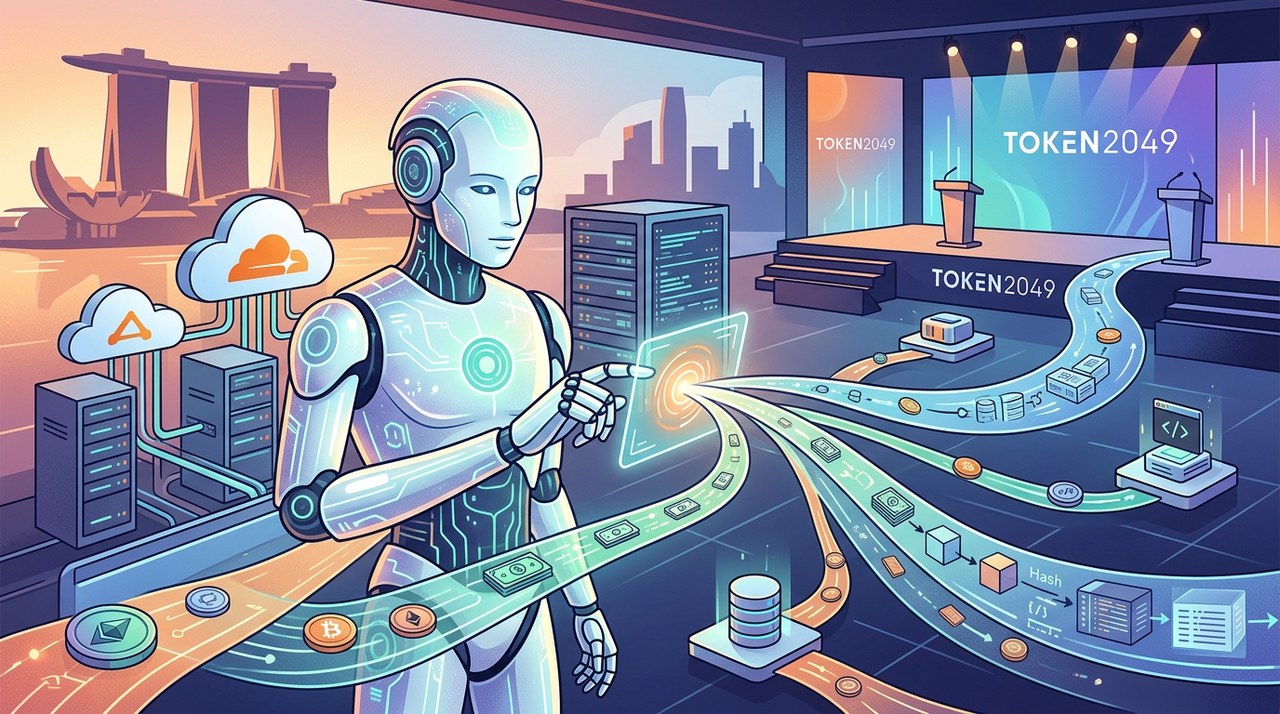
Imagine letting an artificial intelligence program buy its own digital services, pay server bills, or handle transfers without human assistance. That concept is currently one of the most talked-about topics in the cryptocurrency world.
New payment protocols and stablecoin tools frequently make headlines with bold claims. However, how much real-world adoption is actually happening today? BeInCrypto Research set out to answer that exact question in their new report, The State of AI Agent Payments 2026.
Officially launched at the TOKEN2049 conference at Marina Bay Sands in Singapore, the report digs into real on-chain data rather than speculative forecasts.
Grounding the Hype in Real On-Chain Data
The research team collaborated with members of the BeInCrypto Expert Council, incorporating technical insights from professionals at Amazon Web Services (AWS) and Cloudflare.
Instead of relying on projections, the study tracks existing money flows on-chain. It evaluates what current software products permit agents to do and outlines the prerequisites for mainstream business adoption.
Key Findings: How AI Agents Are Actually Spending Money
1. Most AI Payments Are Extremely Small
The researchers examined a 35-day sample of x402 payment protocol transactions across the Base and SolanaSOL-2.80% blockchains. They uncovered a clear pattern regarding transaction size:
- Total Volume: 6.4 million transactions were recorded during the 35-day period.
- Total Value: All 6.4 million payments combined were worth just $119,947.
- Micro-Transactions: A massive 90.8% of all recorded payments were worth less than one cent ($0.01).
Traditional credit card networks were not built to process sub-cent transactions economically due to flat processing fees. This structural limitation explains why developers rely heavily on blockchain rails and stablecoins for automated micro-payments.
2. High Transaction Activity Does Not Equal High Business Demand
While transaction counts look impressive on paper, the underlying data reveals heavy concentration rather than broad organic usage.
Solana accounted for 94.5% of all sampled transactions. However, the majority of this volume occurred during a brief eight-day window.
On August 26 alone, just 145 wallet addresses generated 1,283,926 payments sent to only three recipient addresses. While the study does not classify this as wash activity, it demonstrates that raw transaction counts do not necessarily represent broad commercial adoption.
3. What Services Are AI Agents Paying For?
The study shows that automated software agents primarily request small, practical data utilities. The most popular paid resource was a two-cent ($0.02) token safety check, which received 63,319 calls during the sampled period.
Most top requested services provided basic information or performed simple coding tasks. Note that these figures reflect automated system requests rather than finalized consumer purchases.
Humans Still Control the Financial Reins
Despite stories suggesting autonomous software runs wild in crypto markets, human oversight remains firmly intact across evaluated systems.
- Pre-Set Boundaries: Out of 19 AI products and workflows reviewed, 14 operate strictly within rules pre-defined by human administrators.
- No Goal Setting: Zero out of the 19 evaluated products set their own independent financial objectives.
- Withdrawal Restrictions: Five out of seven trading platforms analyzed explicitly block AI agents from withdrawing funds.
AI Trading Remains a Niche Market Segment
Although trading bots are common, true AI-labelled trading accounts for a minor percentage of overall volume.
Across four analyzed connections on the HyperliquidHYPE-3.40% exchange, applications explicitly tagged as AI processed only 0.55% of $653.08 million in total trading value.
In contrast, 99.4% of the volume moved through CCXT, a standard developer API connection tool without specific AI branding. While unlabelled AI tools may also utilize CCXT, current data shows tagged AI trading remains small.
Security Risks and Investment Capital Trends
Connecting software agents to financial wallets introduces distinct security vulnerabilities that can be exploited rapidly.
The report documented two specific security incidents. In one case, a public chat message triggered an unintended $175,000 transfer from an AI-linked wallet. Across both incidents, attackers extracted $281,200 before security interventions occurred.
Meanwhile, institutional capital is prioritizing back-end payment systems over consumer-facing bots. Out of 36 funding rounds and corporate acquisitions totaling $4.25 billion in disclosed value, roughly 92% went to payment rails and cash-management infrastructure.
Where to Access the Full Report
Attendees at TOKEN2049 Singapore can obtain a physical copy of the report at the BeInCrypto NewsDesk (Booth PB4-45, Level 4 at Marina Bay Sands). Visitors can also participate in the team's 'Question of the Day' survey to contribute data for future editions.
Digital copies of The State of AI Agent Payments 2026 are available directly online via research.beincrypto.com/agentic-payments-2026. BeInCrypto operates under BeInNews Academy Ltd as an independent media group covering digital finance.
Latest blog posts



 +2
+2Solana Sees 33 Percent Spike in New Wallet Addresses
Solana recorded a 33% increase in new wallet creation since September, outperforming networks like Ethereum and Chainlink in terms of new user growth.
|
Bitcoin Dips Below $83K as Oil Shock Pressures Markets
Bitcoin dropped to $82,776 as rising oil prices and surging bond yields weighed on global markets. Here is what technical charts and prediction markets show.
|
OpenAI Tests New Model on 4,000 Unsolved Math Problems
OpenAI tested an unreleased AI model on 4,000 unsolved math problems, revealing impressive reasoning power alongside major verification challenges.