
Banks vs Crypto: ABA Accuses OCC Over Stablecoins
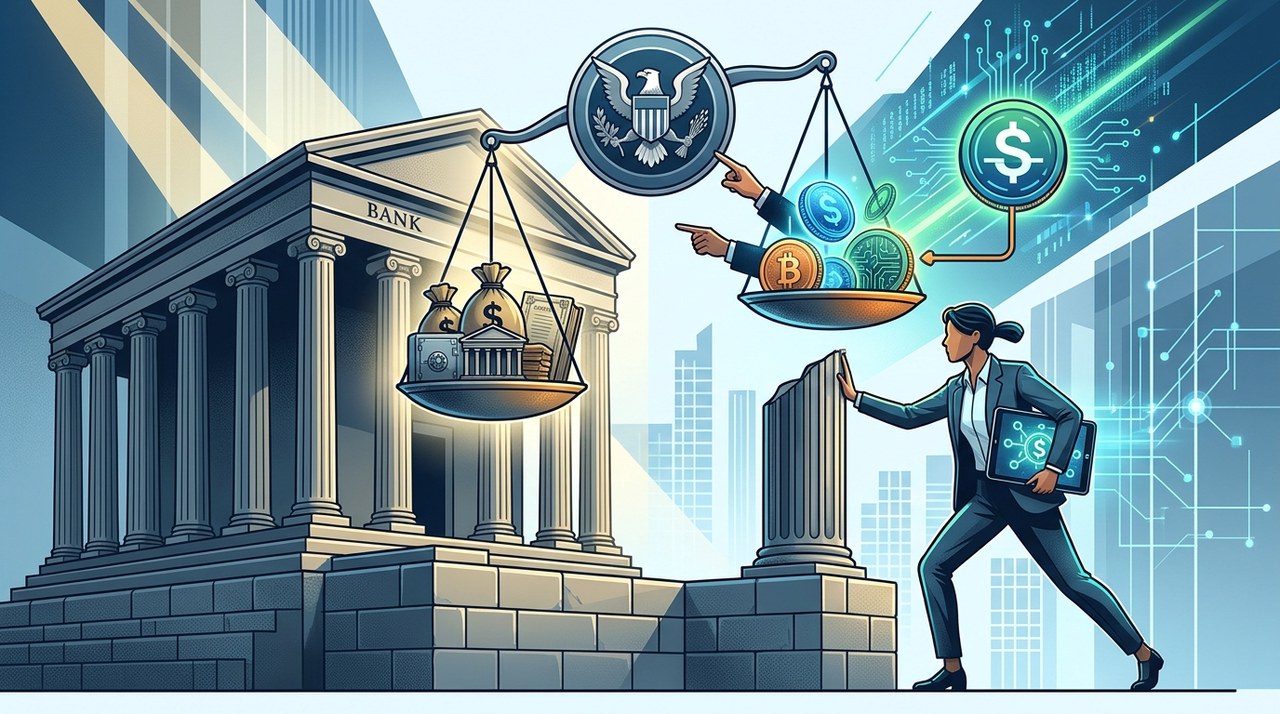
A New Clash Between Traditional Banks and Crypto
Have you ever wondered why traditional banks get so nervous when crypto platforms offer rewards on stablecoins? The long-standing rivalry between traditional financial institutions and the digital asset world has just taken another interesting turn.
The American Bankers Association (ABA), a major trade group representing banks across the United States, has formally voiced strong opposition to a stance taken by the Office of the Comptroller of the Currency (OCC).
At the center of this dispute is a controversial topic: third-party stablecoin rewards. The ABA claims that by declining to take a firm stance against these reward programs, the OCC is effectively undermining the authority of the United States Congress.
Breaking Down the Basics: Who Is Involved?
To fully understand why this debate matters, it helps to know who the main participants are and what role each plays in the financial ecosystem.
- The American Bankers Association (ABA): The primary trade association representing America's banking industry, from community banks to large national firms.
- The Office of the Comptroller of the Currency (OCC): An independent bureau of the U.S. Department of the Treasury that charters, regulates, and supervises national banks.
- The U.S. Congress: The legislative body responsible for passing federal laws governing banking and digital asset framework.
What Are Third-Party Stablecoin Rewards?
Before diving into the regulatory debate, let's break down what stablecoin rewards actually are.
A stablecoin is a type of cryptocurrency designed to hold a steady value, usually pegged to a fiat currency like the U.S. dollar. Popular examples include USDCUSDC+0.54% and USDT.
Many third-party crypto exchanges, wallet providers, and fintech platforms offer user incentives known as rewards or yields. When users hold stablecoins on these platforms, they can earn periodic payouts.
To everyday consumers, earning rewards on stablecoins can look similar to earning interest on a traditional bank savings account. However, these programs operate under different regulatory structures.
Why Are Traditional Banks Concerned?
Traditional banks have voiced concern over stablecoin reward programs for two main reasons: potential deposit competition and regulatory consistency.
First, banks rely on customer deposits to fund their lending activities. If consumers move capital into stablecoins to access yield opportunities on crypto platforms, banks worry about losing deposit volume.
Second, the ABA argues that third-party reward features mimic bank deposit yields without subjecting the crypto platforms to the same strict capital requirements or government-backed deposit insurance rules.
The OCC Decision and the ABA's Reaction
The disagreement escalated when the OCC finalized guidance regarding bank activities and digital assets without explicitly banning or restricting third-party stablecoin rewards.
The fight between banks and crypto has reignited after a top banking regulator declined to weigh in on third-party stablecoin rewards.
By choosing not to impose a prohibition, the OCC left the issue open. The ABA responded sharply, arguing that federal agencies should not bypass lawmakers while Congress actively works on comprehensive stablecoin legislation.
According to the banking group, agency actions that leave key reward definitions unaddressed undermine congressional efforts to establish clear, unified standards across the nation.
What Lies Ahead for Stablecoin Regulations?
Lawmakers in Washington have spent months negotiating bills aimed at providing a formal regulatory framework for payment stablecoins. Key points under debate include reserve transparency, capital buffers, and yield restrictions.
While traditional banking representatives favor stricter limits on non-bank yield programs, digital asset proponents argue that flexible reward structures spur innovation and provide consumer choice.
For users, it is important to remember that crypto yield programs carry distinct risks compared to traditional banking. Unlike regulated bank deposits, stablecoin rewards are generally not FDIC-insured and carry platform and market risks — digital asset returns can fluctuate and involve counterparty exposure.
As the U.S. Congress and financial regulators continue to debate stablecoin policies, the outcome will likely shape how digital dollar products operate in the years ahead.
Latest blog posts

Underdog Taps Zero Hash for 24/7 Crypto Funding Options
Underdog has partnered with infrastructure provider Zero Hash to bring 24/7 cryptocurrency deposit options to its eligible prediction market users later this year.



Bitcoin Drops Below $81K Despite $1 Billion ETF Inflows
Bitcoin fell to an intraday low of $80,836 despite strong ETF buying, triggering over $412 million in long liquidations across crypto markets.
|
Saudi-Backed Bank Reaffirms $2.9 Million Indirect Bitcoin Bet
Gulf International Bank (UK) has held its stake in Strategy steady, keeping Saudi Arabia indirectly connected to Bitcoin exposure.
|