Blog
ทำความรู้จัก Stable (STABLE) บล็อกเชน Layer-1 สำหรับ Stablecoin
Key Takeaways
— Stable คือ Layer-1 Blockchain ที่ออกแบบมาเฉพาะสำหรับ Stablecoin โดยใช้ USDT (ผ่าน USDT0 Standard ของ LayerZero) เป็น Gas Token แทนโทเคน Volatile อย่าง ETH หรือ SOL
— STABLE Token ทำหน้าที่ Governance และ Staking เท่านั้น ไม่ใช่ Gas — ผู้ Stake ได้รับ Reward เป็น USDT จากค่าธรรมเนียมเครือข่าย
— Total Supply 100,000 ล้านโทเคน (Fixed Hard Cap) ไม่มีการ Mint เพิ่ม พร้อมโครงสร้าง Vesting ที่กำหนดชัดเจน
Stable คืออะไร?
Stable คือ บล็อกเชน Layer-1 ที่ถูกสร้างขึ้นมาเพื่อการชำระเงินด้วย Stablecoin และระบบ Digital Payments โดยเฉพาะ ทำหน้าที่เป็นเครือข่ายสำหรับชำระดุล (Settlement Layer) ที่ย้ายมูลค่าในรูปแบบของ USDT ด้วยประสิทธิภาพที่เสถียร ค่าธรรมเนียมที่แม่นยำ และธุรกรรมที่เสร็จสมบูรณ์ในเวลาต่ำกว่าวินาที
จุดเด่นที่เหนือกว่าบล็อกเชนทั่วไปคือ การตัดปัญหาความผันผวนของค่าแก๊สผ่านสถาปัตยกรรม Single-Token Model ที่กำหนดให้ทุกธุรกรรมชำระค่า Gas ด้วย USDT0 (ซึ่งตรึงมูลค่าในอัตรา 1:1 กับ USDT) ผู้ใช้จึงไม่ต้องไปหาซื้อโทเคนอื่นที่มีความผันผวนมาเก็บไว้จ่ายค่าแก๊ส นอกจากนี้ เครือข่ายยังรองรับ EVM เต็มรูปแบบ ทำให้นักพัฒนาสาย Ethereum สามารถย้ายระบบหรือ Deploy Smart Contract มาที่ StableChain ได้ทันทีโดยไม่ต้องเขียนโค้ดใหม่
จุดประสงค์หลักของโปรเจกต์
Stable ถูกสร้างขึ้นมาเพื่อตอบโจทย์ตลาด Stablecoin ที่โตเกิน 300,000 ล้านดอลลาร์ในปี 2026 แต่ยังขาดโครงสร้างพื้นฐานที่ออกแบบมาเพื่อ Use Case นี้โดยตรง ซึ่งวิสัยทัศน์ของ Stable คือการเป็น “Settlement Layer ของ Dollar Digital ระดับโลก” ที่รองรับทั้งการโอนเงินระหว่างบุคคล (P2P Remittance), การจ่ายเงินเดือนข้ามพรมแดน, Treasury Management ขององค์กร และ DeFi ที่ใช้ Stablecoin
Pain Point ที่โปรเจกต์แก้ไข
Ethereum ที่เป็นบ้านหลักของ USDT ใช้เวลาเฉลี่ยราว 3 นาทีในการ Finalize Transaction และค่า Gas ที่จ่ายด้วย ETH ผันผวนอย่างรุนแรง ทำให้ระบบ Stablecoin Payment ที่ควรจะ “คาดเดาได้” กลับมีต้นทุนที่ไม่แน่นอน Tron แก้ปัญหาความเร็วและต้นทุนได้บางส่วนแต่ยังเป็น General-Purpose Chain ที่ไม่ได้ Optimize สำหรับ Stablecoin โดยเฉพาะ Stable แก้ทั้งสองปัญหาในคราวเดียวผ่านการออกแบบ Protocol Level ตั้งแต่ต้น ทั้ง Gas ที่เป็น USDT, Sub-Second Finality, Peer-to-Peer Transfer ที่ไม่มี Gas Fee และ Guaranteed Blockspace สำหรับองค์กร
ฟีเจอร์และเทคโนโลยีเด่น
StableChain ถูกพัฒนาขึ้นด้วยชุดเทคโนโลยี (Tech Stack) ที่ออกแบบมาเพื่อการชำระดุลทางการเงินโดยเฉพาะ โดยแต่ละเลเยอร์ทำงานผสานกันอย่างลงตัว เพื่อรองรับการใช้งานของทั้งผู้ใช้ทั่วไปและสถาบันการเงิน
– USDT0 Native Gas Model หลังการอัปเกรด v1.2.0 ในวันที่ 4 กุมภาพันธ์ 2026 เครือข่ายใช้ USDT0 (OFT Standard ของ LayerZero) เป็น Gas Token โดยตรง ผู้ใช้ไม่ต้อง Wrap/Unwrap Token เพื่อจ่าย Fee อีกต่อไป ที่สำคัญกว่านั้นคือ P2P Transfer ระหว่าง USDT0 ถึง USDT0 มี Gas Fee เป็นศูนย์ในระดับ Protocol ทำให้การโอนเงินระหว่างบุคคลแทบไม่มีต้นทุน
– StableBFT Consensus เป็น Protocol ฉันทามติแบบ Delegated Proof-of-Stake (dPoS) ที่พัฒนาต่อยอดจาก CometBFT รองรับ Fault Tolerance สูงถึง 1 ใน 3 ของ Validator ที่ขัดข้องได้ ทำให้การทำธุรกรรมต่ำกว่า 1 วินาที ซึ่งเร็วพอสำหรับ Point-of-Sale Payment และ Institutional Settlement ในเวลาจริง
– StableDB (Dual-Database Storage) ระบบ Storage ที่แยก MemDB (เก็บ State ที่ Active) และ VersionDB (เก็บ Historical Data) ออกจากกัน ลด Latency ในการเข้าถึงข้อมูลสำหรับ Transaction ปัจจุบัน และรองรับปริมาณ Throughput สูงโดยไม่กระทบ Historical Archive
– Guaranteed Blockspace (Enterprise Lanes) ฟีเจอร์สำหรับองค์กรที่ต้องการ Reserved Capacity บนบล็อกเชนเพื่อรับประกันว่าแต่ละธุรกรรมสำคัญ เช่น Payroll หรือ Treasury Settlement จะถูกประมวลผลทันทีโดยไม่ต้องรอในกรณีที่เครือข่ายมีความแออัด
– StableEarn (RWA Yield Vault) ฟีเจอร์ใหม่ที่เปิดตัวในเดือนพฤษภาคม 2026 เชื่อม USDT เข้ากับ Real-World Assets อย่าง US Treasury Bills (thBILL) และ Gold-backed Token (thGOLD) ผ่านโครงสร้าง Morpho Protocol ที่คัดเลือกโดย Gauntlet และ Backed โดย Standard Chartered’s Libeara และ Wellington Management เพื่อสร้าง Institutional-Grade Yield ให้กับ USDT Holder โดยตรงบนเครือข่าย
– Confidential Transfers ฟีเจอร์ความเป็นส่วนตัวที่ Encrypt จำนวนเงินในแต่ธุกรรมได้ โดยยังคงเปิดเผย Sender/Receiver Address ไว้สาธารณะ พร้อม Built-in Auditor Key สำหรับการตรวจสอบตามกฎหมาย เหมาะกับองค์กรที่ต้องการ Privacy แต่ยังต้องผ่าน Regulatory Audit
ใครคือผู้อยู่เบื้องหลังการพัฒนา?
Brian Mehler — CEO
Brian Mehler ดำรงตำแหน่ง CEO ของ Stable เป็นผู้นำด้านกลยุทธ์ธุรกิจและการสื่อสารสาธารณะ ก่อนหน้านี้เขาบริหาร Blockchain Fund มูลค่า 1,000 ล้านดอลลาร์ที่ Block.one ซึ่งเป็นบริษัทเบื้องหลัง EOS Blockchain ประสบการณ์ด้านการลงทุนระดับสถาบันและความเข้าใจในระบบนิเวศบนบล็อกเชนทำให้เขาเป็นคนที่เชื่อมสะพานระหว่างโลกการเงินดั้งเดิมเข้ากับ DeFi ได้อย่างมีประสิทธิภาพ

Sam Kazemian — CTO
Sam Kazemian เป็น CTO ผู้รับผิดชอบสถาปัตยกรรมทางเทคนิคทั้งหมดของ StableChain เขาเป็นที่รู้จักในฐานะผู้ก่อตั้ง Frax Finance โปรโตคอล Stablecoin แบบ Fractional-Algorithmic ที่นวัตกรรมและมีอิทธิพลอย่างมากในวงการ DeFi การที่เขามาดำรงตำแหน่ง CTO ทำให้ StableChain มีความชำนาญเกี่ยวกับ Stablecoin Economic Design และ On-chain Architecture อย่างแท้จริง
Thibault Reichelt — COO
Thibault Reichelt เป็น COO รับผิดชอบ Execution ของแผนธุรกิจและการ Coordinate ระหว่างทีมต่าง ๆ ตั้งแต่ Engineering ไปจนถึงพัฒนาธุรกิจและ Partnerships

พาร์ทเนอร์สำคัญ
Stable ระดมทุน Seed Round มูลค่า 28 ล้านดอลลาร์ในเดือนกรกฎาคม 2025 โดยมี Bitfinex และ Hack VC เป็น Lead Investors พร้อมนักลงทุนชั้นนำอย่าง Franklin Templeton, PayPal Ventures, Castle Island Ventures และ Susquehanna เข้าร่วม Advisors ของโปรเจกต์ประกอบด้วย Paolo Ardoino (CEO Tether / CTO Bitfinex), Nathan McCauley (CEO Anchorage Digital) และ Gabriel Abed รวมถึง Bryan Johnson นักลงทุนชื่อดัง ในด้าน Institutional Partnerships มีการร่วมมือกับ Anchorage Digital, PayPal และ Standard Chartered ผ่านแพลตฟอร์ม Libeara
โทเคน STABLE คืออะไร?
สิ่งสำคัญที่ต้องเข้าใจก่อนเลยคือ STABLE ไม่ใช่ Stablecoin แต่เป็น Native Governance และ Security Token ของเครือข่าย StableChain ที่ออกแบบให้แยกบทบาทออกจาก USDT อย่างชัดเจน
โดย USDT ทำหน้าที่เป็นค่าแก๊สและใช้ชำระเงิน ส่วน STABLE ทำหน้าที่ Governance และ Security การออกแบบนี้ช่วยให้ผู้ใช้ทั่วไปใช้งานเครือข่ายได้โดยไม่ต้องสัมผัสกับ Volatile Asset เลย การใช้งานในระบบนิเวศที่มีอยู่จริง ได้แก่
– ผู้ถือ STABLE สามารถ Stake หรือ Delegate โทเคนให้กับ Validator ที่ตัวเองเชื่อถือ เพื่อช่วยรักษาความปลอดภัยของเครือข่ายผ่านกลไก StableBFT
– จุดเด่นสำคัญที่ต่างจาก Governance Token ทั่วไปคือผู้ Stake STABLE ได้รับ Reward เป็น USDT (ไม่ใช่ STABLE เพิ่ม) จากกองทุน Gas Fee ที่เครือข่ายเก็บสะสมไว้ ทำให้ Yield ที่ได้มีเสถียรภาพทางมูลค่ามากกว่า
– STABLE ใช้โหวตในการตัดสินใจพัฒนาโปรโตคอล ตั้งแต่ Parameter ของเครือข่าย การ Upgrade ระบบ ไปจนถึงการจัดสรรกองทุนของ Stable Foundation
– STABLE ใช้เป็นเครื่องมือสร้างแรงจูงใจให้กับ Developer, Validator และผู้ร่วมพัฒนา Ecosystem ผ่านโปรแกรม Grants และ Partnership ของ Stable Foundation
Tokenomics และการจัดสรรเหรียญ
STABLE มี Total Supply คงที่ที่ 100,000,000,000 ซึ่งเป็น Hard Cap ที่ไม่มีการ Mint เพิ่มอีก (Zero Inflation) รายได้ทั้งหมดที่ผู้ Stake จะได้รับมาจาก USDT Gas Fee ที่เครือข่ายเก็บสะสม ไม่ใช่การพิมพ์โทเคนใหม่ โดยมีการจัดสรรเหรียญดังนี้
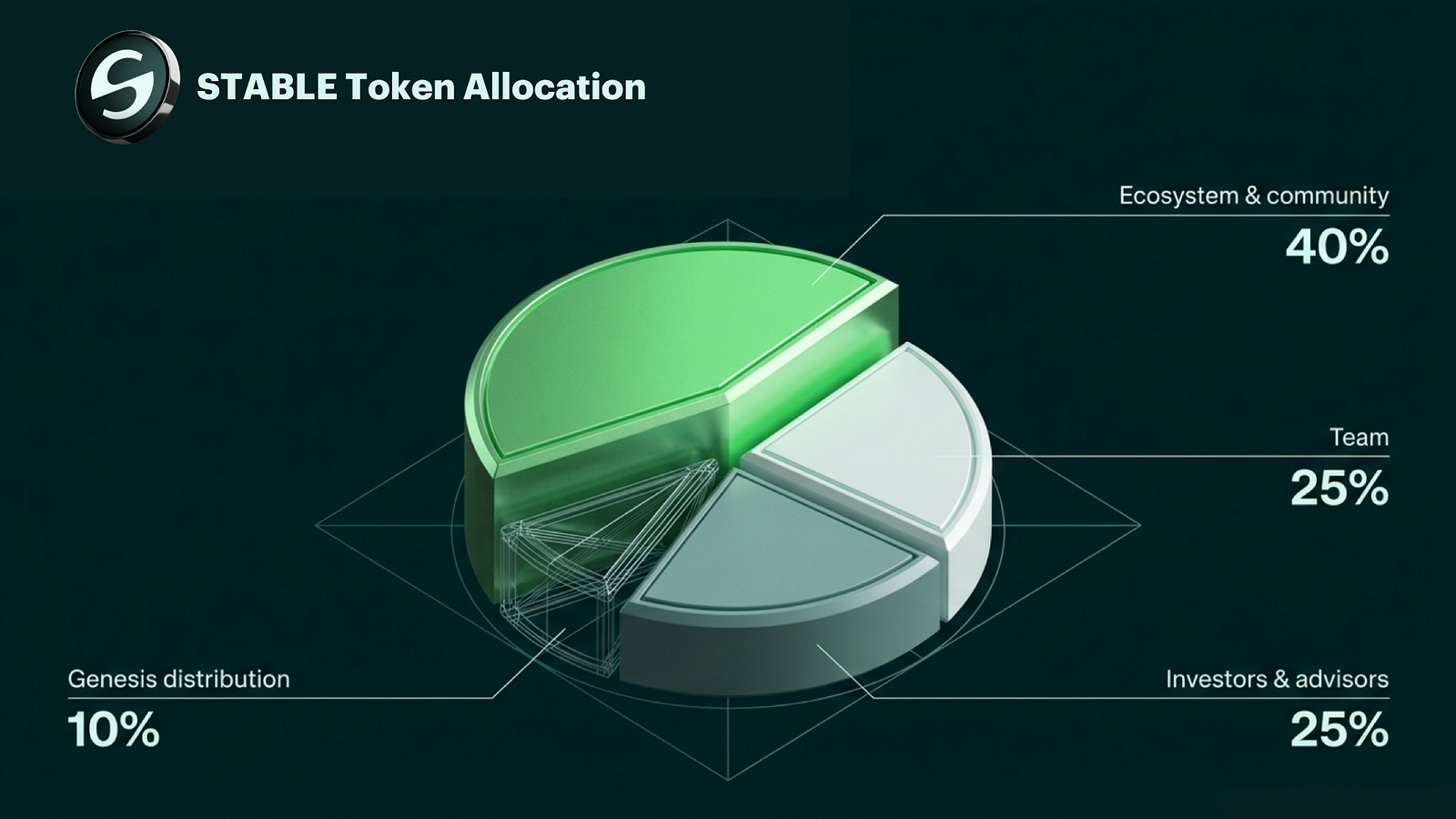
–Genesis Distribution (10%): ใช้กระตุ้นการใช้งานช่วงเริ่มต้น แจก Airdrop ทำแคมเปญร่วมกับศูนย์ซื้อขาย และเพิ่มสภาพคล่องให้ตลาด
–Ecosystem & Community (40%): ทุนสนับสนุนผู้พัฒนา (Grants), เชื่อมต่อพาร์ทเนอร์ระบบชำระเงิน, จัดแฮกกาธอน และให้รางวัลผู้ใช้งานเพื่อการเติบโตระยะยาว
–Team (25%): จัดสรรให้ทีมผู้ก่อตั้ง วิศวกร และนักวิจัย เพื่อสร้างแรงจูงใจในการพัฒนาเครือข่ายระยะยาว
–Investors & Advisors (25%): จัดสรรสำหรับกลุ่มผู้ร่วมระดมทุนและที่ปรึกษาของโปรเจกต์
ข้อมูลน่าสนใจด้านราคาของ STABLE
ข้อมูลจากเว็บไซต์ CoinMarketCap เมื่อวันที่ 6 ก.ค. 2026 เหรียญ STABLE มีมูลค่าตามราคาตลาด (Market cap) ที่ 832,083,456.88 ดอลลาร์สหรัฐฯ หรือประมาณ 27,695,657,545.11 บาท
ณ เวลาที่เขียนบทความนี้ เหรียญ STABLE ซื้อขายกันอยู่ที่ราคาประมาณ 0.03433 ดอลลาร์ หรือประมาณ 1.14 บาทต่อ 1 STABLE โดย STABLE เคยทำราคาสูงสุด (All-time high) ที่ 0.04565 ดอลลาร์ หรือประมาณ 1.52 บาท ต่อ 1 STABLE เมื่อวันที่ 8 ธันวาคม 2025
เช็กราคาเหรียญได้ที่ bitkub.com
ที่มา: Stable Official Website, Stable White Paper
— — — — — — — — — —
คำเตือน:
-คริปโทเคอร์เรนซีและโทเคนดิจิทัลมีความเสี่ยงสูง ท่านอาจสูญเสียเงินลงทุนได้ทั้งจํานวน โปรดศึกษาและลงทุนให้เหมาะสมกับระดับความเสี่ยงที่ยอมรับได้
-ผลตอบแทนของสินทรัพย์ดิจิทัลในอดีตหรือผลการดําเนินงานในอดีต มิได้เป็นสิ่งยืนยันถึงผลตอบแทน ของสินทรัพย์ดิจิทัลหรือผลการดําเนินงานในอนาคต
— — — — — — — — — —
หากคุณยังเป็นมือใหม่ ค้นหาข้อมูลเพิ่มเติมได้ในบทความ “แหล่งความรู้ มือใหม่หัดเทรดคริปโต เริ่มต้นที่นี่” แล้วมาเริ่มต้นเทรดได้วันนี้ที่ Bitkub Exchange → คลิกสมัครเลย
— — — — — — — — — —
What is Stable (STABLE)? The Layer-1 Blockchain Purpose-Built for Stablecoins
Key Takeaways
– Stable is a specialized Layer-1 blockchain engineered exclusively for stablecoins, utilizing USDT (via LayerZero’s USDT0 standard) as its native gas token instead of volatile assets like ETH or SOL.
– The STABLE token is used strictly for governance and staking, not for gas. Stakers earn sustainable real yield in USDT accumulated from network transaction fees.
– The network features a fixed hard cap total supply of 100 billion tokens with zero inflation and a transparent, long-term vesting schedule.
What is Stable?
Stable is an EVM-compatible Layer-1 blockchain purpose-built to power the stablecoin payment ecosystem and digital commerce. It operates as a dedicated financial settlement layer, facilitating the seamless transfer of value in the form of USDT. The network delivers institutional-grade performance, predictable fee structures, and near-instant transaction finality in under one second.
Unlike traditional general-purpose blockchains, Stable eliminates the friction of gas fee volatility through its unique Single-Token Model. By utilizing USDT0 (pegged 1:1 with USDT) to settle all on-chain gas fees, users no longer need to acquire or hold volatile ecosystem tokens just to execute transactions. Furthermore, its full Ethereum Virtual Machine (EVM) compatibility allows Ethereum developers to easily deploy or migrate existing smart contracts onto StableChain without rewriting any code.
Primary Objective of the Project
Stable was developed to address the needs of a booming stablecoin market that has surpassed $300 billion in 2026, yet still lacks a native infrastructure optimized for its unique use cases. Stable’s ultimate vision is to become the premier “Global Settlement Layer for Digital Dollars,” driving peer-to-peer (P2P) remittances, cross-border payroll systems, corporate treasury management, and stablecoin-native DeFi applications.
Pain Points Solved by the Protocol
Ethereum, the primary home for USDT, takes an average of 3 minutes to finalize a transaction, and its ETH-denominated gas fees are notoriously volatile. This introduces cost unpredictability into a stablecoin payment system that demands absolute precision. While Tron addresses transaction speed and lower costs, it remains a general-purpose network not specifically optimized for stablecoin throughput. Stable solves both issues at the protocol level by implementing native USDT gas fees, sub-second finality, gasless peer-to-peer transfers, and guaranteed blockspace for enterprise operations.
Core Features and Breakthrough Technologies
StableChain is engineered with a specialized financial tech stack where every layer integrates flawlessly to serve both retail users and institutional finance:
– USDT0 Native Gas Model: Following the v1.2.0 upgrade on February 4, 2026, the network directly utilizes USDT0 (LayerZero’s OFT standard) as its gas token, removing the need to wrap or unwrap tokens for fees. Crucially, protocol-level P2P transfers of USDT0 incur zero gas fees, driving down remittance costs to virtually nothing.
– StableBFT Consensus: A Delegated Proof-of-Stake (dPoS) consensus mechanism built on CometBFT. It features a high fault tolerance that can withstand up to one-third of validator nodes failing, while securing sub-second finality ideal for real-time Point-of-Sale (PoS) payments and institutional settlements.
– StableDB (Dual-Database Storage): A dual-database storage system that decouples active states (MemDB) from archival logs (VersionDB). This architecture drastically minimizes data access latency for current transactions and handles massive throughput without dragging down historical data archives.
– Guaranteed Blockspace (Enterprise Lanes): A premium feature allowing corporations to reserve dedicated bandwidth on the blockchain. This ensures critical transactions, such as enterprise payroll or treasury settlements, are processed instantly without delays, even during periods of heavy network congestion.
– StableEarn (RWA Yield Vault): Launched in May 2026, this vault connects idle on-chain USDT to institutional real-world assets (RWA) like US Treasury Bills (thBILL) and gold-backed tokens (thGOLD). Powered by Morpho Protocol blueprints curated by Gauntlet, it is securely backed by Standard Chartered’s Libeara and Wellington Management to stream institutional-grade yield directly to USDT holders.
– Confidential Transfers: A privacy-enhancing feature that encrypts transaction amounts while keeping sender and receiver addresses transparent. It includes a built-in Auditor Key to ensure regulatory compliance, making it the perfect fit for enterprises needing transactional privacy without failing legal compliance audits.
The Team Behind the Protocol
Brian Mehler — CEO
As Chief Executive Officer, Brian Mehler leads Stable’s corporate strategy and public communications. He previously managed a $1 billion blockchain fund at Block.one, the development firm behind the EOS blockchain. His institutional venture background and deep blockchain ecosystem expertise position him perfectly to bridge traditional finance with decentralized economies.
Sam Kazemian — CTO
Sam Kazemian serves as the Chief Technology Officer, orchestrating StableChain’s entire technical architecture. Globally recognized as the founder of Frax Finance — a pioneer in highly innovative fractional-algorithmic stablecoin protocols — Kazemian brings world-class expertise in stablecoin economic design and robust on-chain engineering to the network.
Thibault Reichelt — COO
As Chief Operating Officer, Thibault Reichelt oversees day-to-day execution, business development, and strategic partnerships, coordinating cross-functional performance between the engineering and business expansion teams.
Key Strategic Partners
Stable raised a $28 million Seed Round in July 2025, co-led by Bitfinex and Hack VC. Notable participants include heavyweights like Franklin Templeton, PayPal Ventures, Castle Island Ventures, and Susquehanna. The project’s advisory board features Tether CEO Paolo Ardoino, Anchorage Digital CEO Nathan McCauley, Gabriel Abed, and renowned investor Bryan Johnson. On the enterprise front, Stable actively collaborates with Anchorage Digital, PayPal, and Standard Chartered via its Libeara platform.
What is the STABLE Token?
It is critical to distinguish that STABLE is not a stablecoin. Instead, it functions as the native governance and security token of the StableChain network, establishing a clear separation of utility from USDT.
While USDT handles gas and transactional settlements, STABLE drives network security and decentralization. This dual-token architecture ensures retail users can seamlessly navigate the blockchain without ever exposing themselves to market volatility. The core utilities of the STABLE token include:
– Validator Staking: Token holders can stake or delegate their STABLE to trusted validators, securing the network via the StableBFT consensus model.
– USDT Staking Rewards: Departing from traditional governance tokens that emit inflationary native supply, STABLE stakers receive real-yield rewards paid out in USDT sourced directly from the network’s accumulated gas fees.
– Protocol Governance: STABLE serves as the voting mechanism for decentralized protocol changes, allowing the community to vote on network parameters, system upgrades, and Stable Foundation grant allocations.
– Ecosystem Alignment: The token functions as an incentive tool to attract top developers, validators, and builders through specialized ecosystem grants and foundation partnerships.
Tokenomics and Token Allocation
STABLE features a hard-capped maximum supply of 100,000,000,000 (100 billion) tokens with zero inflation. Staking rewards are driven purely by active network adoption and USDT gas utility rather than printing new tokens. The token supply allocation is structured as follows:
– Genesis Distribution (10%): Deployed to bootstrap early network activity, provide initial market liquidity, fund community airdrops, and incentivize launch campaigns with exchanges and ecosystem partners.
– Ecosystem & Community (40%): Administered via developer grants, user onboarding initiatives, payment partner integrations, on-chain activity rewards, hackathons, and critical infrastructure upkeep.
– Team (25%): Allocated to founding members, engineers, and researchers to ensure long-term, multi-year alignment with the ecosystem.
– Investors & Advisors (25%): Reserved for fundraising rounds and early strategic advisory support.
STABLE Market Data and Price Performance
According to CoinMarketCap data as of July 6, 2026, the STABLE token commands a market capitalization of $832,083,456.88 USD, or approximately 27,695,657,545.11 Baht.
At the time of writing, the STABLE token is trading at approximately $0.03433 USD, or about 1.14 Baht per 1 STABLE. STABLE recorded its all-time high (ATH) at $0.04565 USD, or approximately 1.52 Baht per 1 STABLE, on December 8, 2025.
Check real-time cryptocurrency prices today at bitkub.com
Source: Stable Official Website, Stable White Paper
— — — — — — — — — —
Disclaimer:
- Cryptocurrency and digital tokens involve high risks; investors may lose all investment money and should study information carefully and make investments according to their own risk profile.
-Past Returns does not guarantee future returns/performance.
— — — — — — — — — —
Start your crypto trading journey today! If you’re new to the space, get all the information you need in our guide, “Crypto Trading for Beginners: Start Here.”
Ready to trade? Sign up now on Bitkub Exchange → Click to register!
Source:
Medium