Blog
ทำความรู้จัก Block Street (BSB) เจาะลึกโปรโตคอลแก้ปัญหา Liquidity ให้ตลาด RWA
ตลาดหุ้นและพันธบัตรที่ถูกแปลงเป็นโทเคน (Tokenize) กำลังเติบโตอย่างรวดเร็ว แต่มีปัญหาเดียวที่ยังแก้ไม่ได้ คือสภาพคล่องที่กระจัดกระจายอยู่ตามแพลตฟอร์มต่างๆ โดยไม่มีใครเชื่อมเข้าหากัน สำหรับ Block Street เป็นหนึ่งในโครงสร้างสำคัญ ที่จะเข้ามาสร้างชั้นสภาพคล่องเดียวที่รวมทุกแพลตฟอร์มมาไว้ด้วยกัน แล้วนำการซื้อขายระดับสถาบันมาวางบนบล็อกเชนให้ทุกคนเข้าถึงได้
Key Takeaways
–Block Street คือ Unified Liquidity Layer สำหรับตลาดทุน On-Chain โดยเฉพาะ Tokenized Equities และ RWA
–ระบบทำงานผ่านสองชั้นหลัก คือ Aqua สำหรับ Cross-Protocol Liquidity และ Everst สำหรับ Lending และ Leverage
–ก่อตั้งโดย Hedy Wang อดีตนักกลยุทธ์ Quant จาก Apollo และ Point72 ระดมทุนได้ 11.5 ล้านดอลลาร์นำโดย Hack VC
–BSB Token ใช้ได้ทั้ง Governance, Fee Discounts, Collateral บน Everst และ Buyback and Burn จากรายได้โปรโตคอล
–Total Supply 1 พันล้าน BSB, TGE Circulating Supply 20.775% มีโครงสร้าง Vesting ยาวนานสูงสุด 5 ปีในบางกลุ่ม
Block Street คืออะไร ?
Block Street คือโปรโตคอล Liquidity Infrastructure ที่ออกแบบมาเพื่อรองรับการเติบโตของตลาดทุนแบบ On-Chain โดยเฉพาะ Tokenized Equities และ Real-World Assets (RWAs) โปรเจกต์นิยามตัวเองว่าเป็น Unified Liquidity Layer ชุดแรกที่เชื่อมโยงสภาพคล่องที่กระจัดกระจายบนหลายบล็อกเชน เข้าหากัน และนำกลไกการซื้อขายแบบสถาบัน เช่น Request-for-Quote (RFQ) มาใช้บนบล็อกเชนแทนที่จะพึ่ง Automated Market Maker (AMM) แบบดั้งเดิม
Block Street ต้องการเป็นชั้นโครงสร้างพื้นฐานที่เชื่อมตลาดหุ้น Tokenized, RWA และ DeFi เข้าด้วยกัน มีเป้าหมายในระยะยาวคือการสร้างตลาดทุนแบบ On-Chain ที่มีความลึกของสภาพคล่อง Spread ที่แคบ และคุณภาพการทำงานที่เทียบเท่าตลาดดั้งเดิม เพื่อเปิดประตูให้นักลงทุนสถาบันเข้ามาในระบบ DeFi ได้อย่างจริงจัง
Block Street ช่วยแก้ไขปัญหาอะไรบ้าง ?
ในปัจจุบัน Tokenized Equities และ RWA ที่ถูกสร้างบน Blockchain ต่างๆ ยังมีสภาพคล่องที่แตกกระจายอยู่ตามแพลตฟอร์มต่างๆ และบล็อกเชนอื่นๆนับสิบ ทำให้เกิด Slippage สูงสำหรับ Order ขนาดใหญ่ Price Discovery ที่ไม่สม่ำเสมอ และคุณภาพการทำงานที่ต่ำกว่าตลาดดั้งเดิมมาก ปัญหาเหล่านี้เป็นอุปสรรคหลักที่ขัดขวางไม่ให้นักลงทุนสถาบันเข้ามาใช้งาน DeFi อย่างเต็มตัว
ฟีเจอร์และเทคโนโลยีโดดเด่น
Block Street แตกต่างจากโปรโตคอล DeFi ทั่วไปตรงที่ออกแบบสถาปัตยกรรมมาเพื่อตลาดทุนสถาบันโดยเฉพาะ ดังนี้
– Aqua: Cross-Protocol Liquidity Network เป็นชั้น Liquidity หลักที่รวมสภาพคล่องจากบล็อกเชน และ Issuer หลายรายไว้ในที่เดียว ใช้ระบบ Request-for-Quote (RFQ) ใช้วิธี Cryptographic และยืนยัน On-chain ป้องกันการบิดเบือนราคา รองรับการซื้อขาย Tokenized Stocks เช่น AAPL, TSLA, NVDA และ MSTR แล้วในปัจจุบัน
– Everst: On-Chain Lending และ Capital Efficiency เป็นชั้น Lending ที่ผสาน Tokenized Equities กับกระแสทุนคริปโตเข้าด้วยกัน รองรับการ Borrow, Hedging และการนำ Capital กลับมาใช้ใหม่ ผู้ใช้สามารถนำ BSB Token มาวางเป็น Collateral เพื่อยืม Tokenized Stocks ได้โดยไม่ต้องขายสินทรัพย์
– Hybrid Liquidity Engine: ผสมกลไก Off-chain Market Making เข้ากับ On-chain Settlement ทำให้ได้ทั้งความเร็วและความโปร่งใสในคราวเดียวกัน ตอบโจทย์ทั้งนักลงทุนรายใหญ่ที่ต้องการ Deep Liquidity และนักลงทุนรายย่อยที่ต้องการ Access ที่ง่าย
– Multi-Chain Architecture ด้วย LayerZero: BSB Token ทำงานได้บน Ethereum, BNB Smart Chain และ Monad ผ่าน LayerZero Protocol ทำให้ผู้ใช้เลือก Network ตามความสะดวกได้โดยไม่ต้องเปลี่ยน Ecosystem
– Security: Smart Contract ของ Block Street ผ่านการ Audit โดย Halborn Security บริษัทตรวจสอบความปลอดภัยบล็อกเชนชั้นนำ พร้อมระบบ Compliance ระดับ Enterprise ที่รองรับข้อกำหนดด้านกฎหมายสำหรับ Tokenized Securities
– Everst Retail Interface: ด้านผู้ใช้ทั่วไป แพลตฟอร์ม Retail ของ Block Street ดึงดูดผู้ใช้งานได้กว่า 1.2 ล้านรายในช่วง Pilot Phase สะท้อนความต้องการที่แท้จริงของตลาดสำหรับการซื้อขายสินทรัพย์ Tokenized
ใครคือผู้อยู่เบื้องหลัง?

Hedy Wang — CEO และ Co-Founder
ผู้ก่อตั้งหลักที่นำประสบการณ์จากวงการการเงินดั้งเดิมมาสู่โลก DeFi โดย Hedy Wang เคยเป็นผู้นำกลยุทธ์ Quantitative Portfolio ที่ Apollo Global Management และ Point72 Cubist Systematic Strategies กองทุน Hedge Fund ที่ใหญ่ที่สุดในโลก นอกจากนี้ยังดำรงตำแหน่ง Risk Lead ที่ Capital One รับผิดชอบพัฒนา Financial Risk Model ขนาดใหญ่
โทเคน BSB คืออะไร?
BSB คือ Native Utility และ Governance Token ของระบบนิเวศ Block Street ออกในรูปแบบ ERC-20 บน Ethereum และ BEP-20 บน BNB Smart Chain แบบ Cross-chain ผ่าน LayerZero ไปยัง Monad Token นี้ออกแบบมาเพื่อ Incentives, Governance และ Liquidity Participation ของผู้เข้าร่วมในโปรโตคอล
– Governance: ผู้ถือ BSB มีสิทธิ์เสนอและโหวตในพารามิเตอร์สำคัญของโปรโตคอล เช่น โครงสร้างค่าธรรมเนียม, Risk Model, การจัดสรร Treasury และการ Onboard สินทรัพย์ประเภทใหม่
– Fee Discounts: การถือ BSB ให้ส่วนลดค่าธรรมเนียมในการซื้อขายบนแพลตฟอร์ม Aqua และการใช้งาน Everst สร้าง Utility โดยตรงสำหรับนักเทรดที่ Active
– Collateral บน Everst: ผู้ใช้สามารถนำ BSB ไปวางเป็น Collateral เพื่อยืม Tokenized Stocks และสินทรัพย์อื่นๆ ในโปรโตคอล Everst โดยไม่ต้องขาย BSB ที่ถืออยู่
– Buyback and Burn: ส่วนหนึ่งของค่าธรรมเนียมการซื้อขายที่เกิดขึ้นบนแพลตฟอร์มถูกนำไปซื้อคืนและเผา BSB สร้าง Deflationary Pressure ที่ผูกติดกับ Volume ของโปรโตคอลโดยตรง
– Premium Access: การ Stake BSB ในระดับต่างๆ ให้สิทธิ์เข้าถึง Leverage Tier ที่สูงขึ้น, Priority RFQ Routing และพารามิเตอร์ขั้นสูงบน Everst
Tokenomics และการจัดสรรเหรียญ
BSB มี Total Supply และ Max Supply ที่ตายตัวที่ 1,000,000,000 BSB บน Ethereum (ERC-20) และ BNB Chain (BEP-20) พร้อมกัน ณ วัน TGE วันที่ 4 มีนาคม 2026 มี Circulating Supply เริ่มต้นที่ 20.775% หรือ 207,750,000 BSB
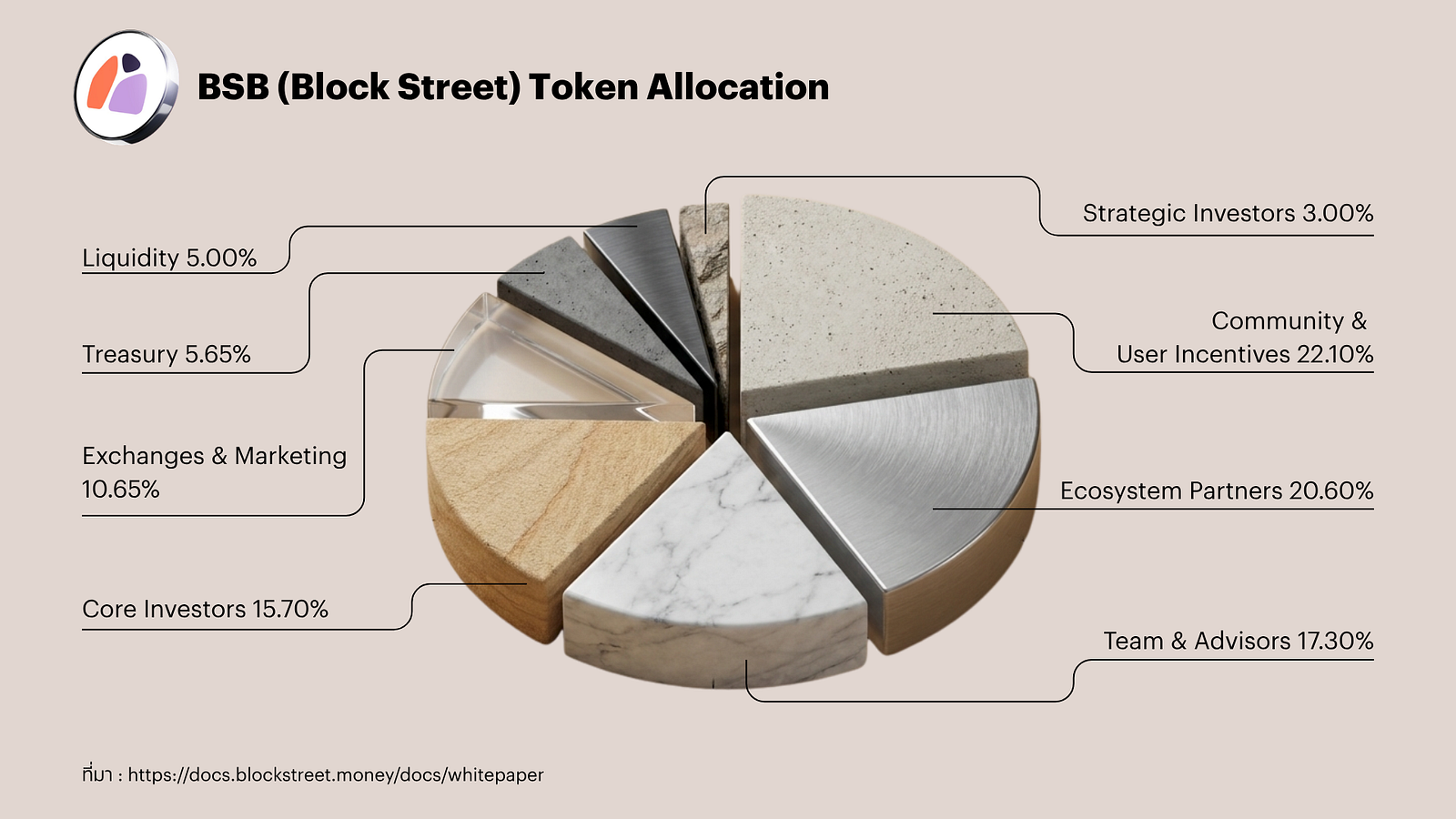
– Community & User Incentives 22.10% โดยปลดล็อค 3.125% ในช่วง TGE ส่วนที่เหลือจะอยู่ในช่วง Vesting ระยะเวลา 5 ปี
– Ecosystem Partners 20.60% โดยปลดล็อคที่ 2% ในช่วง TGE ส่วนที่เหลือ Vesting ระยะเวลา 5 ปี
– Team & Advisors 17.30% มี Cliff Period ก่อน Linear Vesting ระยะยาว
– Core Investors 15.70% มี Cliff Period ก่อน Structured Vesting
– Exchanges & Marketing 10.65% ปลดล็อค 100% ในช่วง TGE เพื่อรองรับ Launch Liquidity
– Liquidity 5.00% ปลดล็อค 100% ในช่วง TGE เพื่อ Seed Trading Pools
– Treasury 5.65% มี Cliff Period ก่อน Extended Vesting ระยะยาว
– Strategic Investors 3.00% มี Structured Vesting
ข้อมูลน่าสนใจด้านราคาของ BSB

ข้อมูลจากเว็บไซต์ CoinMarketCap เมื่อวันที่ 20 พ.ค. 2026 เหรียญ BSB มีมูลค่าตามราคาตลาด (Market cap) ที่ 161,382,460.7 ดอลลาร์สหรัฐฯ หรือประมาณ 5,277,206,464.89 บาท
ณ เวลาที่เขียนบทความนี้ เหรียญ BSB ซื้อขายกันอยู่ที่ราคาประมาณ 0.7768 ดอลลาร์ หรือประมาณ 25.40 บาทต่อ 1 BSB โดย BSB เคยทำราคาสูงสุด (All-time high) ที่ 1.23 ดอลลาร์ หรือประมาณ 40.22 บาท ต่อ 1 BSB เมื่อวันที่ 20 พฤษภาคม 2026
เช็กราคาเหรียญได้ที่ bitkub.com
อ้างอิง: Block Street Whitepaper, Block Street Official Website, CoinMarketCap
— — — — — — — — — —
คำเตือน:
-คริปโทเคอร์เรนซีและโทเคนดิจิทัลมีความเสี่ยงสูง ท่านอาจสูญเสียเงินลงทุนได้ทั้งจํานวน โปรดศึกษาและลงทุนให้เหมาะสมกับระดับความเสี่ยงที่ยอมรับได้
-ผลตอบแทนของสินทรัพย์ดิจิทัลในอดีตหรือผลการดําเนินงานในอดีต มิได้เป็นสิ่งยืนยันถึงผลตอบแทน ของสินทรัพย์ดิจิทัลหรือผลการดําเนินงานในอนาคต
— — — — — — — — — —
หากคุณยังเป็นมือใหม่ ค้นหาข้อมูลเพิ่มเติมได้ในบทความ “แหล่งความรู้ มือใหม่หัดเทรดคริปโต เริ่มต้นที่นี่” แล้วมาเริ่มต้นเทรดได้วันนี้ที่ Bitkub Exchange → คลิกสมัครเลย
— — — — — — — — — —
What is Block Street (BSB)? The Unified Liquidity Layer for Tokenized Stocks
The tokenized stock and bond market is growing rapidly, but one unresolved issue remains: fragmented liquidity across various platforms with no connection between them. Block Street serves as a critical infrastructure designed to create a single unified liquidity layer that aggregates all platforms, bringing institutional-grade trading to the blockchain for everyone to access.
Key Takeaways
– Block Street is a Unified Liquidity Layer specifically built for the on-chain capital market, focusing on tokenized equities and RWAs.
– The system operates through two main layers: Aqua for cross-protocol liquidity and Everst for lending and leverage.
– Founded by Hedy Wang, a former Quant Strategist at Apollo and Point72, the project raised $11.5 million led by Hack VC.
– The BSB Token is used for governance, fee discounts, collateral on Everst, and buyback-and-burn mechanisms powered by protocol revenue.
– Total Supply is 1 billion BSB, with a TGE circulating supply of 20.775% and a long-term vesting structure of up to 5 years for certain allocations.
What is Block Street?
Block Street is a liquidity infrastructure protocol designed to support the growth of the on-chain capital market, specifically tokenized equities and Real-World Assets (RWAs). The project defines itself as the first Unified Liquidity Layer that connects fragmented liquidity across multiple blockchains. It implements institutional trading mechanisms, such as Request-for-Quote (RFQ), on the blockchain instead of relying on traditional Automated Market Makers (AMMs).
Block Street aims to be the foundational layer bridging tokenized stock markets, RWAs, and DeFi. Its long-term goal is to build an on-chain capital market with deep liquidity, tight spreads, and operational performance equivalent to traditional markets, thereby opening the doors for institutional investors to meaningfully enter the DeFi ecosystem.
What Problems Does Block Street Solve?
Currently, tokenized equities and RWAs issued across dozens of different blockchains and platforms suffer from severely fragmented liquidity. This results in high slippage for large orders, inconsistent price discovery, and execution quality far below traditional markets. These inefficiencies serve as primary roadblocks preventing institutional investors from fully adopting DeFi.
Outstanding Features and Technology
Unlike typical DeFi protocols, Block Street’s architecture is tailored specifically for institutional capital markets:
– Aqua: Cross-Protocol Liquidity Network: The core liquidity layer that aggregates liquidity from multiple blockchains and issuers into a single venue. It utilizes a Request-for-Quote (RFQ) system with cryptographic validation and on-chain settlement to prevent price manipulation. It currently supports trading for tokenized stocks such as AAPL, TSLA, NVDA, and MSTR.
– Everst: On-Chain Lending and Capital Efficiency: A lending layer that bridges tokenized equities with crypto capital, supporting borrowing, hedging, and capital recycling. Users can post BSB tokens as collateral to borrow tokenized stocks without having to liquidate their underlying assets.
– Hybrid Liquidity Engine: Combines off-chain market-making mechanisms with on-chain settlement to deliver both speed and transparency. This caters to both institutional investors requiring deep liquidity and retail investors seeking easy access.
– Multi-Chain Architecture via LayerZero: The BSB token operates across Ethereum, BNB Smart Chain, and Monad via the LayerZero protocol, allowing users to choose their preferred network without switching ecosystems.
– Security: Block Street’s smart contracts have been audited by Halborn Security, a leading blockchain security firm. It also includes an enterprise-grade compliance system to meet legal requirements for tokenized securities.
– Everst Retail Interface: On the consumer side, Block Street’s retail platform attracted over 1.2 million users during its pilot phase, reflecting genuine market demand for tokenized asset trading.
Who is Behind the Project?
Hedy Wang — CEO and Co-Founder The lead founder bringing traditional finance experience to the DeFi space. Hedy Wang previously led quantitative portfolio strategies at Apollo Global Management and Point72 Cubist Systematic Strategies, one of the world’s largest hedge funds. She also served as Risk Lead at Capital One, where she was responsible for developing large-scale financial risk models.
What is the BSB Token?
BSB is the native utility and governance token of the Block Street ecosystem, issued as an ERC-20 token on Ethereum and a BEP-20 token on BNB Smart Chain, with cross-chain functionality extending to Monad via LayerZero. The token is designed for incentives, governance, and liquidity participation among protocol participants.
— Governance: BSB holders have the right to propose and vote on key protocol parameters, such as fee structures, risk models, treasury allocations, and the onboarding of new asset classes.
— Fee Discounts: Holding BSB provides trading fee discounts on the Aqua platform and when utilizing Everst, offering direct utility for active traders.
— Collateral on Everst: Users can use BSB as collateral to borrow tokenized stocks and other assets within the Everst protocol without selling their held BSB.
— Buyback and Burn: A portion of the trading fees generated on the platform is used to buy back and burn BSB, creating deflationary pressure tied directly to protocol volume.
— Premium Access: Staking BSB at various tiers grants access to higher leverage tiers, priority RFQ routing, and advanced parameters on Everst.
Tokenomics and Token Allocation
BSB has a fixed Total Supply and Max Supply of 1,000,000,000 BSB, launched simultaneously on Ethereum (ERC-20) and BNB Chain (BEP-20). On the TGE date (March 4, 2026), the initial circulating supply was 20.775% or 207,750,000 BSB.
— Community & User Incentives (22.10%): 3.125% unlocked at TGE, with the remainder on a 5-year vesting schedule.
— Ecosystem Partners (20.60%): 2% unlocked at TGE, with the remainder on a 5-year vesting schedule.
— Team & Advisors (17.30%): Subject to a cliff period followed by long-term linear vesting.
— Core Investors (15.70%): Subject to a cliff period followed by structured vesting.
— Exchanges & Marketing (10.65%): 100% unlocked at TGE to support launch liquidity.
— Liquidity (5.00%): 100% unlocked at TGE to seed trading pools.
— Treasury (5.65%): Subject to a cliff period followed by an extended long-term vesting schedule.
— Strategic Investors (3.00%): Subject to structured vesting.
Interesting BSB Price Data
According to data from the CoinMarketCap website on May 20, 2026, the BSB token has a market capitalization of $161,382,460.7 (approximately 5,277,206,464.89 THB).
At the time of writing, the BSB token is trading at approximately $0.7768 (approximately 25.40 THB) per 1 BSB. BSB reached its all-time high (ATH) of $1.23 (approximately 40.22 THB) per 1 BSB on May 20, 2026.
Check token prices at bitkub.com
References: Block Street Whitepaper, Block Street Official Website, CoinMarketCap
— — — — — — — — — —
Disclaimer:
- Cryptocurrency and digital tokens involve high risks; investors may lose all investment money and should study information carefully and make investments according to their own risk profile.
-Past Returns does not guarantee future returns/performance.
— — — — — — — — — —
Start your crypto trading journey today! If you’re new to the space, get all the information you need in our guide, “Crypto Trading for Beginners: Start Here.”
Ready to trade? Sign up now on Bitkub Exchange → Click to register!
— — — — — — — — — —
Source:
Medium