5 Economic Risks Threatening Stocks and Bonds in 2026
Why Wall Street is Watching Jamie Dimon's Latest Warning
When the head of America's largest bank speaks, investors pay attention. Jamie Dimon, the Chief Executive Officer of JPMorgan Chase, recently shared his thoughts on the economy. At first glance, things look pretty good.
The United States economy continues to show remarkable strength. Consumer spending remains steady, and businesses are still operating actively. However, Dimon is urging everyone to look beneath the surface.
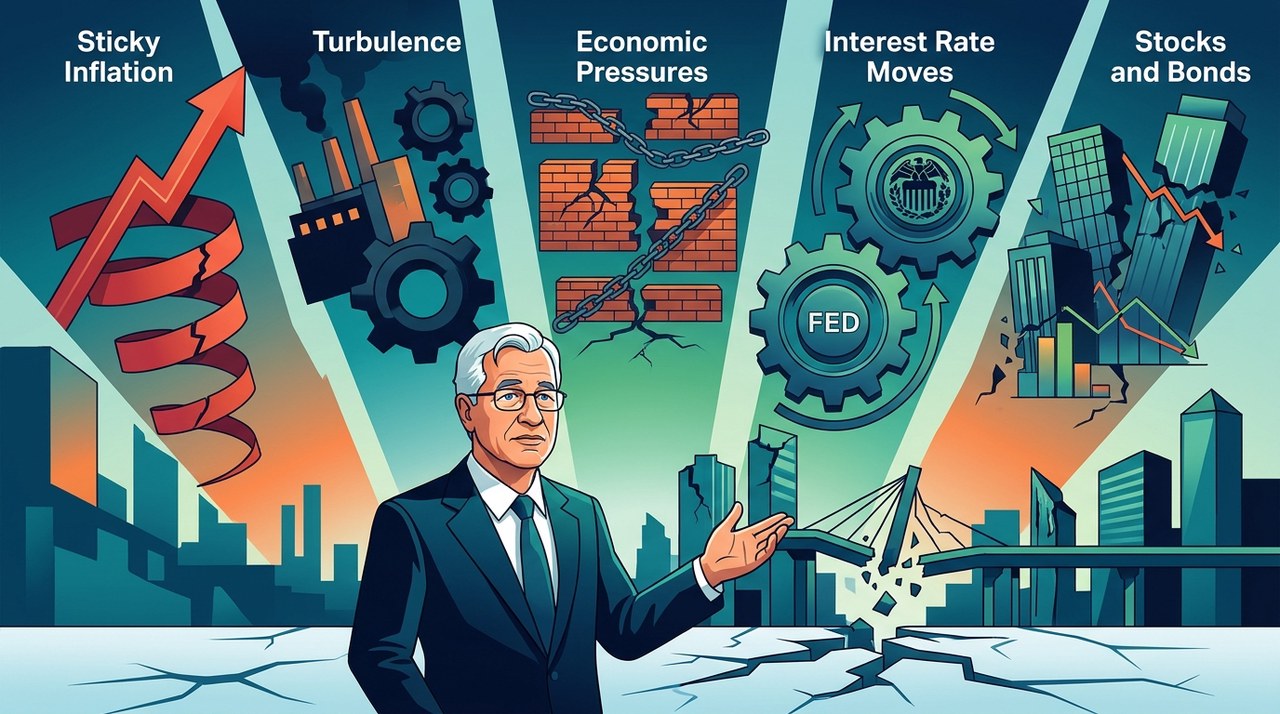
During JPMorgan's third-quarter earnings report, Dimon pointed out five specific economic pressures. He cautioned that these issues are shifting underneath the market's calm exterior. They could cause turbulence for both stock and bond markets as the Federal Reserve weighs its next interest rate moves.
Let us break down each of these five warnings in plain English so you can understand what they mean for the markets.
1. Sticky Inflation: Why Prices Refuse to Fall
The first major concern raised by JPMorgan is persistent, or sticky, inflation. When inflation is sticky, it means prices rise and stay high rather than dropping back down to normal levels.
Official data shows that United States consumer prices grew by 3.7% in September compared to the previous year. A major driver of this price bump was energy. Gasoline prices spiked by an impressive 34.2%.
Why does this matter so much? High gas prices affect almost everything in daily life. When fuel costs more, shipping products gets more expensive, driving up the cost of everyday items.
Sticky inflation hurts everyday family budgets and increases costs for businesses. It also reduces the value of fixed payouts that bond investors count on. Most importantly, high inflation gives central bankers a strong reason to keep interest rates higher for longer.
2. America's Growing $1.99 Trillion Debt Mountain
The second issue on Dimon's radar is the expanding United States government deficit. Simply put, the government is spending far more money than it collects in taxes.
Here are the staggering figures reported for fiscal year 2026:
- Budget Deficit: The annual shortfall reached $1.99 trillion, marking a 12% increase from the $1.78 trillion recorded last year.
- Total Government Spending: Federal spending rose by 6% to hit $7.4 trillion.
- Interest Expenses: Net interest payments on the national debt officially jumped above $1 trillion for the first time.
Paying interest on debt has now become the third-largest single expense for the United States government. To cover this huge cash gap, Washington has to borrow money by issuing massive amounts of government bonds.
Think of it like supply and demand. When the market is flooded with new government bonds, buyers demand higher yields (interest rates) to buy them. Higher yields push down the value of existing bonds and drive up borrowing costs across the entire economy, from mortgage rates to corporate loans.
3. Overpriced Stocks and Artificial Intelligence Questions
The third risk involves expensive stock valuations, particularly in the technology sector. For the past year, excitement around artificial intelligence (AI) has pushed technology stocks to record highs. But now, some investors are starting to worry about a potential slowdown.
Signs of stress are already visible in global stock markets:
- China's Tech Index: China's tech-heavy STAR 50 index lost roughly 40% of its value in under four months.
- United States Nasdaq: The tech-focused Nasdaq index slipped by nearly 6% from its October peak.
Investors are beginning to ask tough questions. Major technology firms are spending billions of dollars building AI infrastructure. Market participants are questioning whether these heavy investments will generate enough profits quickly enough to justify current high stock prices.
4. Rising Interest Rates and Federal Reserve Decisions
The fourth pressure point is the path of interest rates set by the Federal Reserve. The US central bank increased interest rates in September to a range of 3.75% to 4.00%.
Market watchers expect the Federal Reserve to keep rates steady at its late October meeting, followed by a potential rate hike in December.
Higher interest rates act like a heavy weight on economic activity. They make credit cards, auto loans, and corporate debt more costly. When borrowing costs go up, companies tend to earn lower profits, which usually puts downward pressure on stock and bond prices.
5. Geopolitical Tensions and Increasing Energy Costs
The fifth risk stems from global conflicts and geopolitical Instability. Ongoing conflicts in the Middle East have driven crude oil prices above $100 per barrel.
Energy is a foundational input for the global economy. When oil prices spike, transportation, manufacturing, and heating costs all climb. This creates what economists call a supply shock.
If energy costs stay high, the Federal Reserve might feel forced to keep interest rates high to fight inflation, even if economic growth begins to slow down.
The Bright Side: JPMorgan's Strong Balance Sheet
Despite these warning signs, JPMorgan's own financial results show that current conditions remain solid. The bank set aside $2.7 billion in provisions for credit losses during the third quarter.
That figure represents a decline from the $3.4 billion set aside during the same period last year. Setting aside less money for bad loans indicates that borrowers are currently continuing to pay off their debts on time.
However, Jamie Dimon's overall message is one of caution. While bank earnings look strong today, investors need to ask how long this strength can last if all five risks continue to build at the same time.
What These Market Pressures Mean for Investors
Understanding macro trends helps investors keep realistic expectations during changing economic cycles. Macro factors like interest rates, government debt, and energy costs shape liquidity across all global markets.
When central bank liquidity tightens, high-risk assets—including technology stocks and digital currencies—can experience heightened volatility. Conversely, periods of monetary easing or stable inflation often create a more favorable backdrop for risk assets.
Past performance of financial markets or digital assets is not a guarantee of future returns. Market conditions can change rapidly based on macroeconomic factors.
By keeping a close eye on inflation, national debt levels, and Federal Reserve policy decisions, investors can navigate market shifts with greater clarity.
Latest blog posts


Michael Saylor Defends Bitcoin With English Language Analogy
Strategy Chairman Michael Saylor countered critics who argue Bitcoin lacks value because anyone can create a new cryptocurrency.
|
SoFi Discloses 503k Crypto Products and $162M Revenue
SoFi revealed detailed crypto figures for the first time, reporting 503,000 crypto products alongside $162 million in gross crypto revenue.


Crypto Casino Gamdom Faces $15M Bitcoin Ransom Demand
Cyber-extortion group Whitearmor claims to hold 15.4 million user records from crypto casino Gamdom, demanding $15 million in Bitcoin following a prior hot-wallet breach.
|