


XRP Ledger Leads 2026 Commodity Tokenization With $2.2 Billion

A Massive Year for Tokenized Commodities
The crypto world is seeing physical assets transition onto the blockchain at a rapid pace. According to recent data from the RWA Foundation, which cites stats from Token Terminal and RWA.xyz, the XRP Ledger (XRPL) has emerged as the clear leader in the tokenized commodities market for 2026.
Since the start of the year, the XRP Ledger has recorded a massive $2.2 billion in net money inflows for commodity tokenization. This places the network ahead of every other major blockchain platform in this specific sector of Real-World Assets (RWAs). While these capital inflows highlight growing institutional interest in blockchain tech, crypto markets remain volatile and capital flows can shift quickly during changing market cycles.
How XRPL Compares to Other Blockchains
To truly appreciate this performance, it helps to look at how other prominent networks are doing in the tokenized commodity sector out of the $4.2 billion total yearly market flow:
- XRP Ledger: Attracted $2.2 billion in net inflows year-to-date.
- EthereumETH-2.34%: Secured second place with a positive delta of $1.6 billion year-to-date.
- Avalanche: Took third place by bringing in $335.2 million in capital.
- Other Blockchains: BNBBNB+0.71% Chain, Solana, and Coinbase platforms collectively attracted under $100 million combined.
Think of the tokenized commodity market as a single giant pie worth $4.2 billion. XRP Ledger and Ethereum together hold the vast majority of that pie, leaving only small slices for the rest of the industry.
The Power of One Mega Energy Deal
When you dig deeper into the stats, an interesting story emerges. The leadership position of the XRP Ledger relies heavily on a single, massive asset. Roughly 89% of the commodity RWA market on XRPL comes from one institutional deal.
This mega-deal is the JMWH fund by the Justoken platform, valued at an incredible $2.23 billion. The fund represents tokenized contracts on electrical energy generation across Latin America. To ensure institutional safety and compliance, the deals are legally structured under both Argentine and United Kingdom legal frameworks.
At present, there are 172 individual on-chain holders participating in this massive energy tokenization fund on the XRP Ledger.
Why Institutional Players Are Choosing XRPL
Why did the creators of a multibillion-dollar energy deal select the XRP Ledger instead of alternative networks? Institutional creators point to two primary advantages:
- Lightning Settlement Speeds: XRPL settles calculations and transfers in just 3 to 5 seconds, making it ideal for high-volume institutional settlements.
- Advanced Token Standards: The network recently deployed a multi-purpose token standard designed to simplify issuing and managing complex real-world financial assets.
Looking at Other Assets on the XRP Ledger
Outside of the massive Justoken energy contract, other tokenized commodity projects on XRPL are more modest. For example, platform Ctrl Alt manages a retail collection of tokenized diamonds, with its single largest position valued at $105 million.
In fact, the Justoken deal is so enormous that it overshadows all other Real-World Assets inside the XRP ecosystem. It surpasses major financial initiatives like:
- RippleXRP-5.40% USDRLUSD+1.66% stablecoin: Holding $896 million.
- OndoONDO+0.08% Finance Tokenized Bonds: Holding $185 million.
Without the $2.23 billion Justoken energy contract, the XRP Ledger would actually drop to 5th place in global commodity tokenization rankings. Nevertheless, with two months remaining in 2026, XRPL's capability to host institutional deals at this scale marks one of the most notable industry breakthroughs of the year.
Understanding Risk and Market Context
The growth of real-world asset tokenization offers an exciting look into how traditional finance and legal structures can merge with public blockchains. However, digital asset markets remain volatile, and concentration in single large deals means network statistics can fluctuate significantly if institutional capital moves.
Past performance of digital assets or past operational results is not an indication of future digital asset performance or future operational results. Investors should carefully study market fundamentals and consult experts before making financial decisions.
Latest blog posts


Bitcoin Slips Following Strong US Jobs Data as Markets React
Bitcoin experienced temporary price pressure following robust US employment reports, while broader equity markets led by chip stocks showed signs of recovery.
|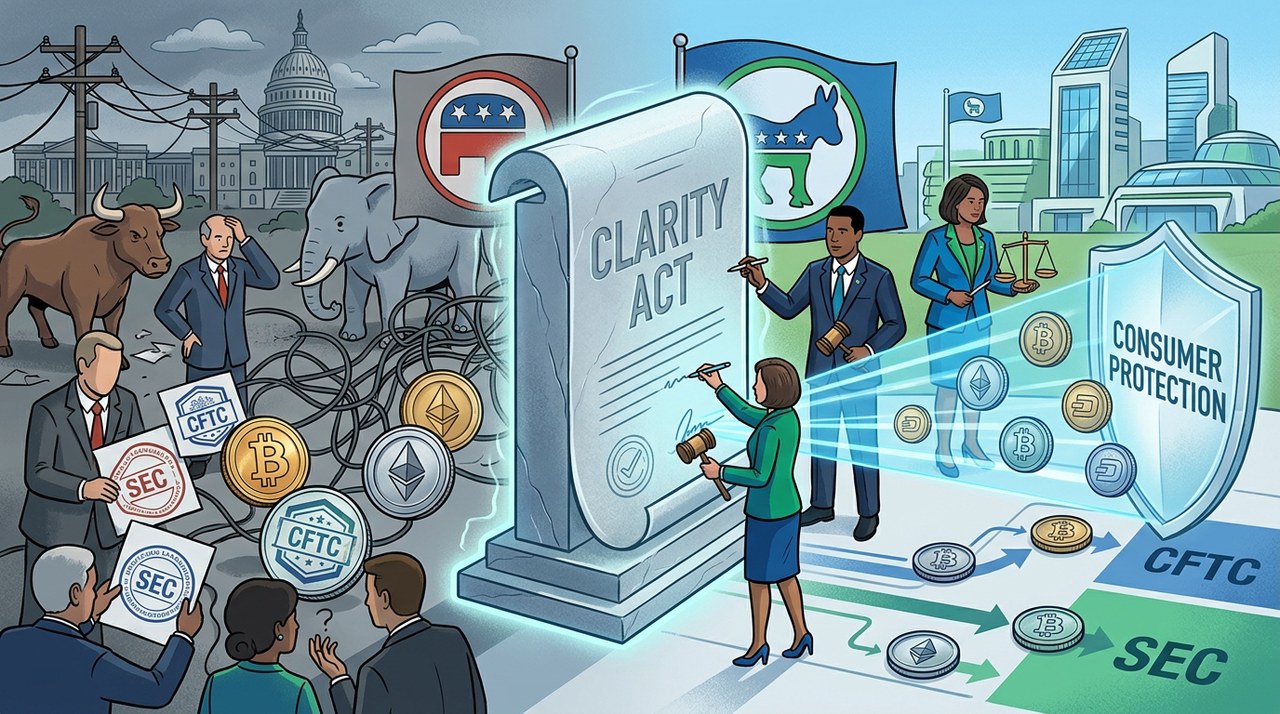
What Democratic Control Means for the CLARITY Act
With Democrats in control of Congress, the CLARITY Act faces new debates over consumer safeguards, ethics, and industry compliance.

Peter Schiff Calls Midterms the Final Pin for Bitcoin
Gold advocate Peter Schiff claims the US midterm election results will pop the Bitcoin bubble, though institutional investors continue buying through spot ETFs.
|