What Democratic Control Means for the CLARITY Act
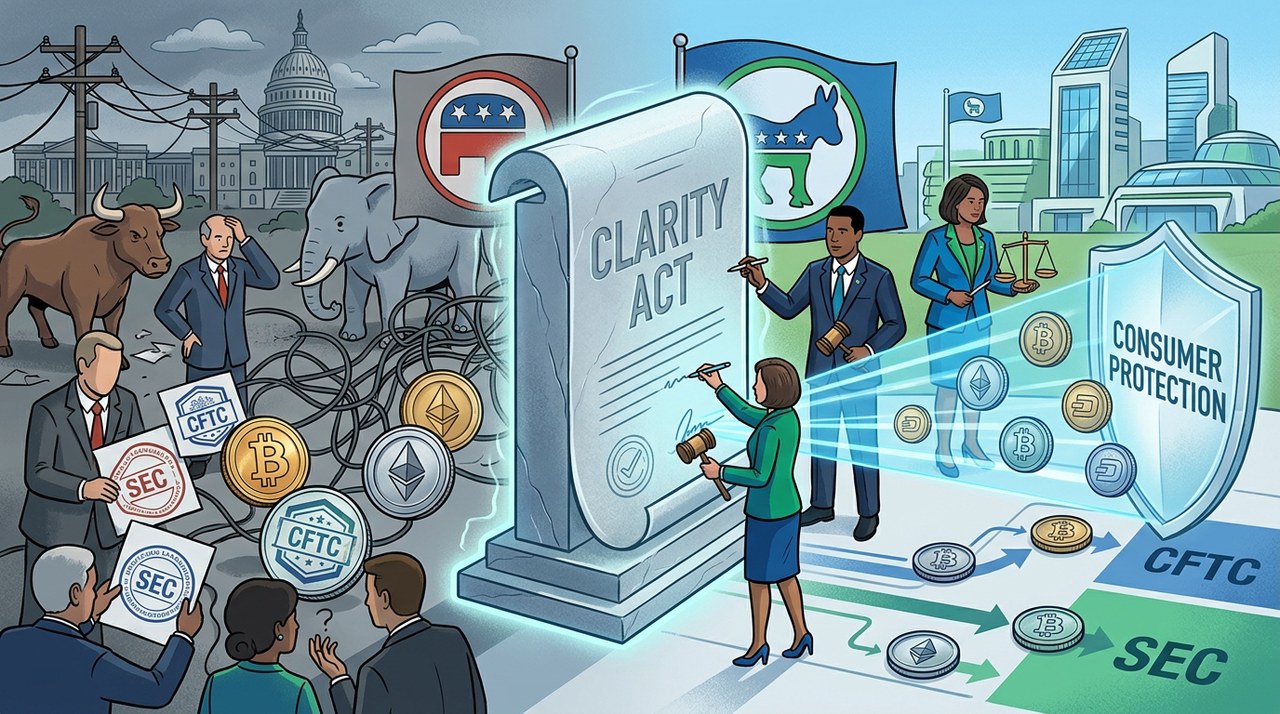
A New Legislative Chapter for Crypto Regulation
Following the US midterm elections, the political landscape in Washington has shifted significantly. With Democrats taking control of Congress, crypto legislation is entering a crucial new phase.
At the center of this transition is the CLARITY Act. This major legislative proposal aims to create a official regulatory framework for digital assets in the United States.
For months, the digital asset industry has pushed for clear rules. However, a shift in congressional leadership means lawmakers are shifting their priorities.
Congress is now placing a much heavier emphasis on consumer safeguards, corporate ethics, and accountability for digital asset platforms.
What Is the CLARITY Act?
Historically, regulatory authority over crypto in the United States has been split between different agencies. The two primary regulators are the Securities and Exchange Commission (SEC) and the Commodity Futures Trading Commission (CFTC).
This split regulatory structure has often created confusion for businesses, developers, and investors. A core goal of the CLARITY Act is to establish clear boundaries between these two agencies.
- Defining clear jurisdictional boundaries between the SEC and the CFTC
- Establishing regulatory oversight standards for cryptocurrency exchanges
- Setting guidelines for stablecoin issuers and backing reserves
- Providing clear rules for digital token categorization
In simple terms, the act attempts to replace uncertain regulatory enforcement with straightforward legal rules. However, the exact details of the bill remain subject to intense legislative debate.
The Shift in Congressional Priorities
Political leadership determines which bills move forward in Congress. Democratic committee leaders generally prioritize consumer protection, market fairness, and strict financial oversight.
Think of it like updating the rulebook for a professional sport. While industry participants might prefer fast-paced play, incoming lawmakers act like strict referees who prioritize strong boundaries.
Key Focus Area: Elevating Consumer Protections
Protecting everyday retail investors is at the top of the legislative agenda. High-profile platform collapses in past years highlighted severe risks when customer protections are weak.
Under Democratic leadership, lawmakers want to ensure that digital asset platforms follow strict safety standards to safeguard user funds.
- Mandatory proof of reserves and independent audits for exchange platforms
- Strict separation of customer funds from company operational capital
- Clear risk disclosures written in plain language for retail token buyers
- Enhanced recovery mechanisms for users during platform insolvency
While these rules create higher compliance standards for platforms, supporters argue that strong protections are necessary to build long-term trust in digital markets.
Key Focus Area: Ethics and Conflicts of Interest
Another central topic for the updated CLARITY Act is financial ethics. Lawmakers are examining potential conflicts of interest within digital asset companies.
In crypto, single entities have sometimes operated as exchanges, custodians, and market makers at the same time. Incoming committee leaders want structural rules to prevent internal trading abuses.
Ethics reform aims to ensure that crypto market operators prioritize platform integrity and investor safety over proprietary trading advantages.
Lawmakers are also focused on corporate lobbying disclosures and executive accountability. The goal is to align digital asset market standards with traditional financial systems.
Concessions the Crypto Industry May Have to Make
Passing major financial legislation requires political compromise. To earn support in a Democratic-led Congress, industry advocates will likely need to yield on several key policy points.
1. Stricter Anti-Money Laundering (AML) Rules
Lawmakers want comprehensive Know-Your-Customer (KYC) identity verification across service providers. This includes expanded reporting rules for transactions involving self-custodial wallets.
2. Increased Oversight for DeFi Protocols
Decentralized finance presents a unique legal challenge because protocols rely on autonomous code. However, lawmakers are exploring ways to hold developers and governance token holders accountable for compliance.
3. Rigorous Token Disclosure Criteria
Instead of granting broad exemptions, the updated bill could set strict requirements for tokens seeking commodity classification. Tokens backed by active developer teams may remain under SEC securities supervision.
Balancing Innovation and Regulatory Risks
The debate surrounding the CLARITY Act reflects the ongoing challenge of encouraging financial innovation while managing market risks.
- Potential Benefit: Clear rules help institutional investors enter the market with legal confidence.
- Potential Benefit: Stronger protections reduce market fraud and build long-term public trust.
- Regulatory Risk: High compliance costs could create barriers for early-stage startups and developers.
- Regulatory Risk: Overly restrictive rules may prompt blockchain innovation to move to other global jurisdictions.
Market participants should remember that digital assets remain volatile and subject to policy changes. While legislative frameworks aim to bring structure, political negotiations can create short-term market uncertainty.
What Lies Ahead for Digital Asset Regulation
As the new congressional session progresses, the CLARITY Act will undergo committee reviews, public hearings, and detailed amendments.
The final wording of the bill will shape how crypto exchanges operate, how tokens are issued, and how consumer safeguards are enforced across the United States.
Latest blog posts


Bitcoin Slips Following Strong US Jobs Data as Markets React
Bitcoin experienced temporary price pressure following robust US employment reports, while broader equity markets led by chip stocks showed signs of recovery.
|
Peter Schiff Calls Midterms the Final Pin for Bitcoin
Gold advocate Peter Schiff claims the US midterm election results will pop the Bitcoin bubble, though institutional investors continue buying through spot ETFs.
|

StockFi Bridges U.S. Stocks and Web3 Ecosystems
StockFi is linking traditional U.S. equities with the Web3 ecosystem on the BNB Smart Chain through tokenized stock products and community meme tokens.
|