


Why Robert Kiyosaki Is Buying Bitcoin and Ethereum
Why Robert Kiyosaki Is Stacking Bitcoin and EthereumETH+4.07%
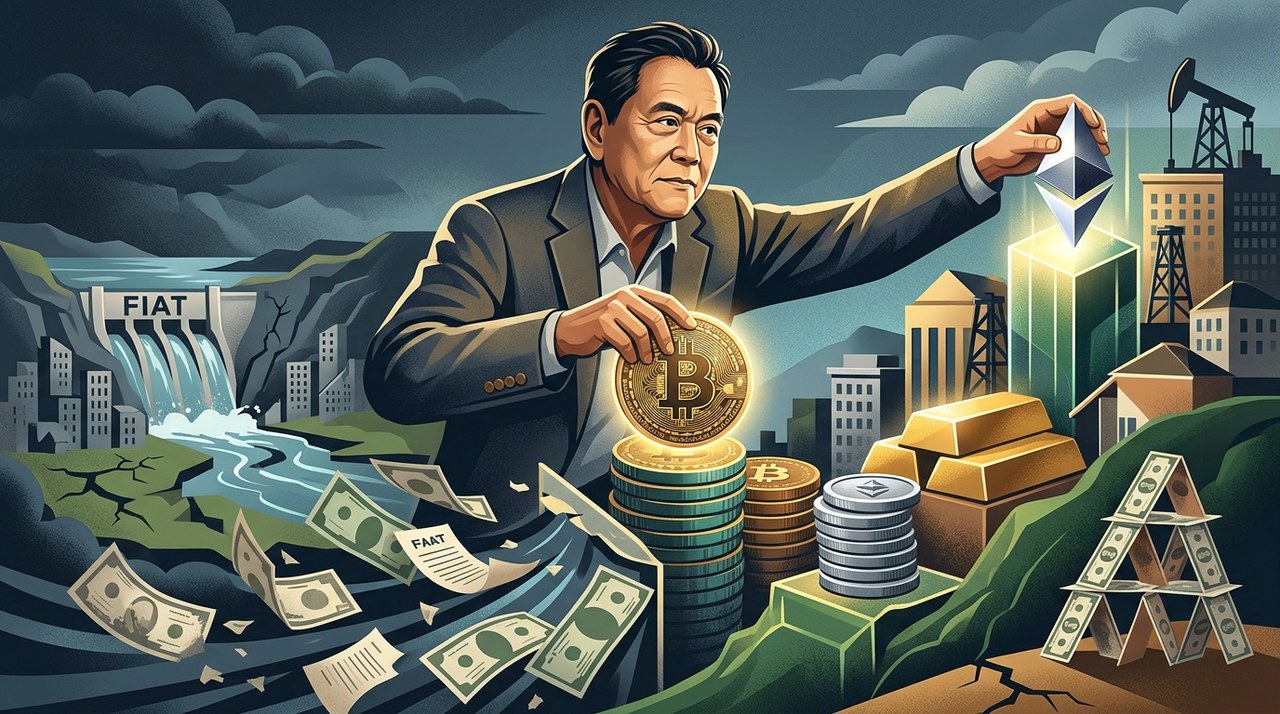
If you have ever read Rich Dad Poor Dad, you know Robert Kiyosaki loves talking about real, tangible assets. In updates published in late November 2026 by financial writer Alex Dovbnya, the famous author revealed why he continues to accumulate Bitcoin (BTCBTC+4.49%) and Ethereum (ETH) alongside physical gold, silver, real estate, and oil.
Kiyosaki is not simply buying on a whim. He believes a major financial crisis could be brewing. In his view, upcoming market turmoil could be larger than the 2008 global financial crash and might even trigger a broader economic slowdown.
To protect his purchasing power, Kiyosaki favors assets that central authorities cannot easily inflate. Let's look closely at his reasoning, his macro warnings, and how he views current market conditions.
The Macro Picture: Debt, Inflation, and 'The Big Print'
At the core of Kiyosaki's strategy is his deep skepticism toward traditional fiat currencies. He frequently criticizes the Federal Reserve and the U.S. Treasury over government borrowing and spending habits.
Kiyosaki warns that mounting debt obligations will force financial authorities to increase currency supply dramatically—a scenario he calls 'The BIG PRINT'.
The BIG PRINT is about to begin.
When central banks expand the money supply significantly, paper currency often loses purchasing power over time. As inflation reduces cash value, investors often seek refuge in scarce assets like gold, silver, Bitcoin, and Ethereum.
Fact-Checking the Numbers: Debt Data vs. Market Claims
While macroeconomic concerns are widely discussed, some of Kiyosaki's figures differ from official statistics. For instance, he stated that U.S. national debt had reached $49 trillion.
Official data from the U.S. Department of the Treasury showed national debt at approximately $40.7 trillion in November 2026. While $40.7 trillion remains a very large figure, it is lower than Kiyosaki's stated estimate.
Furthermore, Kiyosaki suggested that the government prints $1 trillion every 90 days. Financial analysts note that this claim conflates ongoing national debt accumulation with direct liquidity creation by central banks.
Direct Holdings vs. ETFs: Why Kiyosaki Avoids Middlemen
An interesting detail in Kiyosaki's posts is his focus on direct ownership. He explicitly mentioned that he buys real (no ETFs) gold, silver, Bitcoin, and Ethereum.
Why does he prefer direct holdings over exchange-traded funds? While he did not elaborate fully on social media, hard-asset investors typically highlight three main reasons:
- Self-Custody Control: Holding your own private keys for Bitcoin or Ethereum means you hold direct custody of your assets.
- No Intermediary Risk: ETFs rely on fund custodians and brokerage systems, whereas direct holdings eliminate institutional reliance.
- Peer-to-Peer Transferability: Direct crypto holdings can be transferred peer-to-peer at any time without waiting for market trading hours.
Market Timing: 'Never Grab a Falling Knife'
Even though Kiyosaki favors Bitcoin for the long term, he cautioned against buying impulsively during sudden market downturns. On November 20, 2026, he offered a clear warning to his followers.
Never grab a falling knife.
In financial markets, 'catching a falling knife' refers to buying an asset while its price is dropping steeply. Doing so can be risky because prices can fall much further before stabilizing.
Instead of buying mid-crash, Kiyosaki prefers to wait until the market finds a clear floor.
Waiting for the Bitcoin Bottom
Kiyosaki pointed to his past trading decisions as an example of his patient strategy. He recalled purchasing Bitcoin around the $20,000 level after a previous market pull-back.
He stated that he plans to wait for Bitcoin to confirm a bottom again before making his next major purchases.
It is vital for investors to keep in mind that past performance of digital assets is not an indicator of future results. Digital asset prices remain highly volatile, and prior price levels do not guarantee future bottoms. For historical and current market data, check resources like bitkub.com/th/market/BTC.
Context: Recent Trends in the Crypto Market
Kiyosaki's comments come against the backdrop of significant broader market activity across the cryptocurrency ecosystem in late November 2026.
During this period, Bitcoin experienced price volatility, sliding toward the $55,000 mark. Such swings demonstrate how sensitive crypto markets remain to macroeconomic trends and shifting sentiment.
Other major developments reported around the same time include:
- Stablecoin Expansion: RippleXRP+2.81%'s RLUSD stablecoin entered the top five stablecoins by market share, reflecting demand for dollar-pegged digital assets.
- Large Wallet Activity: Market monitors observed significant token movements, including a transfer of 684 billion Shiba Inu (SHIB) tokens between wallets.
- Altcoin Movements: Popular tokens including XRP, HyperliquidHYPE+5.14%, and Dogecoin (DOGEDOGE+2.75%) saw short-term price rebounds as traders responded to technical support levels.
Scenario Analysis: What Could Be Next for Bitcoin and Ethereum?
When assessing potential price movements for Bitcoin and Ethereum, balanced analysis requires examining multiple economic paths rather than expecting a single outcome.
- Expansionary Scenario: If central banks increase liquidity and expand monetary bases to manage national debts, institutional demand for alternative stores of value like Bitcoin could increase.
- Contractionary Scenario: If central banks maintain tight monetary policies or global growth slows down sharply, liquidity across speculative markets could dry up, leading to further price pull-backs.
- Consolidation Scenario: Prices could fluctuate within established range-bound channels while markets evaluate economic indicators, regulatory developments, and adoption metrics.
Key Lessons for Everyday Investors
Robert Kiyosaki's outlook highlights how macro-focused investors view Bitcoin and Ethereum alongside physical commodities. However, individual investors should evaluate their own risk tolerance before making financial moves.
- Do Your Own Research: Avoid making investment decisions based solely on social media commentary or expert predictions.
- Manage Risk: Crypto assets carry high volatility. Never risk funds that you cannot afford to lose.
- Verify Facts: Separate economic statistical realities from commentary or generalized predictions.
Latest blog posts
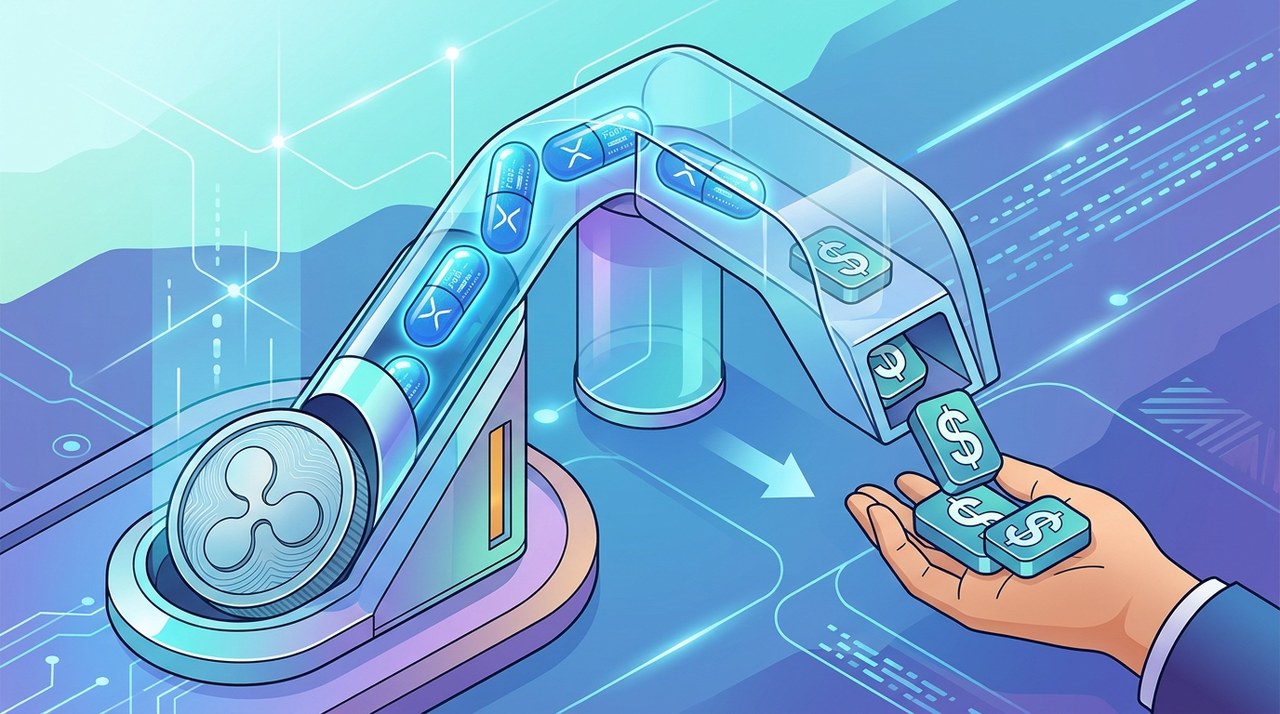

Flare Helps XRP Holders Borrow Dollars Without Selling Tokens
Flare Network's FXRP supply reached 145 million tokens as holders increasingly use their XRP as collateral to borrow US dollar stablecoins across blockchains.
|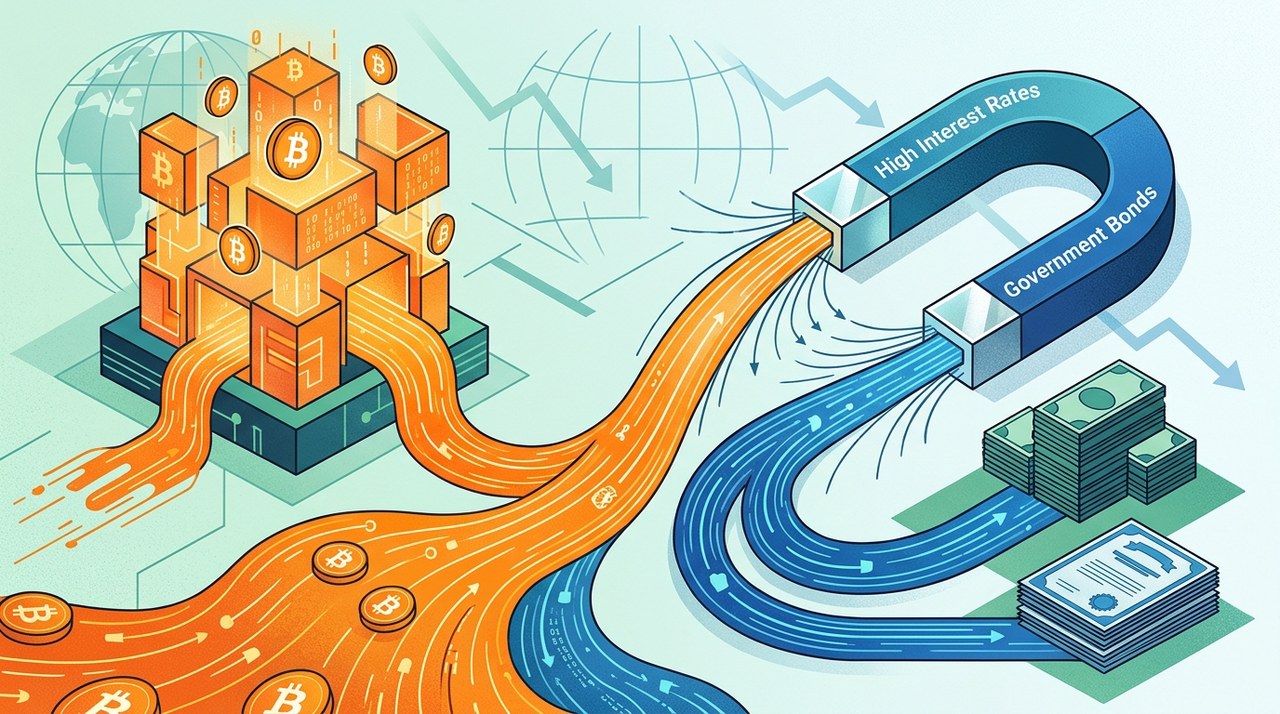
Spot Bitcoin ETFs Shed $1.8 Billion as Outflows Shift
Spot Bitcoin ETFs saw $1.8 billion in weekly outflows as risk-averse investors prepare for potential December interest rate hikes.
|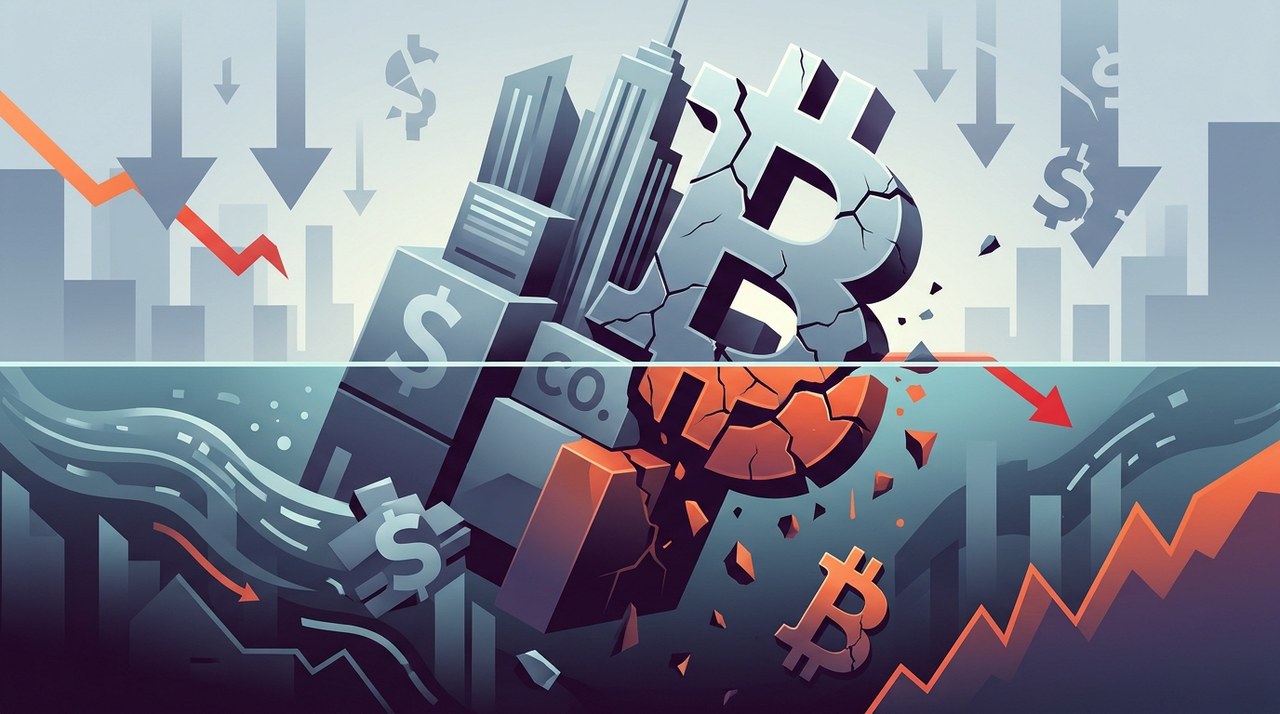
Strategy Bitcoin Holdings Drop 22% Below Average Cost
Strategy's Bitcoin stack is 22% underwater, prompting Peter Schiff to warn of a collapse while company leaders point to strong cash reserves.
|