

Vitalik Buterin Proposes Higher Gas Fees to Scale Ethereum
What is EIP-8037 and Why Does Vitalik Support It?
EthereumETH-2.58% co-founder Vitalik Buterin is stepping forward to defend a new protocol proposal known as EIP-8037. This proposal seeks to increase gas charges for creating accounts, storage slots, and smart contract code on the Ethereum network.
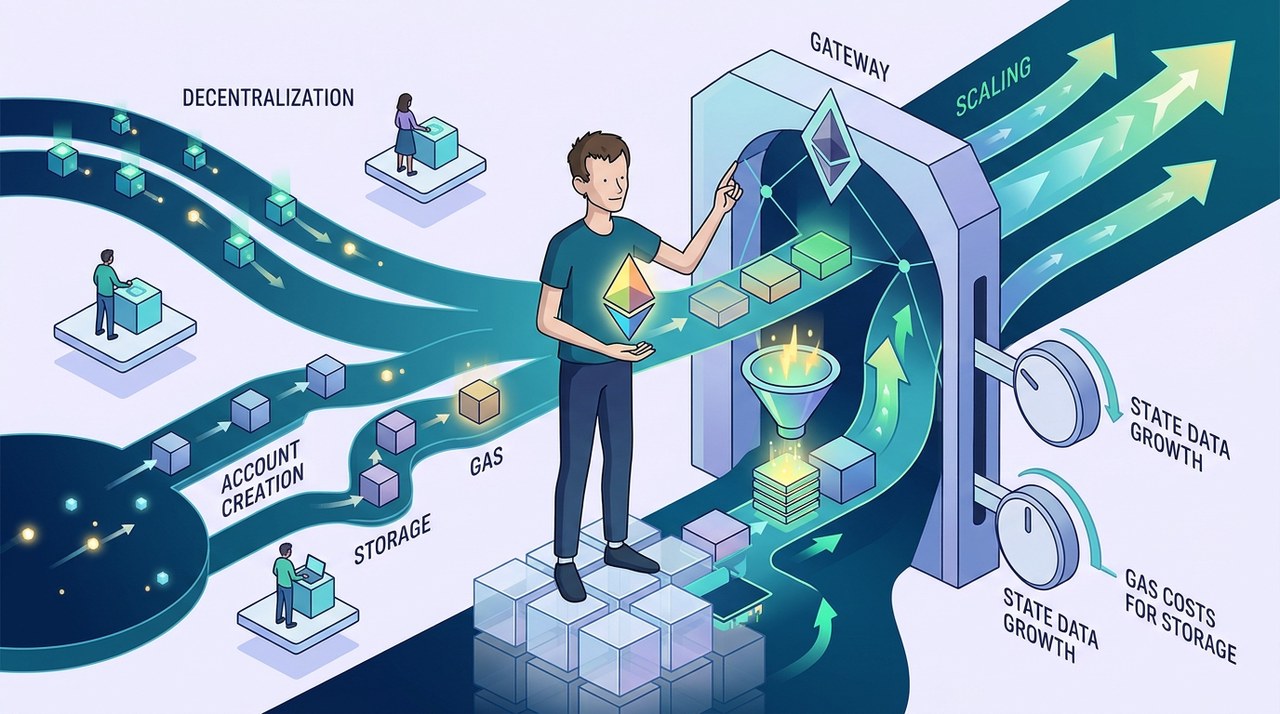
The main goal of this fee adjustment is to keep network data manageable. By slowing down database growth, Ethereum can process far more transactions without making it too expensive or difficult for independent users to run network nodes.
By the Numbers: How Gas Costs Would Change
Under EIP-8037, operations that permanently expand Ethereum's storage footprint will see significant increases in gas resource requirements:
- Creating a new account: Increases from 36,600 gas to 197,900 gas.
- Creating a new storage slot: Increases from 22,100 gas to 110,020 gas.
- Deploying a 24 KiB contract: Increases from 4,947,200 gas to 37,801,488 gas.
- State gas for account creation: Adds a distinct 183,600 state gas charge whenever an operation creates an account, including standard ETH transfers.
It is important to remember that these figures reflect computational gas units. The final dollar fee paid by users will still depend on overall market demand and prevailing gas prices at the time of execution.
State vs Execution: Solving Ethereum's Growth Problem
To understand why Vitalik supports these changes, it helps to distinguish between execution and state on Ethereum. Execution is the processing work required to run transactions, while state refers to the actual database of account balances and smart contract data stored by every node.
Currently, Ethereum's state grows by approximately 110 GiB per year. In an upcoming upgrade named Glamsterdam, planned throughput improvements could boost execution by tenfold. Without EIP-8037, state growth could surge to roughly 1,100 GiB annually, placing a heavy hardware burden on node operators.
The goal of EIP-8037 is to decouple Ethereum’s scaling limits: enable a much higher amount of execution (which is easy to scale), but only a little bit more state size growth (which is hard to scale).
Vitalik noted that this approach represents the most practical way to achieve immediate scaling while maintaining network security and decentralization.
For about 10 years now, Ethereum has followed a simple rule: the gas cost of a resource should reflect the actual burden it imposes on the network.
How the Separate State Gas Reservoir Works
To prevent high storage costs from blocking complex transactions, EIP-8037 introduces a separate reservoir for state gas. This reservoir operates independently from the main execution gas limit, which stays capped at roughly 16.7 million gas per transaction.
When a transaction creates new state, it pays state charges from this dedicated reservoir first. Execution gas is only drawn upon if the state reservoir is exhausted. This architecture preserves the ability for developers to deploy large smart contracts without running out of standard execution gas.
The Compatibility Challenge for Developers
Vitalik candidly acknowledged that raising storage costs creates technical hurdles for existing applications.
But this does not solve every problem.
Applications and cross-chain bridges built with hardcoded gas allowances could experience failures. For example, an OP stack bridge with a hardcoded 40,000-gas limit might allow a transaction without reservoir gas to fail while still marking it as completed on-chain.
To address these risks, developers are considering several potential remedies:
- Adjusting the timing of gas refunds.
- Adding secondary gas reservoirs.
- Exempting legacy contracts while introducing compensating penalties.
Vitalik cautioned against overly radical protocol changes, noting they could delay other essential developments such as quantum safety resistance. Because the Glamsterdam upgrade has already seen schedule shifts, he urged active collaboration with application developers.
Don’t assume gas schedules are set in stone.
He recognized that core developers need to communicate future protocol updates more clearly, suggesting the community publish explicit lists of features expected to remain stable versus those likely to change.
ETH Store-of-Value Thesis vs Network Utility
This fee defense follows statements Vitalik made on November 8, 2026, regarding the primary value driver of Ether (ETH). He argued that ETH should be viewed mainly as a store of value rather than relying strictly on transaction fee burning.
While burning transaction fees reduces supply, Vitalik emphasized that the fundamental value of ETH comes from broader network utility and security. Restraining database growth protects node decentralization, though developers must also retain confidence that smart contracts will function reliably over time.
Market Context and Risk Awareness
At the time of publication on November 16, 2026, ETH was trading around $1,816 (+0.06%), while BTCBTC-2.56% was at $64,743 (+0.24%). Crypto market conditions remain dynamic, and technical upgrades can introduce short-term volatility.
Past performance of digital assets is not a guarantee of future performance. Investors should assess technical updates and market risks carefully before trading. You can review live prices and market data on the Bitkub ETH Market.
Latest blog posts

Coldcard Bitcoin Exploit Explained: How Flaws Survive Audits
A friendly look into how hidden flaws in Coldcard hardware wallets survived years of security audits and what it means for Bitcoin self-custody.
|
US DOJ Targets Crypto Scams in Historic Sweep
The US Department of Justice has charged over 800 defendants in a massive global campaign against international crypto investment fraud.

Ethereum Foundation: AI Is a More Urgent Threat Than Quantum
The Ethereum Foundation highlights that artificial intelligence poses a more immediate risk to blockchain security than future quantum computing capabilities.
|