
Coldcard Bitcoin Exploit Explained: How Flaws Survive Audits
Introduction: Staying Safe in the World of Cold Storage
Have you ever wondered how secure your cryptocurrency really is when stored inside a hardware wallet? Many Bitcoin users trust devices like Coldcard because they offer offline storage away from online hackers.
Coldcard has long been respected by dedicated Bitcoiners who prioritize maximum security. However, revisiting past hardware vulnerabilities shows us that even top-tier security devices can carry hidden flaws.
What makes this situation so notable is that the flaw managed to survive years of professional security audits. Let us break down how this happened and what every crypto owner should know.
How a Flaw Can Hide Through Years of Audits
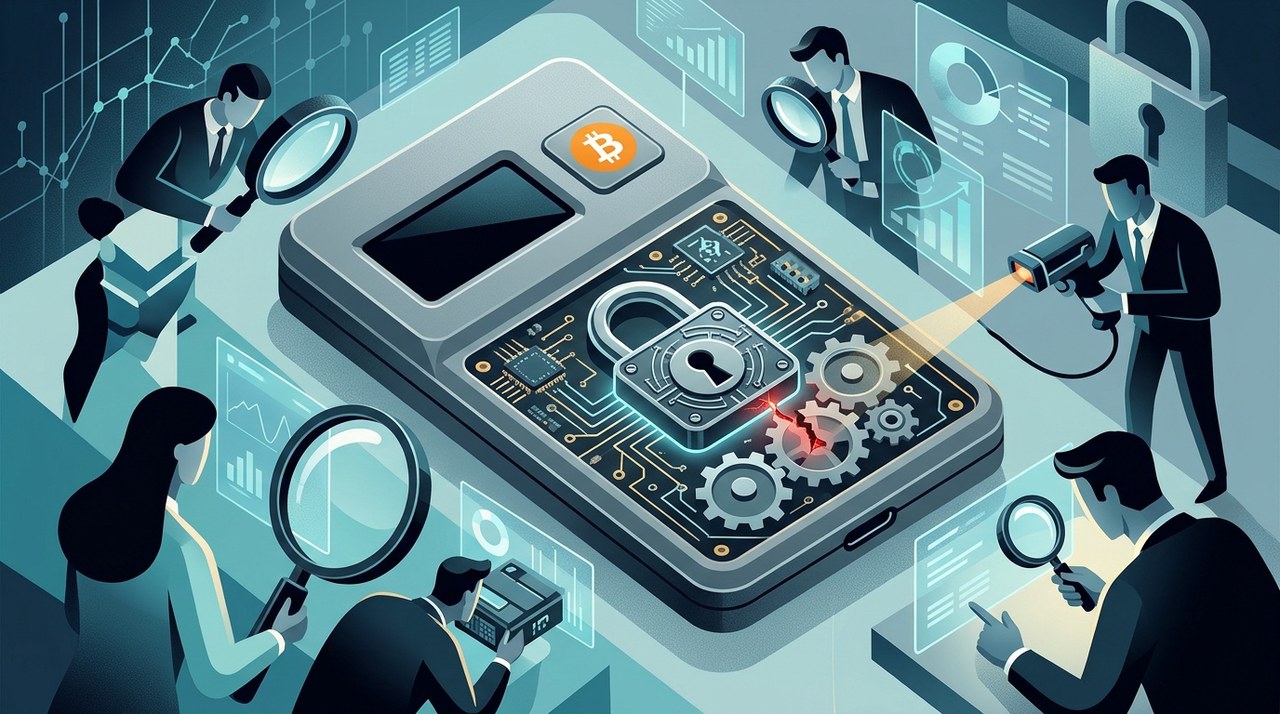
Think of a hardware wallet like a high-tech physical safe inside your home. Even if the safe has thick steel walls, a microscopic issue in the lock mechanism might remain unnoticed for years until someone tests it in an unusual way.
Auditing a crypto hardware wallet requires examining thousands of lines of firmware code, cryptographic math, and hardware components. Developers build strict rules to prevent private keys from ever leaving the offline environment.
In the case of the Coldcard exploit, the issue involved subtle interactions within the firmware code. Security researchers audited the codebase multiple times over several years, but the exact edge-case scenario was hard to spot.
This situation highlights an important principle in cybersecurity: a code audit confirms that experts reviewed the system, but it cannot guarantee that every single bug was caught.
Why Do Professional Audits Miss Bugs?
It is fair to ask why skilled security auditors might miss a vulnerability for so long. There are a few key reasons why complex systems retain hidden risks:
- Complex Code Bases: Firmware must handle key generation, address validation, and transaction signing all at once.
- Unusual Edge Cases: Certain bugs only trigger under very rare combinations of user actions or data formats.
- New Security Discovery Tools: Attack methods evolve over time, allowing researchers to spot vulnerabilities that were unknown when the code was first written.
Because of these factors, the Bitcoin community relies heavily on open-source code reviews and ethical security researchers who test hardware continuously.
Best Practices for Hardware Wallet Security
While discovering firmware flaws can sound concerning, self-custody with a hardware wallet remains one of the safest methods for protecting your digital assets. Here are straightforward steps to keep your funds safe:
- Update Firmware Regularly: Manufacturers regularly release patches to fix discovered security flaws. Always update directly from official manufacturer websites.
- Verify Details on the Device Screen: Always check the receiving address and fee details directly on your hardware wallet screen before confirming.
- Consider Multi-Signature Setup: Using multiple hardware wallets from different manufacturers ensures that a single vulnerability cannot put your entire balance at risk.
- Store Backup Phrases Safely: Keep recovery seeds written down on paper or metal stored in safe, offline locations.
Market Sentiment: Tracking Bitcoin Expectations
Security topics frequently run parallel to general market sentiment. For example, prediction market tracking provides insight into how market participants evaluate Bitcoin (BTCBTC-2.62%) price movements.
Recent prediction data focused on Bitcoin low points for November—with market contracts closing on December 1, 2026 at 04:59 UTC and recording $664.77 in total volume—showed varying market probabilities across price levels:
- $62,500 Level: Estimated at a 100% probability in market projections.
- $65,000 Level: Estimated at a 99% probability.
- $60,000 Level: Estimated at a 97% probability.
- $70,000 Level: Estimated at a 57% probability.
- $55,000 Level: Estimated at a 27% probability.
These numbers represent crowd expectations regarding potential price floors during market shifts. If strong buying demand and positive liquidity persist, Bitcoin may remain above these lower price targets.
Conversely, if macroeconomic pressure or market selling increases, prices could adjust downward toward lower target levels. Prediction market percentages reflect sentiment rather than guaranteed financial outcomes.
To stay informed on market trends and price updates, you can check the Bitkub BTC Market.
Past performance of digital assets is not an indication of future results.
Conclusion: Security is an Ongoing Process
The story of the Coldcard exploit shows that cybersecurity requires constant vigilance. No single audit can solve every issue forever, but continuous updates and active developer communities keep self-custody strong.
By understanding how hardware vulnerabilities work and keeping your devices updated, you can take control of your crypto security with confidence.
Latest blog posts

US DOJ Targets Crypto Scams in Historic Sweep
The US Department of Justice has charged over 800 defendants in a massive global campaign against international crypto investment fraud.


Ethereum Foundation: AI Is a More Urgent Threat Than Quantum
The Ethereum Foundation highlights that artificial intelligence poses a more immediate risk to blockchain security than future quantum computing capabilities.
|
SEC Gives Molecule Green Light for Research Tokens
The U.S. SEC staff decided not to recommend enforcement action against Molecule for its scientific research utility tokens.