US Senators Push Treasury for Fair Stablecoin Rules
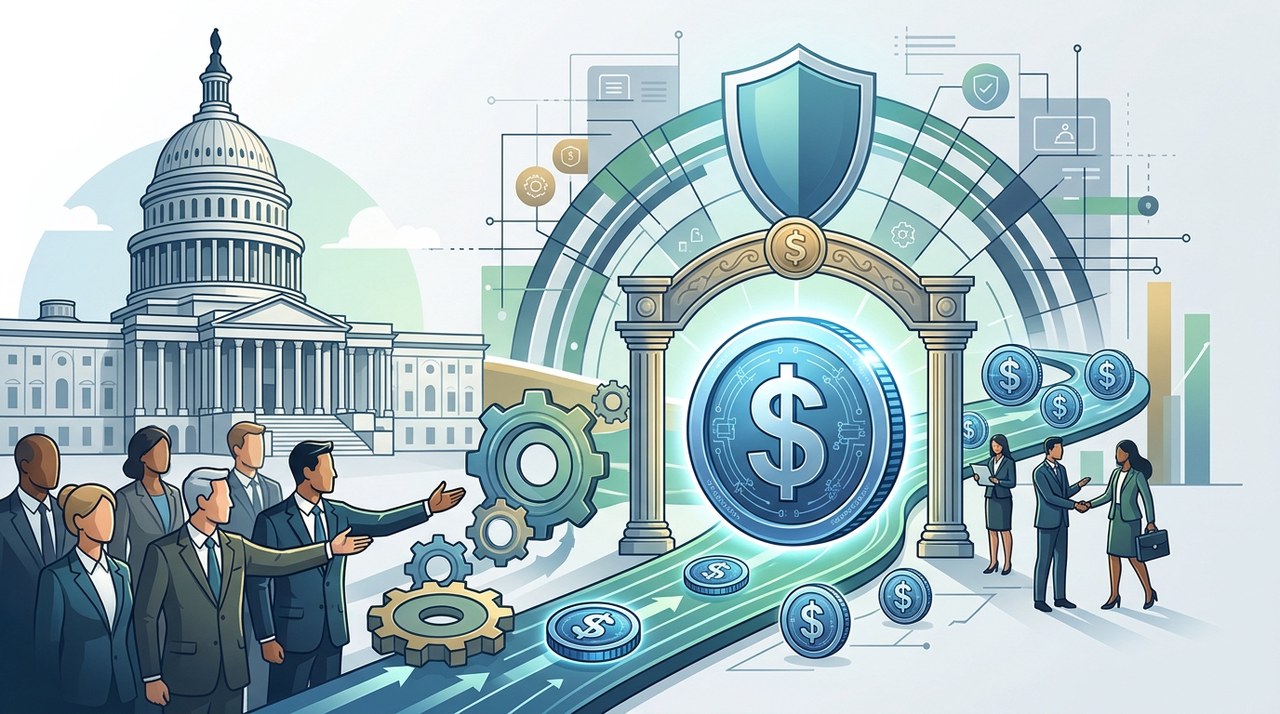
Senators Urge Treasury for Equal Footing on Stablecoins
A group of U.S. Senators is urging Treasury Secretary Scott Bessent to make sure state-licensed stablecoin issuers receive fair treatment under upcoming federal rules. The lawmakers are asking the Treasury Department to grant a safe harbor provision for stablecoin companies that are already operating under established state regulatory frameworks.
This push comes as federal agencies work on implementing the GENIUS Act. Senators want to ensure that existing, state-regulated stablecoin businesses are not left behind or put at a disadvantage as new federal guidelines take effect.
What is the GENIUS Act and Why Does It Matter?
To understand the debate, it helps to look at how stablecoins are regulated in the United States today. Stablecoins are digital assets designed to maintain a fixed value, usually pegged 1:1 to the U.S. Dollar. Because they link traditional money with blockchain technology, Congress has been working to create clear federal guidelines for them.
The GENIUS Act represents part of this broad legislative effort. Its main goal is to set consistent nationwide standards for stablecoin issuers. However, creating new national rules introduces a big challenge: what happens to state-licensed companies that have already been following strict rules for years?
Understanding 'Equal Footing' and the Role of State Rules
Several prominent stablecoin issuers currently operate under state oversight. For instance, the New York State Department of Financial Services (NYDFS) has enforced high compliance standards for digital asset issuers operating in New York for nearly a decade.
When Senators ask for equal footing, they want to ensure that state-regulated issuers can compete fairly alongside institutions that may soon hold federal charters. Without equal footing, state-compliant companies could face unfair operational hurdles or lose market access purely due to administrative shifts.
What is a 'Safe Harbor' Provision?
In legal terms, a safe harbor acts like a protective grace period. It allows companies to continue their regular business operations without fear of legal action while they transition to new regulations.
A safe harbor provision gives state-approved stablecoin issuers the time they need to adapt to new federal requirements without disrupting their services.
If Treasury Secretary Bessent grants a safe harbor, state-regulated issuers will have a clear timeline to update their practices and align with the GENIUS Act. This prevents market confusion and protects both businesses and consumers during the transition.
Federal vs. State Charters: Preserving a Dual Banking Model
The debate reflects the traditional U.S. banking system, which relies on a dual regulatory framework. In traditional banking, institutions can choose between state or federal oversight:
- State Charters: Allow institutions to be supervised by state banking regulators, offering flexibility while enforcing local safety standards.
- Federal Charters: Put institutions under national regulators like the Office of the Comptroller of the Currency (OCC).
- Dual System Balance: Ensures diversity, encourages innovation, and prevents any single authority from monopolizing regulation.
Lawmakers argue that stablecoin oversight should follow this same balanced approach. A single mandatory federal path could harm compliant state issuers that have already invested heavily in risk management and compliance.
Why This Development Matters for Everyday Users
Regulatory discussions around stablecoins may sound technical, but they directly affect everyday crypto users and market liquidity. Stablecoins play a vital role in trading, international payments, and decentralized finance (DeFi).
Clear regulatory frameworks can bring several practical benefits:
- Better Protection: Rules help verify that stablecoins are fully backed 1:1 by high-quality liquid reserves like cash or treasury bills.
- Service Continuity: Prevents sudden shutdowns of widely used stablecoins due to regulatory shifts.
- Market Confidence: Established rules encourage institutional participation and boost overall stability.
It is important to remember that all digital assets carry operational and market risks. While clear regulations help protect consumers, users should always evaluate risks carefully before participating in the market.
Looking Ahead: What Happens Next?
The next step rests with Treasury Secretary Scott Bessent and the Treasury Department. As they work through the details of the GENIUS Act, the crypto industry will watch closely to see if the proposed safe harbor is included.
A balanced framework that respects state oversight while enforcing federal safety standards could serve as a model for digital asset regulation worldwide.
Latest blog posts



Tether Invokes The Big Short in Swipe at S&P Rating
Tether criticized S&P Global after the rating agency kept USDT at its lowest stability score of 5, referencing The Big Short to challenge legacy rating models.
|
Ledger Confirms Tampered Bitcoin Wallets Found in Berlin
Ledger confirmed instances of tampered hardware wallets in Berlin as investigations into hardware spy implants expand globally.
|


 +1
Gonka AI Hit by $1 Million Hack via Ethereum Bridge
Decentralized network Gonka AI lost over $1 million after an attacker exploited its Ethereum cross-chain bridge system.
|