

Tether Invokes The Big Short in Swipe at S&P Rating
What Happened Between TetherUSDT+0.53% and S&P Global?
Tether, the company behind the world's largest stablecoin USDT, has publicly pushed back against legacy credit rating agency S&P Global. The disagreement erupted after S&P Global published its latest Stablecoin Stability Assessment.
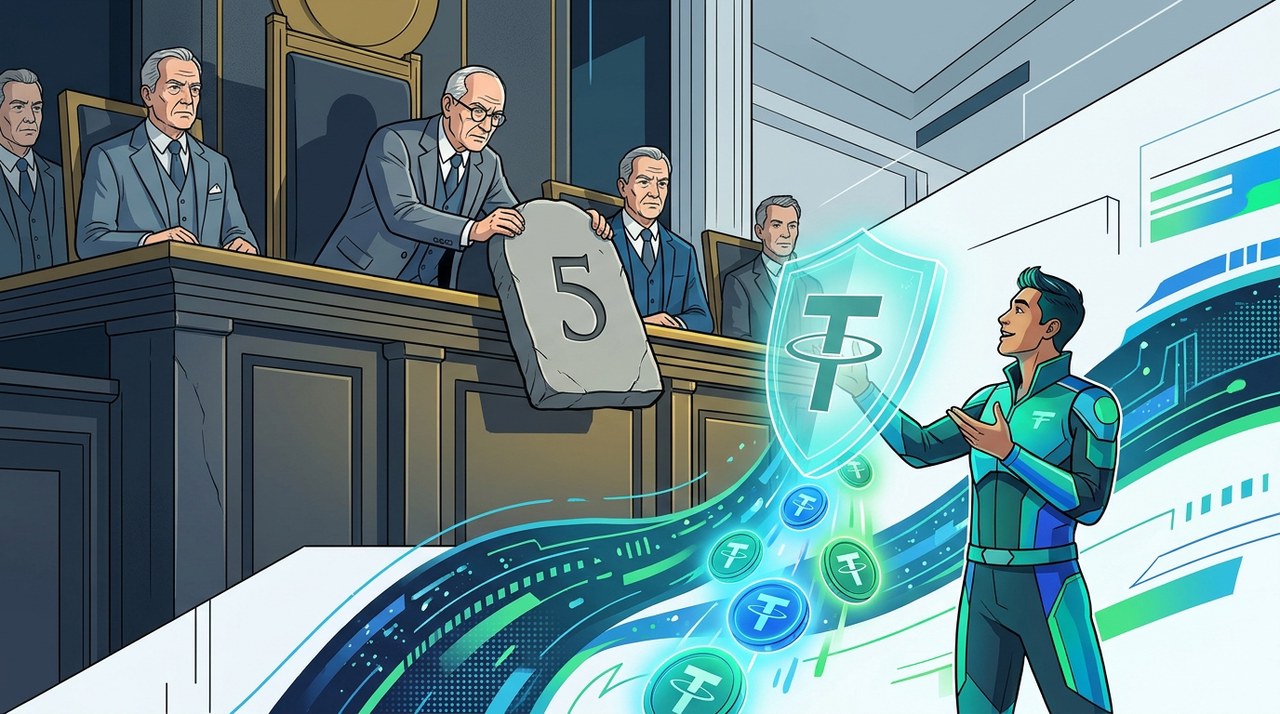
In the updated assessment, S&P Global made no downward adjustment to USDT's score because 5 is already the lowest available score on its rating scale.
Rather than remaining silent, Tether responded with a sharp counter-attack. The stablecoin issuer invoked the famous book and movie The Big Short to question the credibility of traditional rating agencies and their ability to evaluate modern digital assets.
Understanding S&P Global's Stablecoin Rating Scale
To understand why this dispute occurred, it helps to look at how S&P Global evaluates stablecoins. S&P rates stablecoins on a numerical scale ranging from 1 to 5, where 1 represents Very Strong stability and 5 represents Weak stability.
S&P Global assigned USDT a score of 5 based on several key criteria that traditional financial analysts evaluate:
- Reserve Composition: Traditional agencies prefer stablecoins backed strictly by cash and short-term US Treasury bills. Tether's reserves include a broader mix of assets, such as bitcoinBTC-3.35%, physical gold, corporate paper, and secured loans.
- Audit Transparency: S&P emphasizes the need for full independent financial audits rather than periodic third-party attestation reports.
- Operational Governance: S&P applies legacy financial standards to assess custodial mechanisms, counterparty risks, and regulatory alignment.
Because USDT was already assigned a score of 5 in previous reports, S&P Global noted in its latest evaluation that no downward adjustment was made, as 5 is the absolute floor of their grading scale.
Why Tether Reference "The Big Short"
Tether did not hold back in its response. By referencing The Big Short, Tether drew attention to the 2008 global subprime mortgage crisis. During that financial collapse, major Wall Street rating agencies assigned top AAA ratings to high-risk mortgage-backed securities that ultimately failed.
Tether's core argument is that legacy rating agencies use outdated frameworks originally designed for traditional banks. Tether contends that these legacy models fail to accurately assess crypto-native liquidity, real-time blockchain settlement, and modern digital asset management.
Tether invoked The Big Short to point out historical blind spots in traditional credit ratings, arguing that legacy frameworks fail to understand the mechanics of crypto-native reserves.
A Closer Look at Tether's Reserve Breakdown
The debate between Tether and traditional rating agencies revolves around how stablecoin backing should be structured. Tether publishes regular quarterly attestations audited by independent accounting firms such as BDO Italia.
According to Tether's public reserve reports, its backing consists of multiple asset classes:
- US Treasury Bills: Holding tens of billions in short-term US government debt, making Tether one of the largest global buyers of US Treasuries.
- Cash Equivalents & Repos: High-liquidity reserves designed to handle rapid, large-scale user redemptions.
- Bitcoin and Precious Metals: Strategic allocations to non-fiat assets intended to provide long-term portfolio diversification.
- Secured Loans and Corporate Paper: Short-term loans extended to business partners and institutional entities.
Tether maintains that its diversified approach, combined with billions of dollars in excess capital reserves and record net income, makes USDT robust. However, traditional analysts at S&P view price-volatile assets like bitcoin and gold as introducing unnecessary risks for a token pegged 1:1 to the US dollar.
Why This Controversy Matters for Crypto Users
Stablecoins form the financial backbone of the digital asset market. They provide essential liquidity, serve as the main trading pair on major cryptocurrency exchanges, and enable fast global transfers without traditional banking delays.
Because USDT is the most widely traded stablecoin by volume, debates surrounding its reserve backing naturally attract close attention from traders, institutions, and regulatory bodies around the world.
While legacy rating agencies advocate for conservative, bank-like cash reserves, many crypto market participants point out that Tether has successfully processed billions of dollars in daily redemptions even during intense market volatility.
Understanding Risk Factors in Digital Assets
While stablecoins are designed to maintain a stable price, all digital assets carry inherent operational, market, and regulatory risks. Users should keep several factors in mind:
- Reserve Liquidity Risk: The speed at which non-cash reserve assets can be converted to fiat currency during extreme market events.
- Regulatory Developments: Evolving legal frameworks worldwide may change operational standards for stablecoin issuers.
- Counterparty Risk: Reliance on banking partners and financial institutions holding custodial assets.
- Market Volatility: Non-cash reserves like cryptocurrencies or commodities fluctuate in value along with broader economic conditions.
Market participants should always conduct thorough research and review official disclosures. Past performance of digital assets is not a guarantee of future performance. For real-time price metrics and market data, visit Bitkub Market.
Traditional Ratings vs. Digital Asset Realities
The tension between Tether and S&P Global illustrates a broader divide between traditional Wall Street risk assessment methods and the rapidly evolving cryptocurrency industry. Traditional agencies demand strict, bank-like reserve structures, while crypto issuers favor flexible asset models designed for global digital finance.
As regulatory frameworks like MiCA in Europe and stablecoin legislation in the US take shape, the standards governing reserve transparency and stablecoin ratings will continue to develop.
Latest blog posts
US Senators Push Treasury for Fair Stablecoin Rules
U.S. Senators are pressing Treasury Secretary Scott Bessent to provide a safe harbor for state-regulated stablecoin issuers under the GENIUS Act.

Ledger Confirms Tampered Bitcoin Wallets Found in Berlin
Ledger confirmed instances of tampered hardware wallets in Berlin as investigations into hardware spy implants expand globally.
|


 +1
Gonka AI Hit by $1 Million Hack via Ethereum Bridge
Decentralized network Gonka AI lost over $1 million after an attacker exploited its Ethereum cross-chain bridge system.
|