U.S. Fed Governor Waller Advocates Central Bank Rails for Tokenization
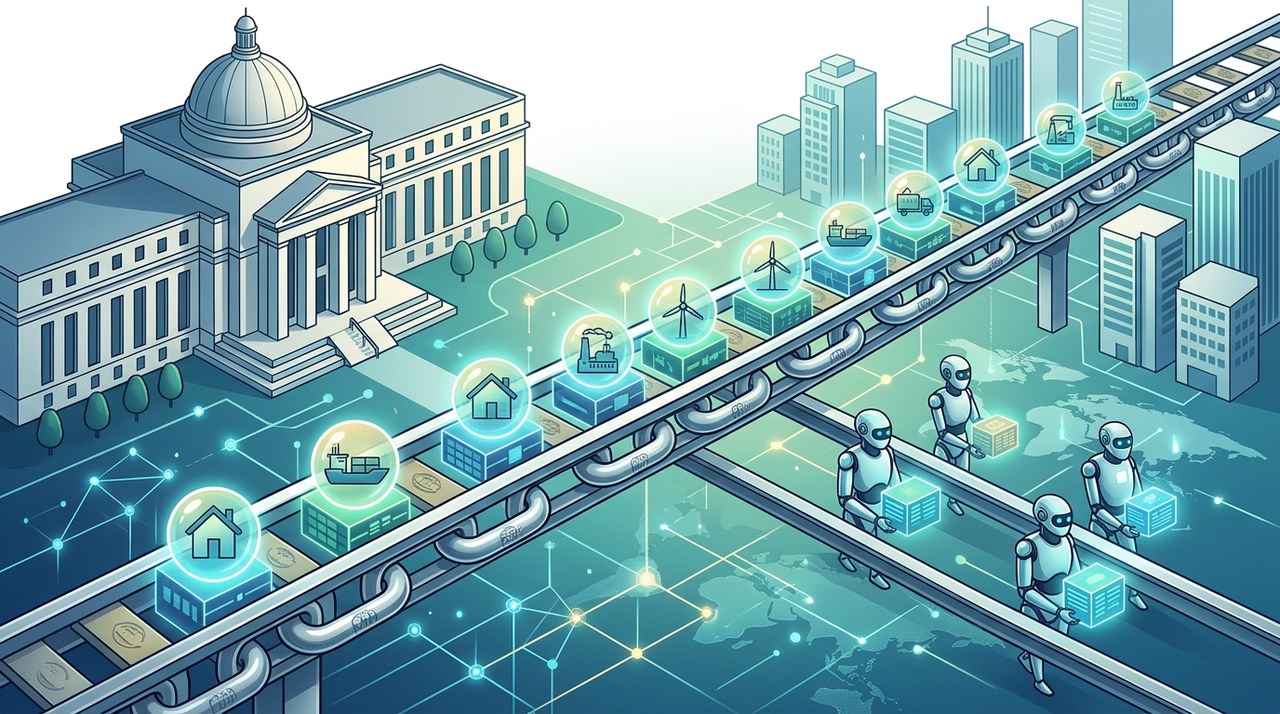
A New Vision for Central Banking and Digital Assets
Imagine a financial system where digital assets move instantly across networks, and autonomous artificial intelligence programs handle everyday economic decisions for businesses and consumers.
This scenario is no longer confined to technical discussions. Federal Reserve Governor Christopher Waller recently outlined how traditional banking networks could interface directly with these cutting-edge digital innovations.
Waller suggested that the U.S. central bank should remain at the core of these technological shifts by offering trusted rails for tokenized real-world assets and autonomous AI agents.
What Did Fed Governor Christopher Waller Propose?
During his recent address, Governor Waller focused on how rapid developments in financial technology could transform standard payment systems.
Instead of stepping back as private companies launch new platforms, Waller argued that central banks must supply the fundamental settlement networks that connect these systems together.
Waller suggested the Federal Reserve could provide trusted rails for emerging innovation tied to tokenized assets and agentic AI.
In simple terms, Waller envisions the Federal Reserve as the reliable highway operator. Tech firms and institutions can build fast, modern vehicles on top of this highway, but the central bank provides the secure physical road.
Understanding Asset Tokenization in Plain English
To fully appreciate Waller's comments, it is helpful to look at how tokenization works in practice.
Tokenization involves taking ownership rights of a physical or traditional financial asset and converting them into digital tokens on a ledger. Common examples of assets being tokenized include:
- Government bonds and U.S. Treasury bills
- Commercial real estate and residential properties
- Corporate loans and private credit contracts
- Precious metals like physical gold
- Commercial bank deposits and cash equivalents
Tokenizing assets allows investors to transfer ownership nearly instantly. Traditional financial settlements often take up to two business days (known as T+2). Tokenization aims to shrink that timeline down to seconds (T+0).
However, for financial markets to operate smoothly, tokenized assets require a final, risk-free settlement layer. That is why central bank participation is critical.
What is Agentic AI and Why Does It Need Financial Infrastructure?
Another prominent idea in Waller's remarks was agentic AI.
Unlike standard chatbots that simply generate answers or text, an agentic AI is an autonomous software program. It is designed to evaluate goals, make decisions, and execute multi-step tasks without constant human intervention.
In a modern economy, an AI agent might automatically monitor yields across platforms, execute trade strategies, pay for cloud computing resources, or purchase supply chain inventory.
Because these software agents operate continuously at high speeds, they require programmable, digital payment rails. Central bank infrastructure could allow AI agents to transact safely without exposing participants to excessive counterparty risk.
Why the Central Bank Wants to Lead Settlement Infrastructure
You might wonder why private networks alone are not sufficient to handle digital asset transactions.
Central banks provide what financial markets call settlement finality. Money settled through a central bank carries zero credit or liquidity risk, unlike private tokens or proprietary bank networks.
Key advantages of keeping central bank rails at the center of tokenization include:
- Systemic Stability: Reduces financial contagion risks if a private company or stablecoin issuer fails.
- Interoperability: Prevents market fragmentation by offering a common settlement standard across competing blockchains.
- High Liquidity: Enables institutional investors to move large sums safely using central bank reserves.
- Regulatory Compliance: Maintains robust oversight for anti-money laundering and financial reporting rules.
Evaluating the Opportunities and Risks
Integrating central bank networks with digital tokens and artificial intelligence offers exciting possibilities, but it also introduces clear challenges that market participants must monitor.
Potential Advantages
- Higher Efficiency: Reduces administrative steps, clearing costs, and manual paperwork.
- Continuous Trading: Supports financial transactions outside traditional banking hours.
- Enhanced Transparency: Immutable ledgers make tracking ownership records clearer for regulators and institutions.
Key Risks to Consider
- Technical Vulnerabilities: Software bugs in automated smart contracts or AI systems could trigger unintended trades.
- Cybersecurity Concerns: Connecting central bank networks to modern public ledgers requires rigorous security updates.
- Regulatory Uncertainty: Legal frameworks governing autonomous AI transactions and tokenized claims are still evolving globally.
While digital asset innovations bring speed and efficiency, market participants should remember that digital assets remain subject to operational risks and price volatility.
Looking Forward to the Future of Finance
Governor Waller's remarks reflect a major strategic shift in how monetary authorities view modern technology.
By actively engaging with tokenization and agentic AI, the Federal Reserve signals its intention to guide financial innovation rather than react to it after the fact.
In the coming years, industry observers expect further pilot programs and collaborative studies to test how central bank settlement systems can seamlessly link with modern digital asset networks.
Latest blog posts



XRP Ledger Daily Active Users Drop 60% Amid Market Dip
Daily active users on the XRP Ledger plummeted from 250,000 to 92,000 as broader market selling pressure weighed on prices.
|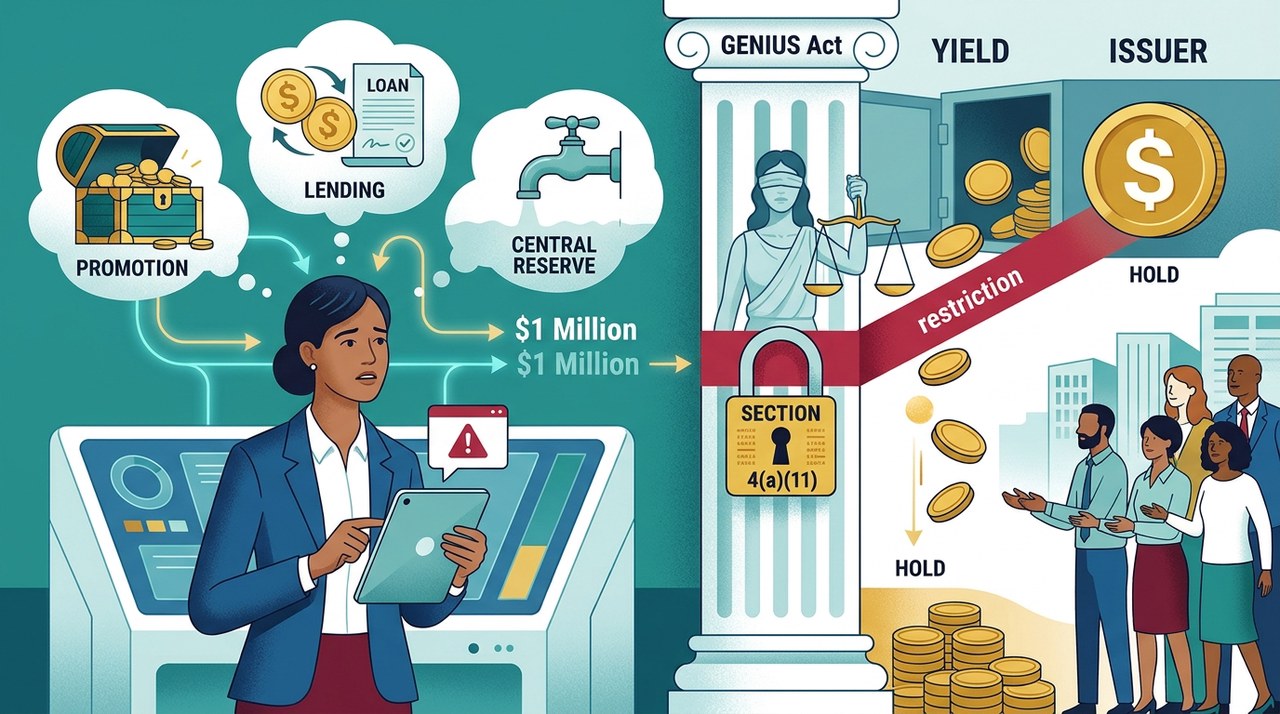
Can Stablecoins Pay Interest? Yield and the GENIUS Act
Starting January 18, 2027, the GENIUS Act bans stablecoin issuers from paying interest directly to holders. Here is how it affects rewards, exchange yields, and crypto lending.
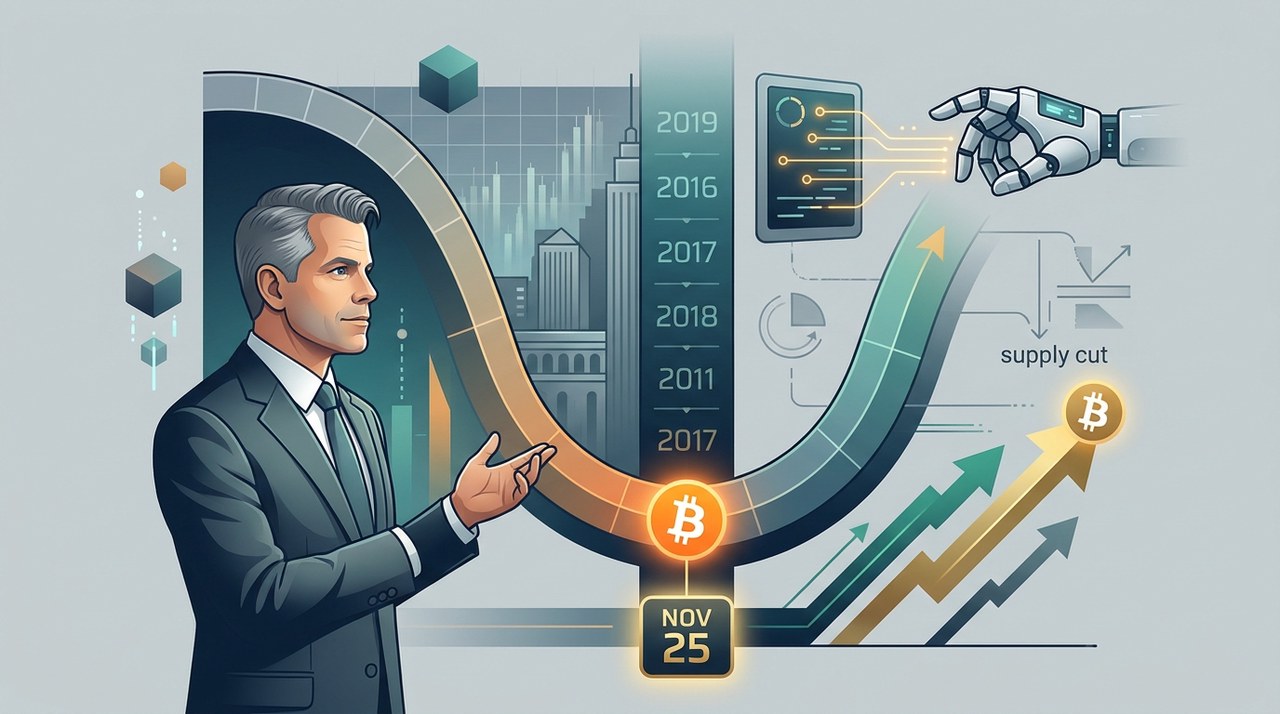

Anthony Scaramucci Points to Possible Bitcoin Bottom
Anthony Scaramucci and Mike Novogratz discussed potential Bitcoin bottom dates, macro factors, and key price levels during a recent market update.
|