US and Canada Launch Joint Crypto Fraud Crackdown
A Major Cross-Border Move Against Crypto Scams
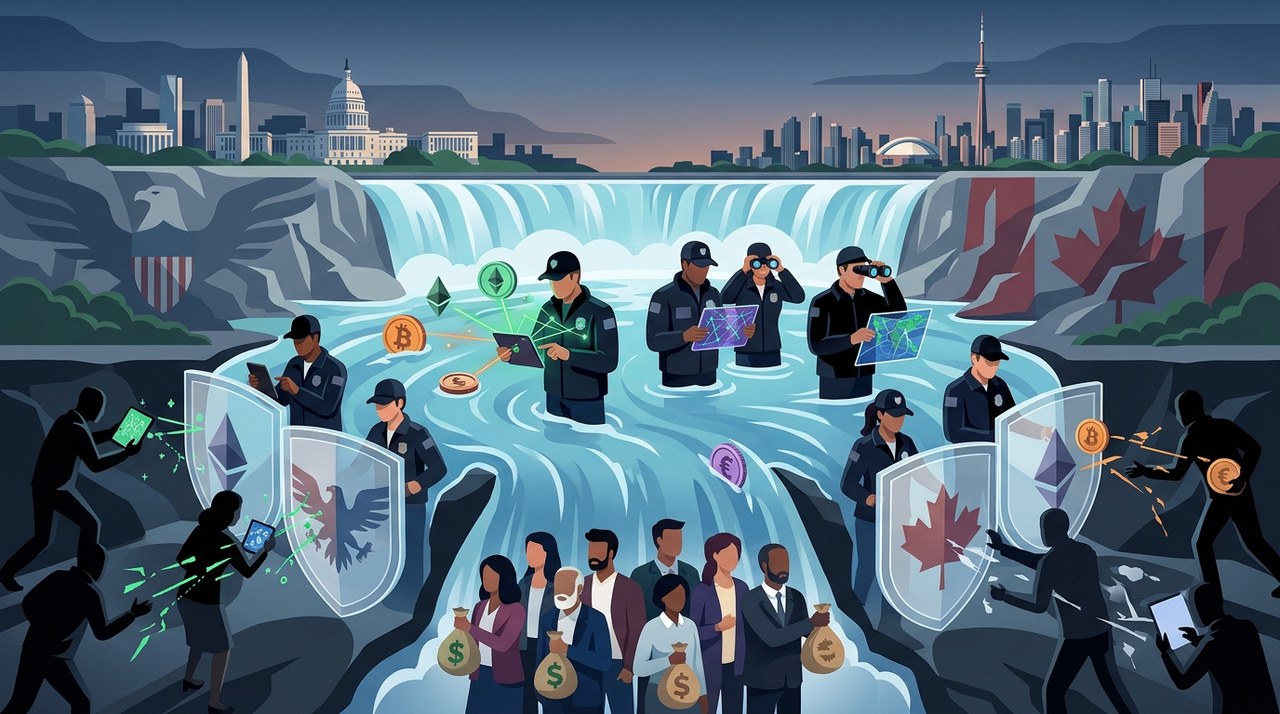
Authorities across North America are taking coordinated action against digital asset crime. The United States and Canada have launched a major joint operation to dismantle online cryptocurrency scam networks.
This joint initiative brings together law enforcement agencies, financial regulators, and private technology firms. Together, they aim to disrupt organized fraud syndicates and protect everyday investors.
Understanding Operation Niagara
The coordinated initiative is officially known as Operation Niagara. The Ontario Securities Commission (OSC) formally announced the project on November 16.
Operation Niagara targets organized cryptocurrency schemes operating across North American borders. Investigators plan to utilize advanced technology to detect illicit activity in near real time.
Specialized teams will combine their capabilities to track suspicious transactions quickly. The goal is to identify criminal operations as they happen rather than reacting months later.
Who Is Joining the Fight?
Tackling international financial crime requires extensive teamwork across multiple jurisdictions. Operation Niagara connects several major agencies from both countries.
Key Law Enforcement Agencies
- United States Secret Service: Bringing specialized financial intelligence and law enforcement resources.
- Royal Canadian Mounted Police (RCMP): Canada's national police force coordinating federal investigative efforts.
- Ontario Provincial Police (OPP): Providing regional enforcement support and local intelligence.
Financial Regulators Across Canada
Securities regulators play a critical role in market oversight and investor protection. Several Canadian provincial regulators are actively participating:
- Ontario Securities Commission (OSC): Leading the project announcement and regional enforcement efforts.
- Alberta Securities Commission (ASC): Monitoring regional investment schemes and compliance.
- British Columbia Securities Commission (BCSC): Tracking cross-border financial activity and fraud reports.
- Autorité des marchés financiers (AMF): Representing Quebec's financial regulatory framework.
The Role of Private Technology Firms
Public agencies are also partnering with private sector companies. Technical experts will supply analytics and intelligence to help pinpoint fraudulent networks.
Blockchain tracking tools allow investigators to trace funds across transparent ledgers. By sharing data, tech partners help police react much faster.
Shifting Focus to Early Prevention
Traditional financial investigations often begin long after victims lose their funds. Operation Niagara intends to change that dynamic by focusing on proactive intervention.
Authorities want to contact individuals who are currently being targeted by scammers. By stepping in early, officials hope to prevent victims from suffering additional financial damage.
"Fraud knows no border, and it targets everyday people." — Bonnie Lysyk, Executive Vice-President of Enforcement at the OSC.
Why International Cooperation Matters
Online scammers routinely exploit geographical boundaries to evade capture. Fraudsters may operate servers in one country while soliciting funds from victims in another.
Think of cross-border fraud like a digital pickpocket jumping over state lines. If law enforcement stops at the border, criminals can easily escape responsibility.
Joint initiatives like Operation Niagara help close those legal loopholes. By sharing intelligence rapidly, authorities can dismantle networks regardless of where operators are physically based.
What Operational Details Remain Confidential?
While the framework of Operation Niagara is public, specific tactical details remain undisclosed. The OSC has not revealed the exact number of active scam networks currently being targeted.
Additionally, official reports have not specified how many potential victims have been identified so far. The total dollar value or amount of cryptocurrency tied to the operation also remains confidential.
Law enforcement agencies standardly keep operational figures private during ongoing actions. Releasing specific counts could alert active criminal networks before raids or legal actions take place.
How Everyday Investors Can Protect Themselves
Government intervention is a positive step forward, but personal awareness is always the first line of defense. Scammers frequently use high-pressure tactics to trick investors.
Here are standard safety practices to keep in mind when navigating digital asset markets:
- Be cautious of guaranteed returns: Legitimate investments carry inherent market risks, and no platform can guarantee profits.
- Check official registrations: Verify whether an investment platform is properly licensed with regional securities regulators.
- Resist high-pressure sales: Fraudulent schemes often create artificial urgency to force quick financial transfers.
- Protect private keys: Reputable service providers will never ask for your seed phrases or private security keys.
Looking Forward
Cross-border initiatives like Operation Niagara signal a growing commitment to regulatory oversight in the digital asset space. Collaborative enforcement helps build a safer environment for users worldwide.
Latest blog posts


Bitcoin Mining Profits Sink as Network Hashrate Hits 1 ZH/s
Bitcoin network computing power has bounced back above 1 zettahash per second, but dropping hashprices and tiny transaction fees leave miners facing tight margins.
|
Wall Street Bull Says Stock Market Selloff Is Overreaction
The S&P 500 dropped into correction territory, but market analyst Ed Yardeni believes strong economic fundamentals will prevent a full bear market.



AI Uncovers Bitcoin Core Bug That Could Freeze Network Nodes
Bitcoin Core developers have patched a medium-severity vulnerability discovered by AI security tools that allowed bad actors to temporarily freeze node processing.
|