
Twenty One Capital Sees $1 Billion Bitcoin Profit Drop 60%
A Huge Paper Profit That Shrinks Quickly
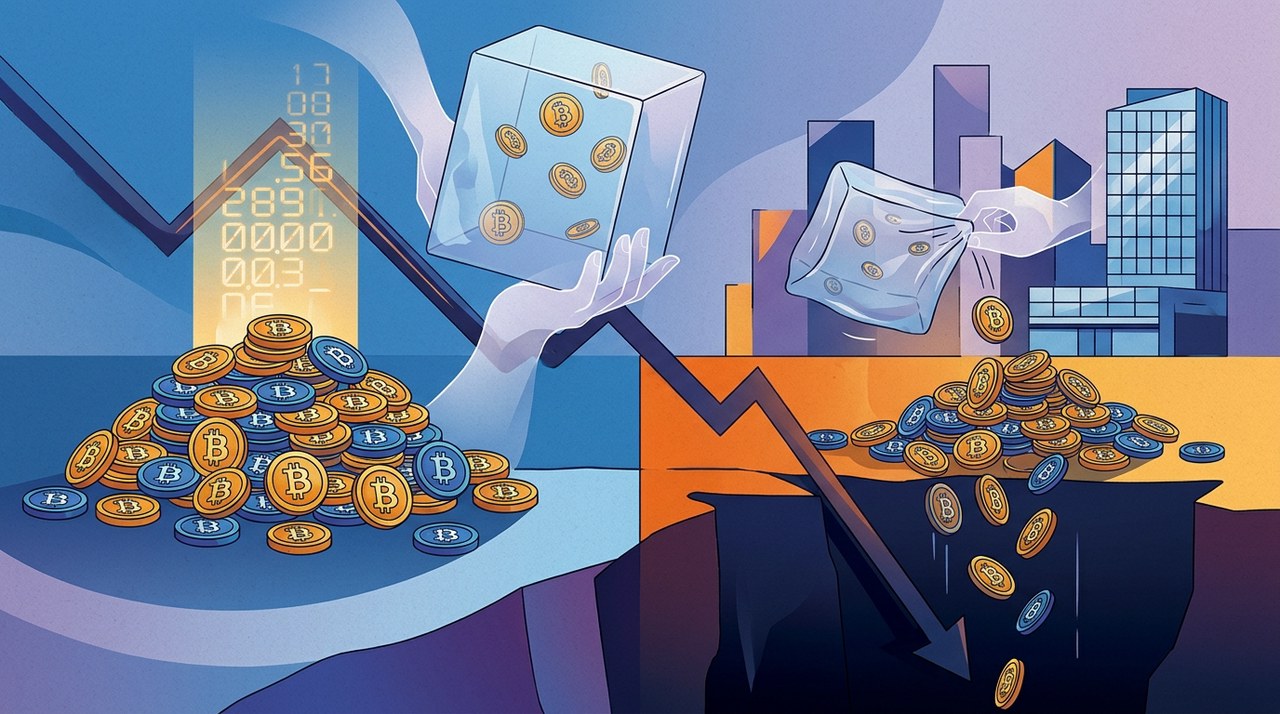
Texas-based firm Twenty One Capital reported a massive $1.087 billion net profit for the third quarter on Friday. However, about 60% of that financial gain has already vanished.
The company achieved these figures because BitcoinBTC-3.18% prices rose significantly leading up to September 30. But because Bitcoin has fallen since the quarter ended, the firm's total holdings are currently worth about $700 million less than what it originally paid for them.
Where Did the $1 Billion Profit Come From?
To understand these numbers, it helps to look at US corporate accounting rules. Regulators require companies to update the paper value of their crypto holdings each quarter. This means firms report profits or losses even if they do not sell a single coin.
Think of it like owning a house. If homes in your neighborhood double in value, your net worth goes up on paper. However, you do not have actual cash in hand until you sell the home.
At the end of September, Bitcoin reached roughly $83,700 per coin, according to company filings. That price boost raised the accounting value of Twenty One Capital's 43,514 Bitcoins by $1.093 billion.
At the same time, the company's core business operations generated zero revenue. Instead, the firm posted a $4.8 million operating loss for the quarter.
Chief Executive Officer Rapha Zagury, who took leadership after Jack Mallers stepped down in July, explained this distinction clearly in his shareholder letter.
But gains from an asset we own are not the same as earnings from businesses we operate.
How Much of the Gain Remains Today?
Crypto markets move fast, and accounting gains can change just as quickly. By November 13, data from BitcoinTreasuries showed the company's coins were worth around $2.99 billion.
That figure is about $653 million below their September 30 valuation. In simple terms, roughly 60% of the profit recorded in the third quarter has evaporated on paper.
Overall, Twenty One Capital spent approximately $3.69 billion to purchase its 43,514 Bitcoins. With current prices lower, its holdings sit about $700 million below their original purchase cost.
Past performance of digital assets is not an indicator of future returns. You can monitor live market data at bitkub.com/th/market/BTC.
Looking Back at 2026 Performance and Stock Impact
Accounting rules cut both ways. Earlier in 2026, dropping Bitcoin prices caused the company to report a $1.27 billion net loss across the first two quarters.
Even after adding the strong third-quarter bounce, Twenty One Capital remains $186.5 million in the red for the full year so far.
Investors responded cautiously to the earnings report. The firm's stock (XXI) traded at $4.97 at midday Friday, down 0.6%.
During the earnings call, CEO Rapha Zagury mentioned that stock buybacks deserve serious consideration if XXI trades below the net asset value of its holdings.
However, he candidly admitted that predicting market trends is impossible.
...we have no idea where Bitcoin price is going to be a year from now.
What to Expect for the Fourth Quarter
Because Twenty One Capital ranks among the largest corporate holders of Bitcoin, its financial statements directly mirror cryptocurrency price swings.
If Bitcoin finishes December below the $83,700 mark recorded on September 30, accounting rules will force the firm to record another net loss for the fourth quarter.
Conversely, if market sentiment and institutional demand push Bitcoin back above $83,700 by year-end, the company could record additional paper gains. However, if broader financial market volatility or macroeconomic pressure drives prices lower, paper losses will expand further.
Latest blog posts

Strategy Shares Insights on Bitcoin Quantum Security
Strategy has clarified how the Bitcoin network can adopt quantum-resistant security upgrades, addressing long-term cryptography concerns in the crypto space.
|

OpenAI Rolls Out ChatGPT Wallet With Visa, Mastercard & Amex
OpenAI has introduced ChatGPT Wallet, allowing AI agents to complete purchases using Visa, Mastercard, and Amex with biometric user verification.
|

Fed Chair Candidate Warsh on AI Inflation & Bitcoin Impact
Former Fed Governor Kevin Warsh is raising questions about how AI impacts inflation, which could influence central bank policy and crypto liquidity.
|