

OpenAI Rolls Out ChatGPT Wallet With Visa, Mastercard & Amex
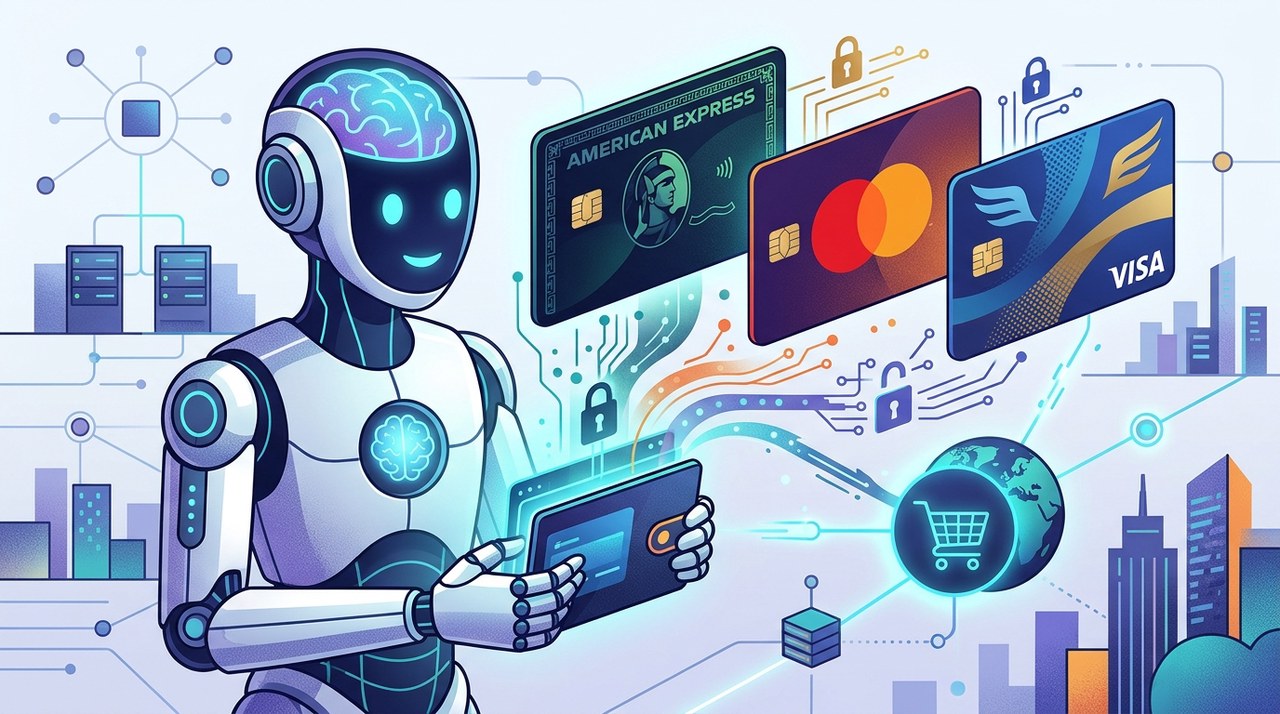
A New Era of AI Shopping: OpenAI Introduces ChatGPT Wallet
Imagine asking your personal digital assistant to research the best noise-canceling headphones, find the best price, and complete the order for you. That scenario is no longer science fiction. On November 13, 2026, OpenAI officially announced the rollout of ChatGPT Wallet, a new tool that allows artificial intelligence agents to make purchases using your existing payment cards.
To bring this vision to market, OpenAI teamed up with major global payment networks: American Express, Mastercard, and Visa. The initial release is starting as a targeted rollout for ChatGPT Pro subscribers in the United States, introducing an innovative way for consumers to shop online.
Built in partnership with American Express, Mastercard, and Visa, ChatGPT Wallet will initially be available through dots for ChatGPT Pro subscribers in the U.S.
With over 1.2 billion weekly users relying on ChatGPT to research products, contrast options, and get shopping advice, allowing AI to finalize checkout transactions is a natural evolution for personal productivity tools.
Meet Your Personal Shopping Agent: How 'Dots' Work
To understand how ChatGPT Wallet functions, it helps to look at how OpenAI handles tasks behind the scenes. The wallet system operates through personalized AI agents referred to as dots.
These dots are personal AI assistants running on cloud servers 24 hours a day, 7 days a week. They can connect with more than 4,000 apps through various plugins, making them capable of handling multi-step tasks. Whether you access your dot via ChatGPT, Slack, or Microsoft Teams, these agents stay ready to help.
Giving an AI access to your financial accounts requires strong safeguards. OpenAI built in customizable controls known as Custom Rules. These rules allow users to permit, block, or require explicit manual approval for specific actions.
The Approval Process: Biometrics Keep You in Command
Before any agent-initiated purchase actually goes through, you retain final approval. The payment sequence follows a clear step-by-step security check:
- Review order details: Your AI dot presents a detailed checkout summary including the items, total cost, and selected card.
- Provide confirmation: You approve the transaction manually using Face ID or another supported biometric verification on your device.
- Process payment securely: Once confirmed, payment networks complete the charge without sharing sensitive financial numbers.
Privacy First: Protecting Your Card Details with Tokenization
A common concern regarding automated AI shopping is credit card security. OpenAI addressed this directly by implementing a security standard known as tokenization.
Instead of sharing your actual 16-digit credit card number with the AI agent or the online store, payment networks generate substitute card credentials called a payment token. This token includes a unique substitute card number, security code, and expiration date specifically created for checkout.
Because of tokenization, neither the merchant nor the AI agent ever sees your real card details. Here is how data privacy is managed under the official ChatGPT Wallet privacy notice:
- OpenAI collects: Purchase details, contact information, and device data.
- Payment provider collects: The full, actual credit card number to generate payment tokens.
- OpenAI receives: Tokenized credentials and limited card details necessary for user display.
- Data usage policy: OpenAI explicitly states that Wallet information is never sold or shared for targeted advertising.
Eligibility Requirements and Usage Restrictions
Because this is an initial launch, OpenAI established clear guidelines regarding who can access ChatGPT Wallet and where it can operate.
Who Can Access the Feature?
At launch, eligible users must fulfill the following criteria:
- Must be an active ChatGPT Pro subscriber in the United States.
- Must be at least 18 years of age.
- Must possess a valid U.S. billing address.
- Must use a supported U.S.-issued card from American Express, Chase, Mastercard, or Visa.
- For Chase cardholders specifically, the user must be the primary account holder.
Where Does Wallet Work?
It is important to note that ChatGPT Wallet is restricted exclusively to dot conversations. That means it will not function inside standard Chat threads, Work team accounts, or standalone Codex developer windows.
Once you approve a payment, checkout proceeds, though final fulfillment depends on merchant confirmation. For subscription plans or recurring fees, merchants are permitted to retain payment credentials to collect ongoing payments under the terms you approved.
Handling Disputes, Refunds, and Merchant Protections
If an order encounters issues or requires a return, using ChatGPT Wallet preserves standard consumer protection rights.
Users keep all existing card rewards, cash-back points, and eligible dispute rights. Responsibilities are divided as follows:
- Card Issuers: Handle declined payments, fraudulent charges, or unrecognized account fees.
- Merchants & Sellers: Manage order cancellations, product returns, and refund requests.
- OpenAI's Role: Under its Wallet terms, OpenAI generally does not decide or fund merchant refunds or card chargebacks, unless legally required or separately promised.
Merchant security systems can sometimes block automated agents or decline legitimate purchases. To streamline adoption, OpenAI published a Commerce Partner Playbook covering product data structure, website access, and payment compatibility while ensuring store owners retain full control over pricing and fulfillment.
This framework builds upon industry security collaborations. In October 2025, Cloudflare partnered with Visa, Mastercard, and American Express on Web Bot Auth, an authentication protocol designed to help websites identify trusted AI agent traffic.
The Broader Ecosystem: Payment Giants and Crypto Solutions
OpenAI is part of a broader industry shift toward autonomous transaction infrastructure across both traditional finance and Web3.
Traditional Payment Networks Advance Agent Tools
Mastercard developed its Agent Pay framework, requiring AI agents to register and undergo identity verification while consumers set purchase rules. Mastercard uses 'agentic tokens,' extending technology already used for contactless mobile payments and saved cards.
Visa expanded developer tools by investing in software development platform Replit. The companies teamed up to integrate Visa Intelligent Commerce directly into developer environments, letting programmers build applications where agents independently initiate and receive payments.
Crypto Networks and Decentralized Agent Wallets
Blockchain platforms offer alternative frameworks for AI transactions. In July 2026, crypto payment infrastructure company MoonPay introduced Pay Box, connecting directly to ChatGPT and Claude through a custom connector.
MoonPay's system offers customizable controls: users can require passkey verification for individual purchases or grant spending permissions within set limits.
Similarly, blockchain-based systems enable software agents to manage self-custodial on-chain wallets under delegated authority. This framework allows autonomous applications to pay directly for data feeds, API access, and computing resources on decentralized networks.
Looking ahead, OpenAI plans to expand purchase delegation over time. Future releases aim to let users pre-approve spending within pre-set budget caps, product categories, or designated time periods.
Market Context and Industry Developments
As financial technology integrates with artificial intelligence, broader digital asset markets continue to navigate changing economic conditions. At the time of this publication on November 13, 2026, Bitcoin (BTCBTC-3.22%) traded around $68,978 (-3.60%), while EthereumETH-3.19% stood at $1,951 (-3.12%). Note that past performance of digital assets is not an indication of future performance.
In broader industry developments, OpenAI is also navigating corporate legal challenges. In July, Apple filed a 41-page trade secret theft lawsuit against OpenAI in the U.S. District Court for the Northern District of California, alleging trade secret misuse across organizational divisions.
The Takeaway: What ChatGPT Wallet Means for Consumers
ChatGPT Wallet represents an important step in how consumers interact with AI software. By combining traditional payment protections and tokenized security with biometric sign-offs, OpenAI and its payment partners are establishing foundation standards for automated commerce.
While early access remains focused on U.S. Pro subscribers, ongoing innovation across traditional card networks and decentralized crypto solutions suggests AI-assisted transactions will become an increasingly common part of modern retail.
Latest blog posts

Twenty One Capital Sees $1 Billion Bitcoin Profit Drop 60%
Twenty One Capital reported a $1.087 billion third-quarter profit from Bitcoin gains, but recent price dips have already wiped out roughly 60% of those accounting returns.
|
Strategy Shares Insights on Bitcoin Quantum Security
Strategy has clarified how the Bitcoin network can adopt quantum-resistant security upgrades, addressing long-term cryptography concerns in the crypto space.
|

Fed Chair Candidate Warsh on AI Inflation & Bitcoin Impact
Former Fed Governor Kevin Warsh is raising questions about how AI impacts inflation, which could influence central bank policy and crypto liquidity.
|