
Tether Leads $15M Investment in AI Payment Startup Mural
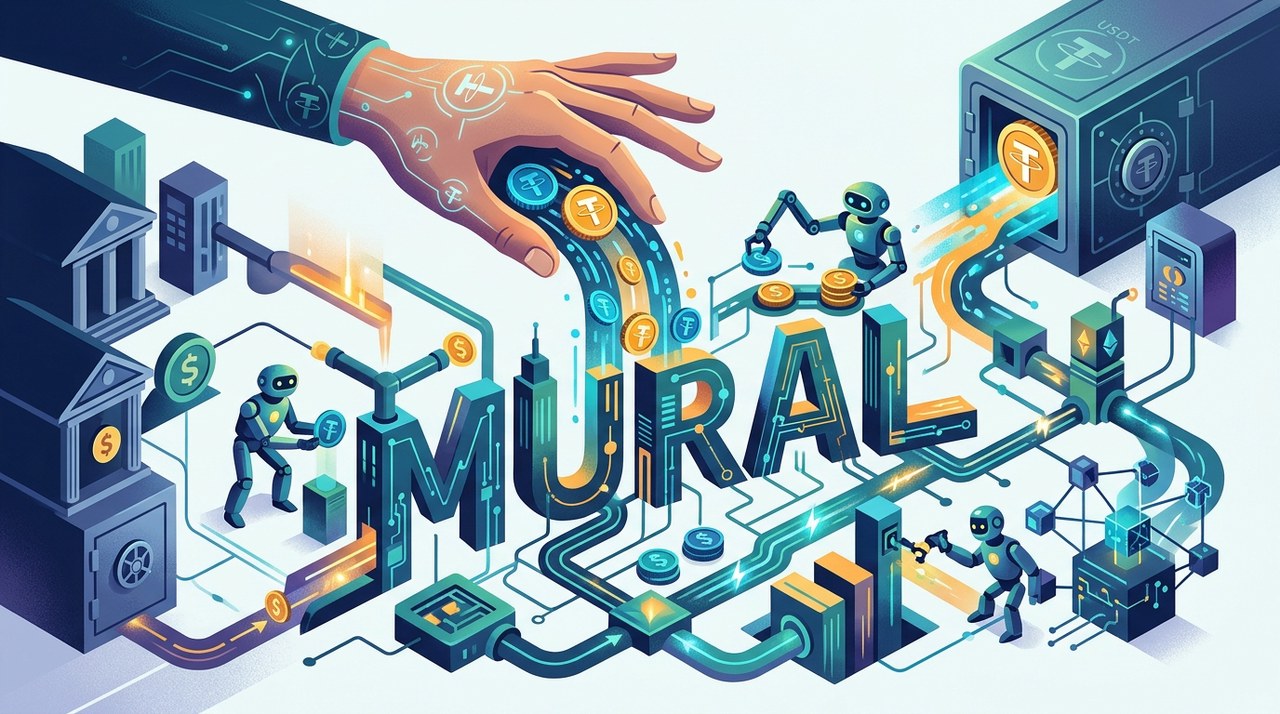
TetherUSDT+0.44% Expands Into AI with $15 Million Investment
Tether has led a $15 million Series A funding round for Mural. Mural is a New York-based financial infrastructure startup focused on AI payments.
This latest investment brings Mural's total funding to $28 million. North Island Ventures and existing investors also participated in the funding round.
The move highlights Tether's strategy to support technology where artificial intelligence interacts directly with real-world money systems.
Who is Mural and What Do They Do?
Former Palantir engineers founded Mural to build modern payment infrastructure. They help financial technology companies connect traditional banking networks with blockchain technology.
Mural handles several critical tasks for software platforms. These include managing bank accounts, routing payments, verifying identity, and maintaining regulatory compliance.
Several major platforms already rely on Mural's technology. Notable clients include global payroll platform Deel and web browser developer Opera.
Understanding Agentic Finance and AI Money Movement
The financial industry is rapidly exploring agentic finance. This concept centers on AI software agents executing financial transactions on behalf of people or companies.
Imagine an intelligent software assistant paying invoices or rebalancing business accounts automatically. To make that happen safely, the AI needs reliable access to money networks.
That is where Mural comes in. They build the technical bridge connecting autonomous software agents to legacy banks and digital asset blockchains.
Safety First: How Mural Controls AI Transactions
Allowing autonomous software to move money raises important security questions. How do business owners prevent an AI program from making costly errors?
Mural addresses these concerns by embedding security features directly into its platform:
- Transaction Limits: Companies can restrict the maximum spending amount allowed per AI transaction.
- Counterparty Restrictions: Businesses can specify exactly which approved accounts the AI can send funds to.
- Approval Guardrails: Larger payment transfers require human authorization before money moves.
These protective controls give companies confidence while letting artificial intelligence manage routine payment tasks.
Why Tether is Investing Beyond Stablecoins
Tether is best known as the issuer of USDT, the world's largest stablecoin. However, the company is actively expanding its footprint across broader financial tech.
Tether CEO Paolo Ardoino highlighted why this payment plumbing is essential for the industry:
As agents start moving money, that connection to the banks, payment networks and compliance systems the world still runs on becomes essential.
Programmable payments are emerging as a core use case for AI financial services. By backing Mural, Tether strengthens a key link between software agents and real-world finance.
The Broader Market Context
This funding news comes as global regulators take a closer look at artificial intelligence in trading and payments. For example, the U.S. CFTC recently added agentic finance to its official forum agenda.
As AI and programmable payments grow, secure infrastructure will remain vital for businesses and investors alike.
If you are following digital assets like USDT, remember that market conditions change over time. Past performance of digital assets is not an indication of future results. You can track current market metrics on platforms like Bitkub USDT Market.
Latest blog posts
Bullish Beats Q3 Revenue Estimates Despite Net Loss
Institutional services helped crypto platform Bullish beat third-quarter revenue estimates, balancing out quieter spot trading activity across the market.

MARA Secures $185M Debt Deal Following $1B Bitcoin Sale
Bitcoin miner MARA raised $185 million in new debt tied to an Ohio power plant after selling $1 billion in BTC to pay off existing loans.
|


Anchorage Exec Warns AI Could Disrupt Crypto Security
An executive at Anchorage Digital warns that artificial intelligence could increase cyber threats against crypto networks over the next 12 months.
|