South Korea Postpones 22% Crypto Income Tax to 2029
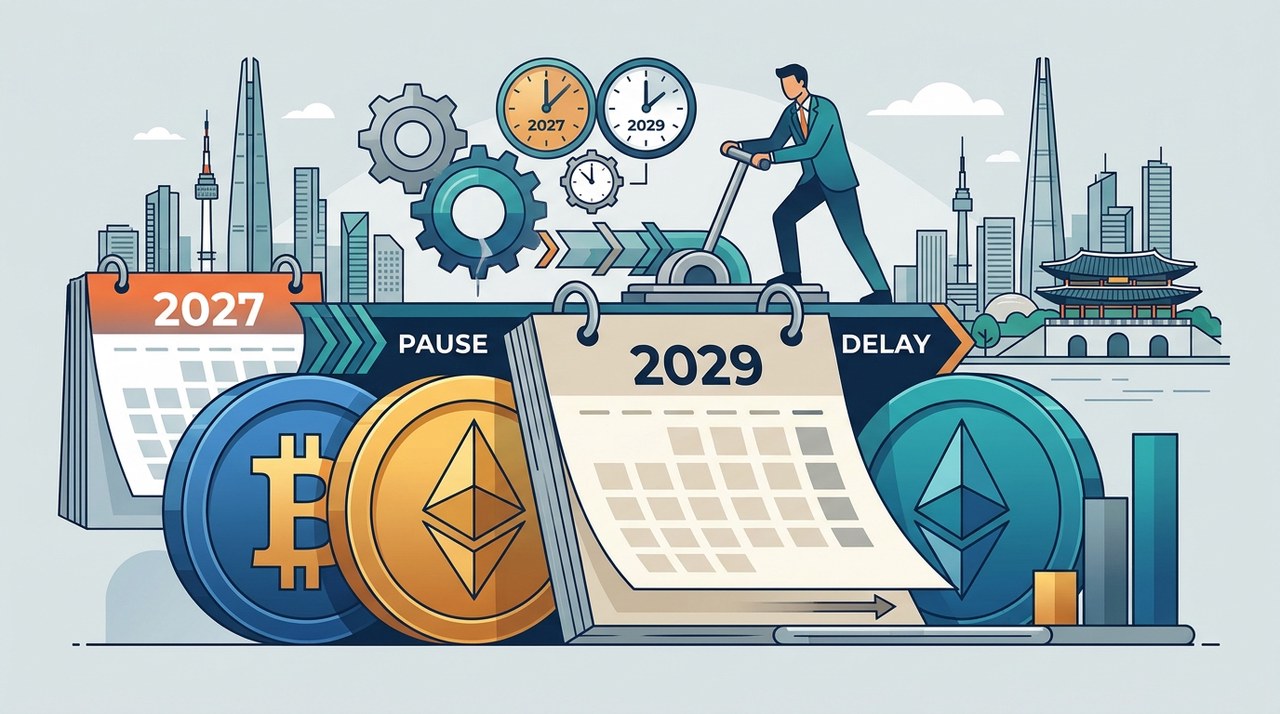
South Korea Delays Crypto Tax for the Fourth Time
South Korea plans to delay its proposed 22% tax on cryptocurrency gains by another two years. If approved by lawmakers, the tax will now take effect in 2029 instead of 2027.
The government announced this decision on November 4. Officials cited the timeline for global data sharing and the need for clearer market regulations as key reasons for the delay.
This postponement marks the fourth time implementation has been pushed back since South Korea first passed the tax law in 2020.
It is with a heavy heart that I announce another proposed delay in taxation, after its implementation has already been postponed three times. The government will use the two-year period to ensure that taxation of virtual assets can be implemented smoothly in 2029.
Finance Minister Lee Hyoung-il shared these words during a press conference in Seoul to explain the government's stance.
How the Proposed 22% Crypto Tax Works
Under the planned legislation, crypto tax applies to individual investors who earn more than 2.5 million South Korean won (around $1,869 USD) in net profits per year.
This tax covers profits made from transferring or lending digital assets. The overall 22% levy consists of two parts:
- A 20% national capital gains tax
- A 2% local income tax
Under current rules, investors cannot carry trading losses over into future tax years. Profit calculations stand strictly on an annual basis.
Introducing a 3-Year Loss Carryforward System
Alongside the two-year delay, the government proposed a major relief measure for retail traders. Investors will be allowed to carry forward crypto trading losses for up to three years.
This new loss carryforward rule lets traders use past losses to offset future taxable gains. The change brings South Korea's crypto tax framework in line with standards used in the United States and Britain.
Under this framework, losses incurred starting in 2029 can reduce taxable income through 2032. However, any trading losses realized before the official start date in 2029 will not be eligible for tax offsets.
Why Was the Crypto Tax Delayed Again?
The government's decision follows growing feedback from domestic crypto exchanges, retail investors, and lawmakers.
Local crypto exchanges pointed out that unclear reporting guidelines created technical roadblocks. These delays made it very difficult to build standard tax collection software on time.
Tracking transactions from overseas platforms created another huge practical problem. When investors move tokens purchased on foreign exchanges onto Korean platforms, local exchanges rarely have access to the original purchase prices. Without purchase records, calculating net profit is almost impossible.
International tax cooperation schedules played a critical role in the government's decision as well.
South Korea is set to begin cross-border information sharing with the U.S. under the OECD-backed Crypto-Asset Reporting Framework (CARF) in 2029. Finance Ministry officials noted that taxing local traders before gaining clear visibility into offshore crypto holdings would unfair disadvantage domestic exchanges.
Roadmap and Next Steps for Korean Crypto Legislation
To make the delay and loss carryforward rules official, the government is submitting legislative amendments to the National Assembly during its current regular session.
Lawmakers must formalize amendments to the Income Tax Act ahead of the original 2027 scheduled review.
Here is what the government plans to do next:
- Form a Public-Private Working Group: The Finance Ministry will bring together industry representatives and legal experts to refine tax standards for complex transactions and simplify filing processes by the first half of next year.
- Align with the Digital Asset Act: The ministry will work with the Financial Services Commission (FSC) to coordinate tax rules with broader digital asset consumer protection and operational rules.
- Review Legislative Progress in 2027: If the working group recommends further structural changes, additional amendments will enter the National Assembly during its 2027 session.
- Finalize Administrative Guidelines: Complete administrative tax guidelines are expected to be finalized in the first half of 2028.
Regulators Also Demand Tighter Security Controls
Alongside tax discussions, South Korean financial regulators are pushing for stronger operational security across local crypto firms.
Authorities have called for higher cold wallet storage percentages and stricter internal access controls following recent exchange hacking incidents in the region.
Latest blog posts



Bitcoin Slips to $76.1k as AI Stock Sell-Off Triggers Liquidations
Crypto majors fell 4-6% as AI tech stocks crashed, resulting in over $1.1 billion in long liquidations while Bitcoin dropped to $76.1k.
|


China Central Bank Halts Solana Event After Skyline Ad
Chinese authorities shut down Solana's promotional event in Shanghai after a skyscraper light show triggered a central bank crackdown.
|

 +2
Trump-Backed World Liberty Launches WLFI Buyback Amid Scrutiny
World Liberty Financial plans to buy back its WLFI tokens using stablecoin reserve yield as Congressional Democrats signal impending investigations.
|