
SBI and SMFG Launch Solana Joint Venture for Tokenization
Japanese Financial Leaders Join Forces on SolanaSOL-3.83%
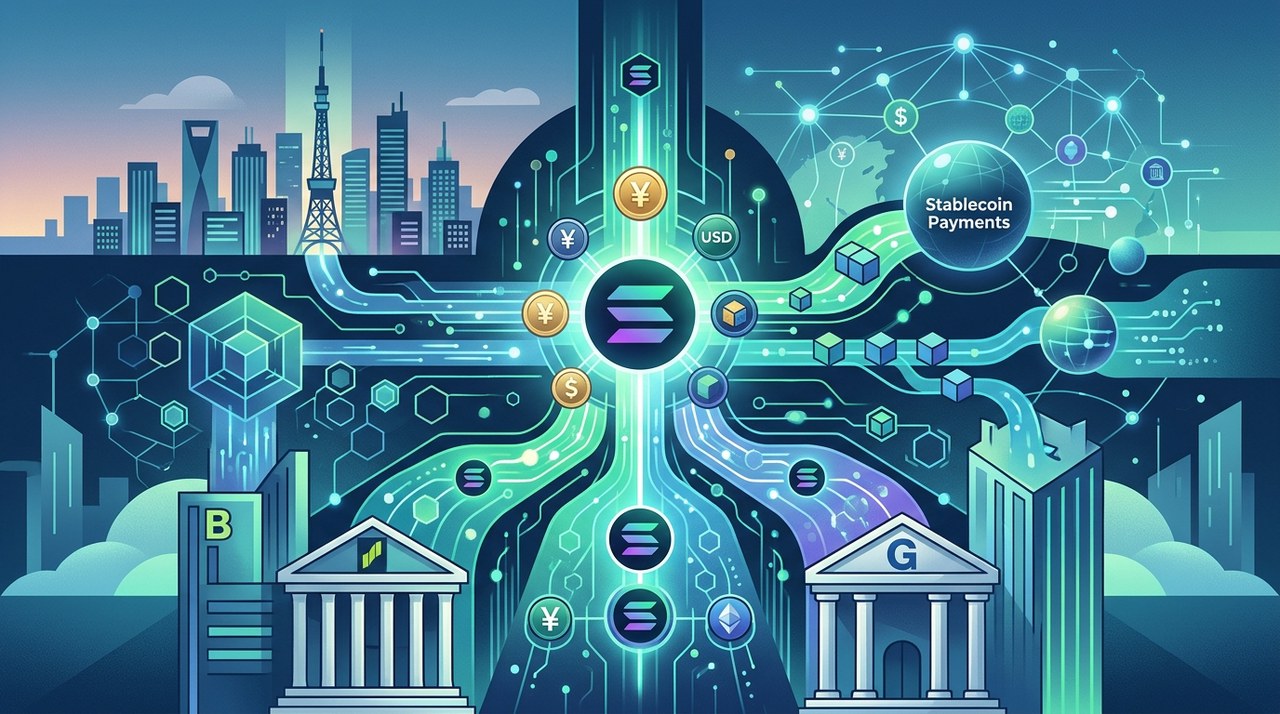
Japanese financial giants SBI Holdings and Sumitomo Mitsui Financial Group (SMFG) have officially launched a new joint venture. This initiative focuses on using the Solana blockchain to modernize traditional financial services.
The newly created entity aims to bridge the gap between institutional banking and decentralized technology. It represents a significant step forward for enterprise blockchain adoption in Asia.
Both partners carry major weight in the industry. SBI Holdings is a long-standing pioneer in digital asset investments, while SMFG is one of Japan's top banking institutions.
Understanding the Four Pillars of the Venture
The joint project focuses on four primary operational pillars. Let us take a closer look at what each of these areas involves.
1. Stablecoin-Based Payments
Stablecoins are digital tokens pegged to sovereign fiat currencies like the Japanese Yen or US Dollar. They keep a predictable value for seamless digital transfers.
The project aims to build settlement systems using stablecoins on Solana. This design helps make cross-border payments faster and less costly than conventional banking channels.
2. Financial Asset Tokenization
Financial tokenization converts traditional instruments like stocks, bonds, or fund shares into digital tokens on a blockchain.
Tokenizing these instruments allows continuous trading with automated clearing. It helps eliminate delays caused by manual paperwork and standard settlement cycles.
3. Real-World Asset (RWA) Tokenization
Real-World Assets (RWAs) refer to physical holdings such as real estate, commercial property, or commodities like gold. Tokenization enables fractional ownership of these assets.
For instance, investors can hold a fraction of a commercial property through digital units. RWA tokenization brings enhanced liquidity to markets that were previously illiquid.
4. Onchain Asset Management
Onchain asset management involves managing fund portfolios directly using smart contracts on a public blockchain network.
Smart contracts handle tasks like executing trades, rebalancing portfolios, and distributing income automatically. This reduces overhead fees while improving operational auditability.
Why the Partners Picked Solana
Choosing the Solana network is a strategic decision for this joint initiative. Solana is widely recognized for its fast transaction speeds and low network fees.
High-volume payment networks require high transaction throughput. Solana provides the bandwidth needed to handle large enterprise settlement activity smoothly.
Low fees are equally essential for micro-payments and small asset transfers. High gas fees on congested chains can make small transfers impractical for daily use.
Market participants should remember that past performance of digital assets is not indicative of future results. You can monitor live market data for SOL on Bitkub Market.
Japan's Framework for Stablecoins
Japan has established clear legal guidelines for digital assets and stablecoins over recent years. The revised Payment Services Act came into effect in 2023 to regulate stablecoin issuers.
Under these regulations, licensed banks, trust companies, and money transfer service providers can issue fiat-linked tokens safely.
Clear regulatory guidance gives large financial institutions like SBI and SMFG the certainty needed to launch institutional-grade projects.
Benefits and Risk Factors to Consider
While institutional adoption brings notable advances to financial infrastructure, evaluating the technology requires a balanced perspective.
- Higher Efficiency: Automated blockchain settlements reduce clearing times and manual operational costs.
- Greater Transparency: Public ledgers offer clear, verifiable proof of asset ownership and trade history.
- Continuous Access: Blockchain networks function continuously without standard banking holidays.
At the same time, users and market participants should remain aware of inherent operational risks.
- Smart Contract Vulnerabilities: Software bugs or technical exploits can pose risks to digitized assets.
- Regulatory Shifts: Changes in international financial laws can impact cross-border payment compliance.
- Market Volatility: Underlying asset prices and overall token liquidity can shift rapidly based on market conditions.
The Evolving Future of TradFi and Web3
The joint effort between SBI, SMFG, and Solana highlights an ongoing shift in global finance. Major banks are moving beyond initial testing phase to build real-world application infrastructure.
As stablecoins and asset tokenization gain institutional support, users may soon interact with blockchain-powered systems during everyday banking activities.
Latest blog posts


Revised Bitcoin Power Law Model Sets Baseline at $99,000
A revised Bitcoin Power Law model uses quantile regression to estimate a fair value baseline near $99,000, offering a lower projection than traditional models.
|

HKMA Launches Digital Platform for Tokenized Debt
The Hong Kong Monetary Authority has launched a digital asset platform for tokenized debt securities with ten major banking institutions.
|
French Senate Rejects Strict Crypto Wallet Disclosure Plan
French lawmakers have voted down proposed rules on crypto wallet disclosures, stablecoin taxes, and exit levies in ongoing budget talks.