

Satoshi's Bitcoin DNA Inside the XRP Ledger Explained
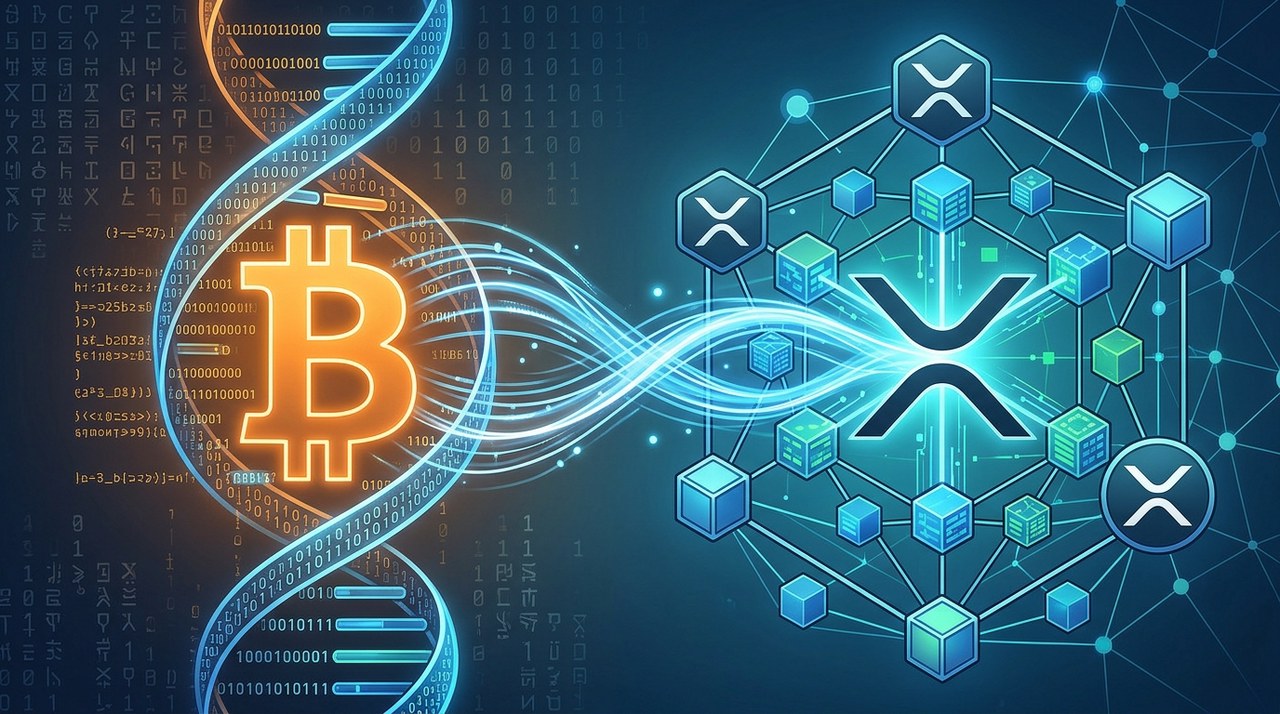
How Bitcoin's Blueprint Inspired the Creation of the XRP Ledger
Hussein Zangana, known in the crypto community as Vet and Director of Community at the XRP Ledger Foundation, recently shared an interesting look into early blockchain history. In a post on X, he highlighted how the XRP Ledger still carries cryptographic design choices created by Bitcoin founder Satoshi Nakamoto.
Back in 2011, three software engineers set out on an ambitious project. David Schwartz, Jed McCaleb, and Arthur Britto were fascinated by Bitcoin. However, they wanted to build a network designed specifically for global payments that improved on Bitcoin's early limitations.
That project eventually became the XRP Ledger. On November 11, 2011, David Schwartz wrote the very first line of core code for what would become XRPL. But because Bitcoin was already a working model, the developers used parts of Satoshi's original codebase to help get things started.
The Early Days: Borrowing Satoshi's Original Code
Creating a whole new blockchain protocol from scratch is a massive effort. In the beginning, the early XRPL code borrowed several helper functions directly from the Bitcoin client created by Satoshi Nakamoto.
Jed McCaleb copied Satoshi's timekeeping routines directly into the early XRP Ledger repository. Interestingly, this included a classic comment left by Satoshi inside the Bitcoin source code.
"Never go to sea with two chronometers; take one or three"
This quote is a famous old maritime rule of thumb. If a ship carries only one clock, you must trust it. If it carries two clocks that show different times, you cannot know which clock is wrong. But if it carries three clocks, you can use a majority vote to spot the inaccurate one.
Satoshi used this analogy in Bitcoin to explain how network nodes agree on time. When building the initial version of XRPL, McCaleb kept both the timekeeping code and Satoshi's exact note in the codebase.
The 2014 Code Clean-Up: Removing Leftover Functions
As the XRP Ledger evolved, its underlying consensus mechanism grew distinct from Bitcoin's Proof-of-Work system. Over time, custom routines replaced the borrowed Bitcoin code.
By late 2014, the remaining direct code from Satoshi was phased out. In December 2014, former RippleXRP-0.63% engineering lead Nik Bougalis removed the last of the timekeeping functions, along with Satoshi's maritime comment.
Vet explained that this code simply became unnecessary leftover logic as new custom code was deployed. Cleaning up unused code is standard practice in software engineering to keep networks fast and clean.
Mechanism 1: The secp256k1 Signature Curve
Even though the direct Bitcoin code was removed in 2014, two fundamental design choices from Satoshi Nakamoto remain active on the XRP Ledger today. The first mechanism is the secp256k1 cryptographic curve.
Cryptographic curves are mathematical formulas used to create public and private key pairs. They allow users to sign transactions securely without revealing their private keys.
When David Schwartz chose secp256k1 for XRPL, he wanted to ensure absolute trust in the network's security. By selecting the exact curve used by Bitcoin, no one could question whether the cryptography was reliable.
Today, XRPL also supports an alternative curve called Ed25519. This means that while not every single XRPL transaction relies on secp256k1, the network maintains full support for Satoshi's original curve.
Mechanism 2: Address Generation with SHA-256 and RIPEMD-160
The second Satoshi design choice still present in XRPL is how account addresses are generated from public keys. Every single wallet address on the XRP Ledger uses this exact cryptographic pipeline.
The process works through a two-step hashing method inherited directly from Bitcoin:
- SHA-256 Hashing: First, the public key is processed through the SHA-256 algorithm to create a fixed-length string of data.
- RIPEMD-160 Hashing: Next, that result is processed through the RIPEMD-160 algorithm to produce a shorter 160-bit hash.
- Encoding: Finally, checksums and base58 encoding turn that hash into the readable public address you see in your wallet.
Because every XRPL account address relies on this process, every user on the network interacts with Satoshi Nakamoto's architectural choices every day.
Breaking Down the Cryptography in Simple Terms
To better understand why these technical choices matter, let's break down these concepts with everyday analogies.
Think of a signature curve like a specialized mathematical lock. You have a private key (your physical key) and a public key (the padlock itself). Satoshi chosen curve secp256k1 was picked because it offered robust security without requiring excessive computing power.
Think of hashing algorithms like a digital food processor. If you put data into SHA-256 and RIPEMD-160, you get a unique digital signature. You cannot reverse the process to get the original raw key back, keeping public credentials safe while producing manageable account numbers.
Open-Source Collaboration in Digital Assets
The history of the XRP Ledger shows how open-source collaboration built the modern digital asset landscape. Early blockchain projects frequently learned from and built upon Bitcoin's foundational design.
While XRPL introduced unique consensus mechanisms to settle payments quickly, keeping core cryptographic elements ensured high security standards across both networks.
As the ecosystem continues to grow, understanding the history behind major assets like BTCBTC+0.96% and XRP provides valuable perspective on how blockchain tech evolves.
Past performance of digital assets or historical operations is not a guarantee of future returns or results. Digital asset trading carries market risks and price volatility. Investors should carefully study all relevant information and assess their risk tolerance before making investment decisions.
Latest blog posts



Google's Quantum Chip Beats Classical Limits in Impossible Game
Google's latest quantum chip has achieved a historic milestone by outperforming classical supercomputers in a non-local quantum game once deemed mathematically impossible for standard binary hardware.
|
Bitcoin Quantum Threat: Upgrades May Take Longer Than Expected
Quantum computers cannot crack Bitcoin today, but expert Leo Fan warns that upgrading security and moving custodial funds will take substantial time.
|

 +2
Institutional Conviction Meets Market Despair: Week in Review
Bitcoin fell below $62,000 as broader markets faced pressure, yet institutional adoption and blockchain integration hit record milestones.
|