

Quantum Risk Flags 35% of Bitcoin Supply, Data Shows
What Is Bitcoin's Potential Quantum Risk?
New data from analytics firm Glassnode reveals that about 7.12 million Bitcoin—or 35.4% of all existing coins—currently sit in addresses with visible public keys.
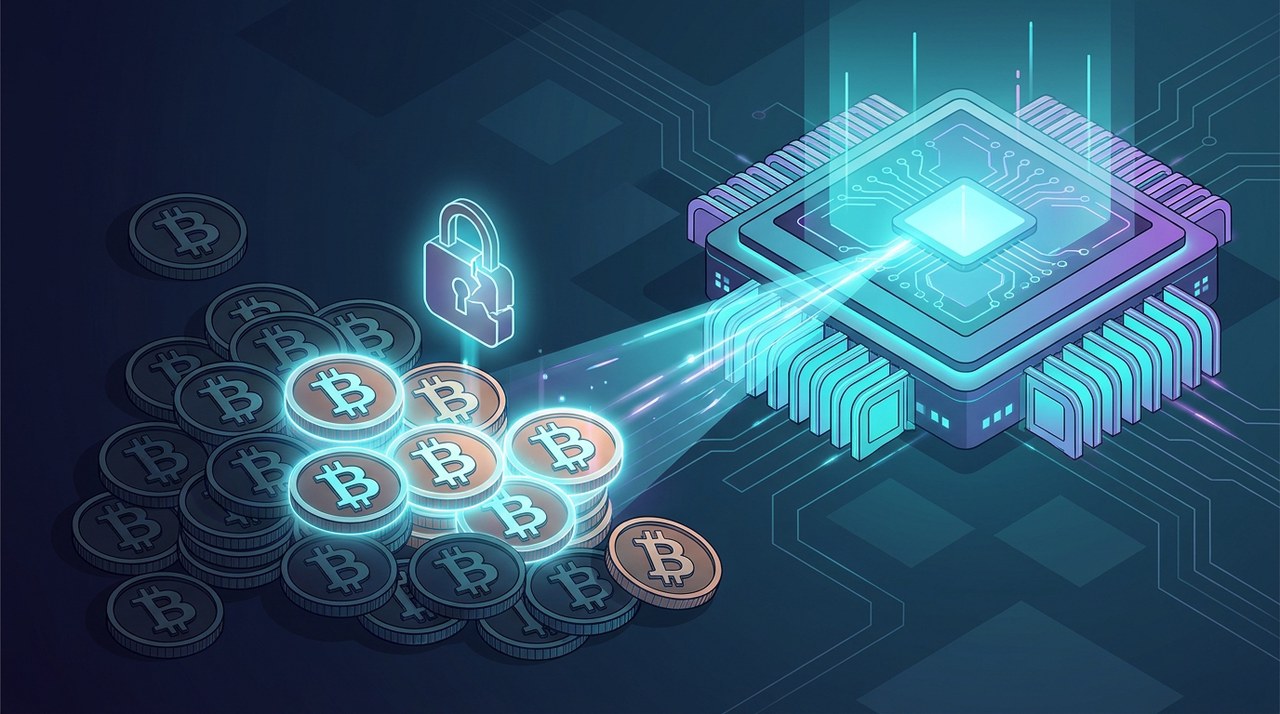
To understand why this matters, think of a public key like a lock visible on a public street. Standard computers today cannot pick this lock. However, a sufficiently powerful quantum computer could theoretically analyze the public key to uncover the private key and move the funds.
How Address Reuse Exposes Bitcoin
Glassnode reports that address reuse is the main reason coins become exposed. Roughly 25.8% of the total Bitcoin supply is vulnerable simply because owners sent transactions from the same address more than once.
Centralized exchanges hold another 11.6% of the Bitcoin supply in exposed addresses. Glassnode's entity data shows noticeable differences across major platforms:
- Robinhood: Holds 100% of its Bitcoin in exposed addresses.
- Binance: Holds about 85% of its Bitcoin in exposed addresses.
- Coinbase: Holds roughly 5% of its Bitcoin in exposed addresses.
- US Government: Shows zero exposed Bitcoin in its holdings.
Glassnode clarified that these numbers represent wallet design structures rather than overall security ratings. Coinbase, which manages custody for most US spot Bitcoin ETFs, noted on October 29 that it has already started upgrading its infrastructure for post-quantum security.
Why Satoshi Nakamoto's Coins Are Harder to Fix
For standard users, removing this exposure takes just a few minutes. Moving coins to a brand-new address automatically protects them.
However, coins linked to Bitcoin's creator, Satoshi Nakamoto, present a unique challenge. EthereumETH-3.77% Foundation researcher Justin Drake estimates that around 1 million BTCBTC-3.94% sits in Satoshi's early addresses, which have remained untouched for over 15 years.
Since Satoshi is inactive, those coins cannot easily be transferred. Developers are currently debating how the Bitcoin network should handle dormant funds:
- Jameson Lopp (Casa): Drafted a proposal to eventually freeze coins that never upgrade, including Satoshi's holdings.
- Adam Back (Blockstream CEO): Prefers keeping upgrades completely optional for wallet owners.
- BIP-360: Another draft proposal focusing on post-quantum readiness, though neither plan has a set activation date.
How Soon Could Quantum Computers Threaten Bitcoin?
In March, Google stated that a quantum computer with under 500,000 qubits could break standard encryption in minutes. However, no quantum machine with that capacity exists today.
Blockstream CEO Adam Back estimated that quantum computers capable of breaking Bitcoin encryption might still be 20 to 40 years away.
At current market prices, the exposed coins are worth over $500 billion, following an earlier ARK Invest estimate of $480 billion. Meanwhile, research firm CoinShares calculated that only about 10,200 BTC would actually be worth targeting for a major market impact.
Despite the long timeline, institutional holders are keeping an eye on the issue. On October 30, Nasdaq-listed Next Technology Holding approved selling or pledging up to 5,833 BTC, citing quantum computing risks alongside other factors.
What This Means for Bitcoin Holders
For individual investors, avoiding address reuse remains the best practice for privacy and safety. While developers continue discussing long-term quantum resistance, immediate risks to everyday wallets remain low.
As with any digital asset, technology and market conditions will continue to evolve over time. Past performance of digital assets is no guarantee of future results. For current market metrics, check Bitkub BTC Market.
Latest blog posts

XRP Tests Crucial $1 Support: Is a Rebound or Drop Ahead?
XRP traded near $1.03 after a 15% weekly decline. We examine key support levels at $0.99 and potential recovery targets.
|
Paraguay Shifts Power From Bitcoin Mining to AI
Paraguay's state utility will end power deals for 4% of global Bitcoin mining by 2027 as it pivots energy toward AI data centers.
|

 +2
Grayscale Sees New Crypto Opportunities Beyond Bitcoin
Grayscale research shows that crypto sectors are decoupling, opening up new diversification opportunities for investors beyond holding Bitcoin alone.
|