

Pyth Network Integrates Real-Time NYSE Stock and ETF Data
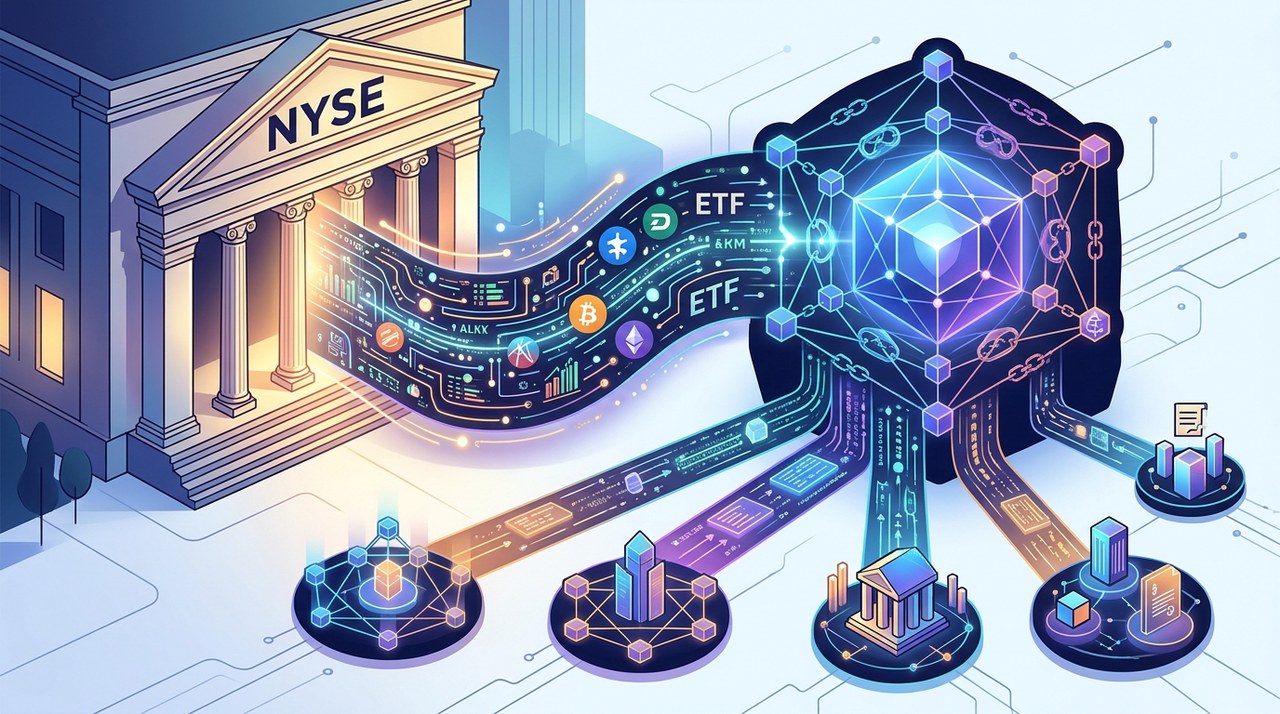
Big News for DeFi: NYSE Data Arrives on PythPYTH+0.87% Network
Pyth Network has officially expanded its data marketplace by adding real-time stock and Exchange-Traded Fund (ETF) data directly from the New York Stock Exchange (NYSE). This expansion marks a major milestone in connecting traditional Wall Street finance with the rapidly growing world of decentralized finance (DeFi).
For years, decentralized applications operated in a separate digital sphere with limited real-time access to legacy stock exchanges. By integrating live feeds from one of the world's premier stock markets, Pyth allows smart contract developers to build financial tools powered by trusted, real-time equities pricing.
What Is Pyth Network and How Do Oracles Work?
To appreciate why this NYSE integration matters, it helps to understand the role of decentralized oracles in the blockchain ecosystem.
Imagine a smart contract on a blockchain as an automated vending machine. It executes predefined instructions perfectly when given input. However, blockchains are designed to be isolated networks for security reasons. They cannot directly look outside their own networks to check the current price of Apple stock, gold, or BitcoinBTC+2.17%.
This is where an oracle network comes in. An oracle serves as a secure bridge, fetching data from external real-world sources and delivering it directly onto the blockchain for smart contracts to use.
Pyth Network specializes in high-frequency financial oracle feeds. Rather than sourcing data from public internet scraping, Pyth receives price information directly from primary institutional sources, including major trading firms, market makers, and financial exchanges around the globe.
Inside the New York Stock Exchange Integration
The New York Stock Exchange is one of the largest equity venues worldwide, facilitating billions of dollars in daily trading volume across thousands of stocks and ETFs.
With live NYSE market data integrated into Pyth, developers across more than 50 supported blockchain networks can access real-time price points for major traditional equities.
- Real-Time Stock Feeds: Live equity prices for NYSE-listed companies are directly available on-chain.
- Comprehensive ETF Coverage: Exchange-Traded Funds tracking indexes, commodities, and sectors can be referenced by smart contracts.
- High-Frequency Updates: Pyth delivers data updates at sub-second speeds, minimizing price latency for financial dApps.
- Multi-Chain Availability: Feeds are available across numerous Web3 ecosystems through Pyth's pull-oracle framework.
Powering the Real-World Asset (RWA) Trend
Why do decentralized applications need equity and ETF price data in the first place? The primary driver is the rapid rise of Real-World Asset (RWA) tokenization.
RWA tokenization involves representing traditional financial assets—such as stocks, government bonds, real estate, and commodities—as digital tokens on a blockchain. Institutions and developers are pursuing RWAs to benefit from faster settlement times, reduced operational overhead, and global fractional ownership.
Core Advantages of Tokenizing Traditional Assets
- Global Accessibility: Investors across different regions can gain exposure to financial instruments with fewer intermediaries.
- Fractional Ownership: Tokenization permits division of high-value shares into smaller fractions, lowering entry barriers.
- Automated Settlement: Smart contracts can execute transfers and collateral management automatically without manual clearing delays.
However, for RWA platforms to function accurately and securely, they require trusted pricing infrastructure. If a platform enables trading or lending backed by tokenized stocks, it must access the precise market value of those assets in real time. Pyth's NYSE integration fulfills this critical requirement.
Practical Use Cases for Developers and Traders
The addition of institutional NYSE feeds enables several new application designs across Web3:
1. Synthetic Equities Trading
Developers can build synthetic trading platforms where users track the price performance of major stocks without taking physical delivery of underlying shares. Precise NYSE pricing ensures synthetic contracts closely match real-world market movements.
2. Multi-Asset Collateral Protocols
Decentralized lending markets can expand to accept tokenized stocks and ETFs as collateral. Borrowers can pledge traditional assets to access stablecoins, while automated risk engines monitor collateral ratios using Pyth's low-latency feeds.
3. Automated Hedging Strategies
Crypto funds and automated market makers can design sophisticated hedging protocols that manage exposure across both digital assets and legacy equity markets simultaneously.
Important Risks and Market Factors to Keep in Mind
While integrating NYSE data into decentralized finance introduces exciting possibilities, users and developers must remain aware of structural challenges and market risks:
- Trading Hours Mismatch: Traditional equity markets operate during fixed business hours (such as 9:30 AM to 4:00 PM EST), whereas blockchain networks run 24/7. Outside standard market hours, stock prices remain stationary, which on-chain protocols must account for in their risk management models.
- Market Volatility: Both digital assets and traditional stocks can experience significant price volatility. Tokenized asset products carry financial risks, and past performance of digital assets is not an indication of future results.
- Oracle and Technical Dependencies: Smart contracts rely on consistent oracle uptime. Interruptions in data feeds or network connectivity can impact protocol execution.
- Evolving Regulations: Regulatory frameworks surrounding tokenized real-world assets and synthetic derivatives continue to develop globally.
Connecting traditional stock market feeds with decentralized oracle infrastructure enhances cross-market capabilities, but market participants should carefully evaluate differences in liquidity, operating hours, and asset volatility.
Looking Forward: Convergence of Legacy and Digital Financial Markets
The integration of NYSE stock and ETF data into Pyth Network illustrates the gradual convergence of conventional financial infrastructure and blockchain technology. As institutional data sources continue joining decentralized networks, smart contracts become increasingly versatile and reliable.
For those interested in exploring market trends or following tokenized asset developments, staying educated on market mechanics remains essential. You can monitor live market activity for PYTH directly on the Bitkub PYTH Market.
Latest blog posts
Bitcoin Holds Near $74K as Stocks Surge Despite Inflation
Bitcoin trades in a narrow range near $74,000 as investors buy tech stock dips despite rising US bond yields following CPI inflation data.
|

Solarious Partners With ALTA Blockchain Labs for Growth
Solarious has partnered with ALTA Blockchain Labs to accelerate its global market presence and expand its decentralized renewable energy platform.
|
Why Stablecoin Backing Won't Save DeFi Lenders
Stablecoin protections under proposed acts do not shield DeFi lenders from governance changes or oracle failures, according to Ajna experts.