Why Stablecoin Backing Won't Save DeFi Lenders
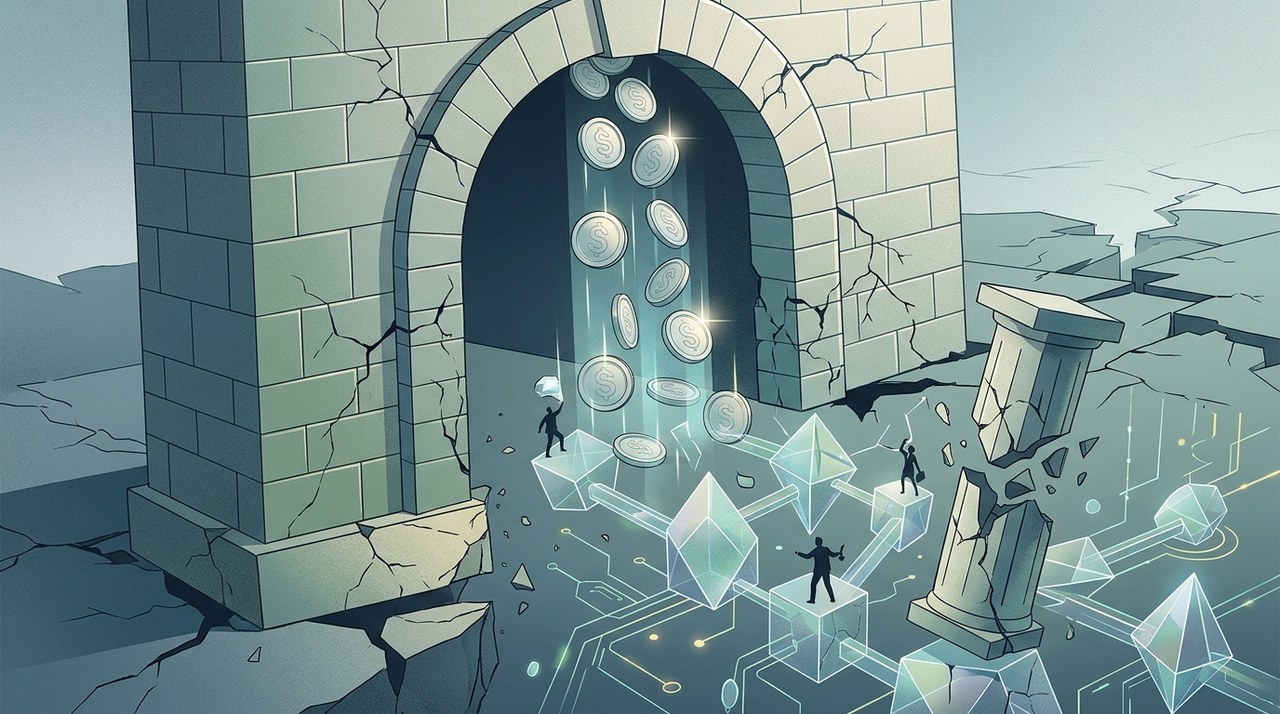
Introduction: Institutions Are Knocking on DeFi's Door
Imagine running a large financial fund. You see traditional financial systems offering modest interest rates, while decentralized finance (DeFi) protocols provide dynamic lending markets powered by automated code. Naturally, institutional investors are interested in exploring these opportunities. But before allocating millions of dollars into smart contracts, what is the first question an investor should ask?
Most institutional investors typically ask a simple question: Which DeFi lending market is the safest?
While that sounds like a sensible question, Mike Hathaway and Joseph Quintilian of the DeFi protocol Ajna argue that it might actually be the wrong starting point.
Asking the Right Question: Who Can Change the Rules?
When traditional institutions evaluate crypto markets, they often focus heavily on regulatory compliance and asset backing. They look for fully backed stablecoins—tokens collateralized 1-to-1 by fiat cash or government securities—or legal protections like the proposed GENIUS Act in the United States.
Legislation such as the GENIUS Act aims to guarantee that a dollar-pegged token can always be redeemed for an actual dollar in the banking system. That offers significant reassurance regarding asset quality.
However, Hathaway and Quintilian point out a critical distinction. A stablecoin can be perfectly backed, legally compliant, and secure on its own. Yet, once that stablecoin is deposited into a decentralized lending pool, the operating environment changes completely.
Instead of asking which market is safest overall, the experts suggest asking a more precise question: Who has the power to change a loan's terms after the money is already lent?
Mike Hathaway and Joseph Quintilian of Ajna argue the better question is who can change a loan’s terms after the money is lent, and why a fully backed stablecoin offers no protection against a token vote or a faulty price feed.
What Legal Frameworks Cover—and What They Miss
To understand this argument, it helps to examine what regulatory guarantees actually achieve. When lawmakers draft stablecoin standards, their focus is primarily on reserve auditing, issuer solvency, and redemption rights.
- Redemption Guarantee: Ensures token holders can exchange stablecoins for fiat currency.
- Reserve Transparency: Requires issuers to hold verifiable cash or liquid assets.
- Issuer Insolvency Protection: Protects consumer funds if the token issuer defaults.
While these protections safeguard the asset itself, they do not extend into the smart contract protocols where tokens are deposited. Once stablecoins enter a lending pool, system safety relies entirely on smart contract code, governance structures, and external data inputs.
Risk Vector 1: Token Votes and Governance Power
The first major risk highlighted by the Ajna leaders is governance risk via token voting.
Many decentralized lending platforms are managed by Decentralized Autonomous Organizations (DAOs). Holders of governance tokens vote on operational parameters, including collateral requirements, interest rate models, and liquidation thresholds.
While DAO governance is designed for community management, it means loan parameters are not permanently fixed. In some protocols, governance token holders can vote to adjust system variables while loans are active.
How Governance Changes Impact Lenders
- Parameter Adjustments: A governance vote could alter collateral factors, changing liquidation risk for existing borrowers and lenders.
- Voting Weight Concentration: Entities holding large amounts of governance tokens can pass proposals that favor specific market setups.
- Contract Upgrades: If a protocol permits contract upgrades via governance, code changes can introduce new logic or vulnerabilities.
Even if the loan is denominated in a fully backed stablecoin, changes made by token voting can alter the risk profile of the lending pool.
Risk Vector 2: Faulty Price Feeds (Oracles)
The second core vulnerability identified is oracle risk.
Smart contracts cannot directly observe real-world market prices. They depend on oracles—third-party data streams that feed price information into the contract logic to determine collateral value and liquidation status.
The Impact of Oracle Errors
If a price feed delivers inaccurate data due to market volatility, technical latency, or manipulation, the smart contract executes its programmed rules based on that faulty input.
- Erroneous Liquidations: False price drops reported by an oracle can cause healthy positions to be liquidated automatically.
- Under-Collateralized Loans: Overreported asset values allow borrowers to take out loans exceeding the true worth of their collateral.
- Market Manipulation: Attackers can exploit vulnerable price feeds to withdraw funds from lending pools.
In these scenarios, legal guarantees surrounding stablecoin backing do not prevent losses caused by data feed inaccuracies within the application layer.
Evaluating Protocol Architecture
To navigate these challenges, market participants examine the structural differences between governance-managed and governance-less protocol designs.
Governance-managed protocols rely on continuous human oversight to update parameters and risk profiles. While this allows adaptability, it retains active operational and voting risks.
In contrast, immutable or governance-less protocols attempt to fix contract rules upon deployment. By removing admin keys and voting mechanisms, these designs aim to ensure loan parameters cannot be modified after funds are committed, though they trade off the ability to adjust to unexpected conditions.
Key Considerations for Market Participants
When assessing DeFi lending opportunities, institutional and retail participants should consider a holistic risk assessment framework:
- Distinguish Asset Security from Protocol Security: Recognizing that a stablecoin's legal status does not guarantee smart contract safety.
- Review Governance Rights: Checking whether contract parameters can be altered retroactively through admin keys or DAO votes.
- Analyze Oracle Architecture: Understanding how price data is sourced, updated, and secured against manipulation.
- Maintain Risk Awareness: Acknowledging that decentralized applications involve unique smart contract and operational risks that differ from traditional banking.
As institutional involvement in digital asset markets continues to evolve, understanding smart contract mechanics and governance parameters remains a fundamental part of risk management.
Latest blog posts

StoneX Sees Growth Potential for Securitize in Tokenization
Financial services firm StoneX has maintained its Buy rating on Securitize, highlighting tokenized equities, fund demand, and structured credit as key growth drivers.

Bitcoin Core Details 3 Patched Security Vulnerabilities
Bitcoin Core developers disclosed details on three previously fixed vulnerabilities, including a high-severity bug that affected block creation.
|

Bessent and Lutnick Clash Over Nvidia China Chip Probe
US officials debated national security and trade policies during a high-stakes White House meeting regarding chip export controls.
|