
NYSE Selects Avalanche to Power Planned Tokenized Stock Platform
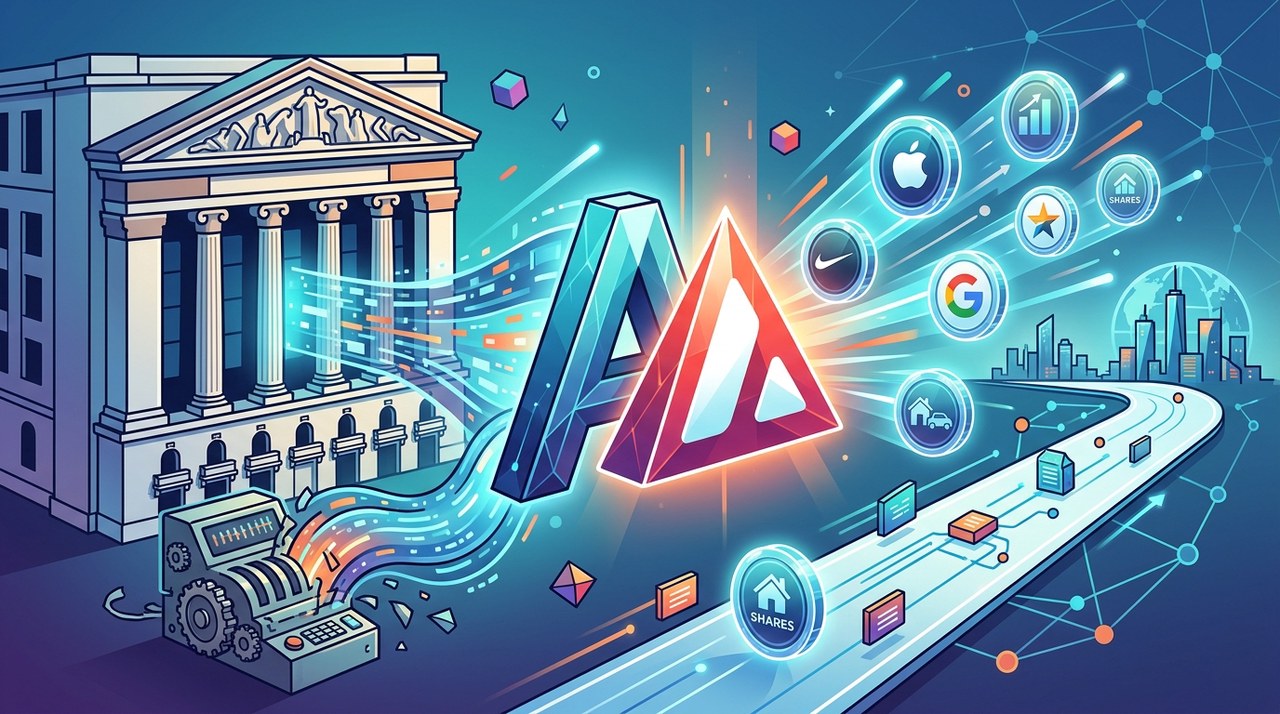
NYSE Meets Blockchain Infrastructure
Imagine buying shares of a major stock, but instead of waiting days for the trade to clear through traditional settlement systems, the transaction clears almost instantly on a blockchain. That vision is moving closer to reality as the New York Stock Exchange (NYSE) prepares to leverage the Avalanche network for its planned tokenized stock trading and settlement platform.
Traditional financial institutions are actively shifting from simple research projects to live infrastructure tests. By integrating Avalanche technology, the NYSE aims to combine the deep liquidity and regulatory standards of established stock exchanges with the speed, transparency, and efficiency of decentralized ledgers.
What Is Stock Tokenization and How Does It Work?
Tokenization is the process of converting real-world assets (RWAs)—such as company stocks, corporate bonds, or real estate—into digital tokens hosted on a blockchain. Each token represents legal ownership of the underlying asset or a fractional share of it.
In traditional stock markets, buying a share involves multiple intermediaries, including brokers, clearinghouses, global custodians, and transfer agents. Settlement historically took two business days (T+2) and was recently streamlined to one business day (T+1) across major financial markets like the United States.
Key Differences: Legacy Settlement vs. Tokenized Settlement
When equity assets are represented as tokens on a high-performance blockchain network, the operational dynamics shift significantly:
- Near-Instant Settlement (T+0): Transactions can clear and finalize in seconds rather than waiting overnight or through weekend closures.
- 24/7 Market Operations: Legacy stock exchanges operate during set local business hours, whereas blockchain rails can run continuously around the clock.
- Fractional Ownership: Tokenized shares can easily be split into smaller decimals, allowing investors to buy precise dollar amounts of expensive equities.
- Programmable Compliance: Rules regarding investor accreditation, identity checks (KYC/AML), and transfer limits can be embedded directly into smart contracts.
Why Avalanche Was Chosen for Equities Settlement
Selecting the right blockchain network is a critical decision for an exchange of NYSE's scale. The platform must handle massive transactional throughput while maintaining strict security, deterministic finality, and compliance capabilities. Avalanche has emerged as a preferred network for institutional asset tokenization due to several distinct architectural advantages.
Avalanche Technical Advantages for Institutional Markets
- Subnet Architecture: Avalanche allows institutions to deploy custom, dedicated blockchains called Subnets. NYSE can operate a custom permissioned subnet with specific validator requirements, regulatory access controls, and privacy settings.
- Sub-Second Transaction Finality: Avalanche can achieve consensus and finalize trades in less than one second under normal network conditions, essential for high-volume financial markets.
- EVM Compatibility: Full support for the EthereumETH+1.11% Virtual Machine (EVM) allows institutional developers to write standard smart contracts using Solidity while benefiting from faster processing times.
- Proven Institutional Track Record: Major financial institutions, including JPMorgan's Onyx, Citi, and WisdomTree, have previously conducted asset tokenization trials on Avalanche networks.
Step-by-Step: How Tokenized Stock Settlement Functions
For market participants, trading tokenized stocks will feel simple on the surface, but the underlying mechanisms provide major efficiency improvements behind the scenes.
- Asset Custody: Traditional equities or cash reserves are deposited with a qualified, regulated custodian bank.
- Token Generation: Smart contracts on the Avalanche platform mint corresponding digital tokens that mirror the ownership rights of the deposited shares.
- Order Execution & Settlement: Buyers and sellers execute trades via regulated trading venues, with ownership transferring on-chain simultaneously with payment (Delivery versus Payment).
- Automated Governance: Corporate actions such as dividend distribution, stock splits, and proxy voting rights can be administered automatically using smart contract execution.
The Broader Real-World Asset (RWA) Trend
The decision to build a stock settlement platform on Avalanche is part of a larger movement across global capital markets toward tokenizing real-world assets. Financial institutions around the world are tokenizing money market funds, government treasuries, commodities, and private credit to improve liquidity and lower operational costs.
Industry experts note that bringing traditional financial instruments on-chain could unlock trillions of dollars in capital efficiency over time as clear regulatory framework standards are established globally.
Risk Factors and Regulatory Considerations
Integrating public blockchain rails into global equity markets requires meeting rigorous regulatory standards, enforcing strict cybersecurity protocols, and maintaining stable liquidity.
While tokenization offers clear speed and cost benefits, market participants should stay informed about potential market risks:
- Regulatory Compliance: Global market regulators enforce strict compliance rules regarding investor protection, asset segregation, and anti-money laundering standards.
- Smart Contract Vulnerabilities: Tokenized platforms depend heavily on automated code, which must undergo rigorous third-party audits to prevent exploits or technical glitches.
- Market Volatility & Liquidity Differences: Newly launched tokenized assets may experience liquidity variations compared to traditional exchange order books during early rollout phases.
- Network Dependencies: Public blockchain networks require network fees (gas), which can fluctuate depending on overall transaction traffic.
Investors should carefully evaluate their financial goals and risk tolerance when exploring tokenized assets or cryptocurrency markets. Past performance of digital assets or financial institutions is not an indication of future performance. To review live cryptocurrency market data and asset details, visit the Bitkub Market page.
What Lies Ahead for Traditional Markets and Crypto
The collaboration between traditional market venues like the NYSE and blockchain networks like Avalanche highlights the ongoing convergence between traditional finance and decentralized technology. Rather than replacing legacy institutions, blockchain acts as a modern upgrade for market infrastructure.
As testing and regulatory reviews continue, tokenized stock settlement platforms could pave the way for a more open, efficient, and interconnected global financial ecosystem.
Latest blog posts


Google's Quantum Chip Beats Classical Limits in Impossible Game
Google's latest quantum chip has achieved a historic milestone by outperforming classical supercomputers in a non-local quantum game once deemed mathematically impossible for standard binary hardware.
|

Bitcoin Quantum Threat: Upgrades May Take Longer Than Expected
Quantum computers cannot crack Bitcoin today, but expert Leo Fan warns that upgrading security and moving custodial funds will take substantial time.
|
 +2
Institutional Conviction Meets Market Despair: Week in Review
Bitcoin fell below $62,000 as broader markets faced pressure, yet institutional adoption and blockchain integration hit record milestones.
|