


Moody's Gives Sky Protocol B3 Rating with Stable Outlook
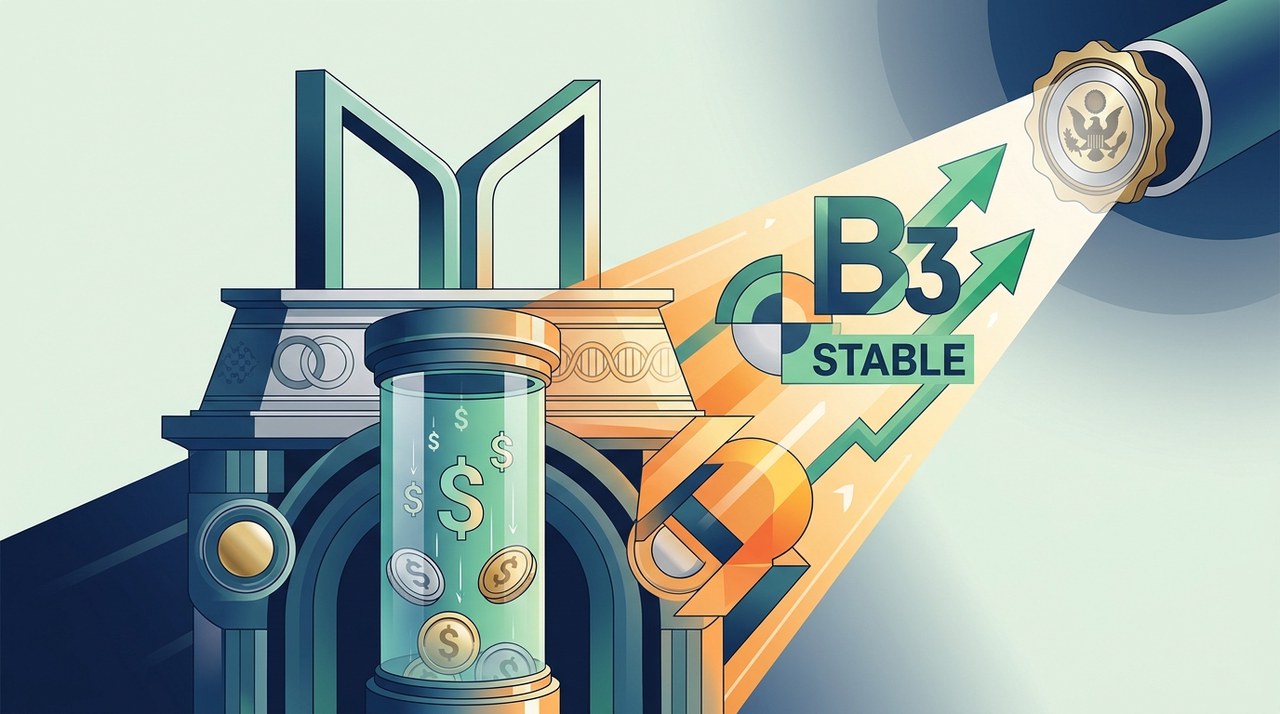
Moody's Issues First-Ever Stablecoin Protocol Rating
Traditional credit rating agency Moody's Investors Service has officially assigned an issuer rating of B3 with a stable outlook to Sky Protocol. This announcement marks a historical milestone for digital assets, as it represents the very first time Moody's has assigned a formal credit rating to a decentralized stablecoin platform.
In addition to the new assessment from Moody's, Sky Protocol also holds a B- credit rating from S&P Global Ratings. Together, these two ratings mark a significant step in how traditional financial institutions analyze decentralized financial infrastructure.
What Is Sky Protocol and How Does USDSUSDS+0.00% Fit In?
To understand why this rating matters, it helps to look at what Sky Protocol actually does. Formerly known as MakerDAO, Sky is one of the oldest and largest decentralized finance (DeFi) platforms in the cryptocurrency ecosystem.
Sky Protocol operates USDS, a major decentralized stablecoin pegged to the U.S. dollar. The protocol rebranded from MakerDAO to Sky to improve user experience, offer streamlined savings options, and make decentralized stablecoins more accessible to both retail users and institutional investors.
Unlike centralized stablecoins that hold fiat dollars in conventional bank accounts, decentralized stablecoin protocols like Sky rely on automated smart contracts and asset collateral. Users deposit supported assets—such as EthereumETH-4.28% or tokenized real-world assets (RWAs)—into vaults to generate USDS.
Decoding the Ratings: What Do B3 and B- Mean?
Credit ratings evaluate the financial strength and risk profile of an entity. Both Moody's and S&P use structured letter scales to give institutional investors a standard measure of creditworthiness.
Here is how Sky's ratings fit into the traditional credit scale:
- Moody's B3 Rating: On Moody's rating scale, letters starting with 'B' fall into the speculative or non-investment grade category. A B3 rating indicates high credit risk, but the 'stable' outlook suggests Moody's expects the protocol's credit profile to remain steady over the medium term.
- S&P B- Rating: S&P uses a comparable letter scale where a B- rating corresponds closely to Moody's B3. It indicates that the protocol is currently capable of meeting its financial commitments but remains vulnerable to adverse market or economic conditions.
While a speculative rating reflects financial and operational risk, receiving an official credit rating is a major milestone for a DeFi platform. Historically, decentralized protocols have operated entirely outside the scope of traditional institutional rating agencies.
Why Credit Ratings Matter for Institutional Adoption
For institutional investors like treasury managers, fund managers, and family offices, evaluating risk is a fundamental requirement before deploying capital. Many traditional institutions are bound by strict risk management guidelines that limit interactions with unrated financial products.
By obtaining official ratings from established agencies like Moody's and S&P, Sky Protocol offers institutional risk managers a recognizable framework to evaluate potential risk.
This evaluation arrives at a time when institutional interest in USDS and tokenized real-world assets continues to grow. Standardized metrics help bridge the gap between traditional corporate finance and decentralized protocols.
Understanding Protocol Risks and Realities
While credit ratings offer valuable transparency, decentralized protocols carry distinct risks that market participants should consider carefully.
Key factors evaluated by rating agencies in the crypto space include:
- Smart Contract Risk: Software code bugs or technical exploits present unique operational risks that traditional corporate debt issuers do not face.
- Collateral Volatility: Sky Protocol relies on digital assets and real-world collateral. Sharp fluctuations in collateral values can impact system backing, though over-collateralization safeguards are built into the protocol.
- Regulatory Environment: Evolving global regulations surrounding stablecoins and decentralized finance could alter operational requirements over time.
- Governance Governance: Decentralized protocol changes depend on token-holder votes, which can lead to shifts in protocol strategy.
Investors should always conduct thorough research and evaluate their personal risk tolerance. Past performance of digital assets or historical protocol stability is not an indication of future results.
A Benchmark Moment for Decentralized Finance
Moody's decision to assign a B3 rating with a stable outlook to Sky Protocol sets a noticeable precedent for the digital asset industry. As traditional finance and crypto continue to connect, institutional risk assessments may become a standard feature for major stablecoin issuers.
For now, the ratings from both Moody's and S&P establish an baseline evaluation for Sky and USDS as institutional curiosity in stablecoin architecture expands.
Latest blog posts

Crypto Market Enters Extreme Fear as Bitcoin Drops to $59k
The Fear and Greed Index sank toward single digits as Bitcoin pulled back from its local high of $87,000 to around $59,000.
|

Wall Street and Crypto Enter 'Extreme Fear': What Is Spooking Investors?
Market sentiment across traditional finance and crypto has shifted into extreme fear amid macroeconomic uncertainty and liquidity concerns.
|


BlockCon Global Confirms 2026 Executive Roster
BlockCon Global announces its speaker lineup for the 2026 business retreat in Punta Cana, bringing together investors, builders, and regulators.
|