

Wall Street and Crypto Enter 'Extreme Fear': What Is Spooking Investors?

Understanding the Current Market Sentiment
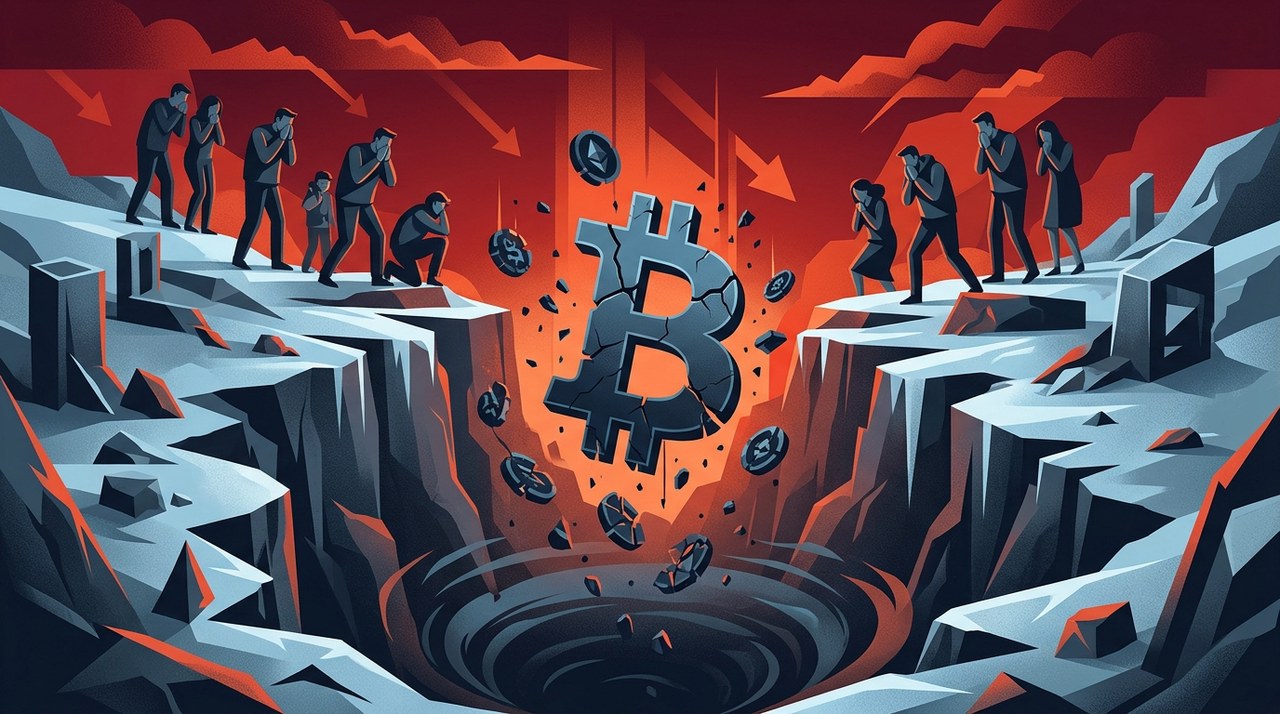
Both Wall Street and the crypto market are experiencing a noticeable shift in investor mood. Key sentiment indicators, including the Crypto Fear and Greed Index, have dipped into Extreme Fear.
When market anxiety reaches these levels, investors often step back to assess the broader economic landscape. But what factors are driving this shared caution across traditional finance and digital assets?
What Is Spooking Investors Right Now?
Market sentiment rarely changes without specific underlying catalysts. Currently, several macroeconomic headwinds and industry trends are weighing heavily on market sentiment.
1. Macroeconomic Policy and Interest Rates
Central bank interest rate decisions continue to play a central role in market behavior. Elevated interest rates make low-risk yield assets more attractive while reducing appetite for higher-risk investments like stocks and Bitcoin.
If inflation remains sticky, central banks may keep rates higher for longer. This scenario tends to constrain liquidity across global financial markets.
2. Tech Industry Valuations and Delayed IPOs
Wall Street is also keeping a close eye on tech startup valuations and initial public offering (IPO) timelines. Data from prediction market platforms reflects cautious expectations for major corporate listings.
For instance, prediction market contracts tracking potential tech and crypto-adjacent firm IPOs before 2027 show relatively low estimated probabilities for listings. Probabilities for companies like Rippling (4%), Remote (4%), Celonis (3%), Ledger (3%), and Discord (3%) suggest investors expect private tech firms to wait for clearer market recovery before going public.
3. Capital Flows and Market Liquidity
Liquidity remains a key driver for the crypto market. While institutional products like spot Bitcoin ETFs provided significant momentum earlier, capital flows can slow down or reverse during broader market pullbacks.
How Market Sentiment Indicators Work
The Crypto Fear and Greed Index tracks market emotions on a scale from 0 to 100 to help investors analyze overall market mood.
The index aggregates multiple data points, including:
- Price Volatility: Measuring current price swings against 30-day and 90-day averages.
- Trading Volume: Comparing current market activity with recent historical trends.
- Social Media Sentiment: Assessing public discussion frequency and tone.
- Market Dominance: Analyzing Bitcoin's share relative to altcoins.
- Search Trends: Monitoring search engine interest for market-related terms.
A low score signals extreme fear, indicating widespread market caution. Conversely, a high score indicates extreme greed.
Evaluating Future Market Scenarios
When assessing Bitcoin (BTCBTC-2.92%) and the wider crypto market during period of high volatility, it is helpful to consider potential scenarios based on changing market conditions.
If macroeconomic pressure eases and institutional inflows through spot ETFs strengthen, Bitcoin could see a gradual recovery in buying momentum over the coming quarters. However, if macroeconomic growth slows further or regulatory pressures increase, digital asset prices could experience continued consolidation or downward pressure.
Investors interested in tracking real-time crypto price data and trading activity can monitor markets on Bitkub Market.
Past performance of digital assets is not an indication of future performance.
How Investors Approach High-Fear Periods
Experienced market participants view sentiment swings as a natural part of financial market cycles. Rather than acting on emotion, investors typically focus on foundational strategies:
- Risk Management: Setting clear portfolio risk limits and maintaining cash reserves.
- Disciplined Strategy: Utilizing dollar-cost averaging (DCA) to spread entry points over time.
- Diversification: Spreading exposure across multiple asset classes to manage risk.
- Data-Driven Research: Relying on objective market metrics rather than short-term headlines.
Summary
The current overlap of caution across Wall Street and crypto highlights the deep connections between global macroeconomic trends and digital asset markets. Staying informed on economic data helps investors stay grounded regardless of market sentiment.
Latest blog posts
Crypto Market Enters Extreme Fear as Bitcoin Drops to $59k
The Fear and Greed Index sank toward single digits as Bitcoin pulled back from its local high of $87,000 to around $59,000.
|


BlockCon Global Confirms 2026 Executive Roster
BlockCon Global announces its speaker lineup for the 2026 business retreat in Punta Cana, bringing together investors, builders, and regulators.
|

BlackRock Launches Tokenized Money Market Fund in Hong Kong
BlackRock has launched a tokenized money market fund in Hong Kong backed by $100 million in seed capital from Standard Chartered and Ant International.
|