
MicroStrategy Wants a Bitcoin Bank, but You Can Run Your Own

Two Competing Visions for the Future of Bitcoin
Imagine having complete control over your money without needing a bank to approve your transactions. That exact promise was why Bitcoin was created in the first place.
Today, we are witnessing a clear divide in how people view the future of digital currency. On one side, giant corporations want to turn Bitcoin into a traditional banking engine. On the other side, everyday users are maintaining network nodes to protect their financial independence.
Strategy Outlines Plan to Become the World's Bitcoin Bank
On November 6, 2026, corporate giant Strategy (formerly known as MicroStrategy) reinforced its massive crypto roadmap. Strategy CEO Phong Le laid out the vision during the Money20/20 fintech conference.
Le explained how Bitcoin serves as digital capital. He highlighted Strategy's journey from a regular enterprise software firm to a massive corporate holder of 845,000 BTCBTC-0.19%.
Le also discussed STRC, the company's preferred stock, along with the gradual convergence of traditional finance (TradFi) and decentralized finance (DeFi).
Shortly after the panel, Strategy executive chairman Michael Saylor shared Le's interview on X. Saylor added a direct message: The world needs a Bitcoin bank. We're building it.
This vision has been brewing for a while. Back in September, Saylor urged commercial banks to hold Bitcoin and lend funds against it.
Strategy continues building its financial offerings, where its 12% dividend stock has rebounded from its June low. Keep in mind that past performance of corporate securities or digital assets does not guarantee future results, and digital markets remain subject to volatility.
Why Bitcoin Does Not Actually Need a Middleman
While Strategy works on enterprise banking solutions, on-chain data shows regular people can easily run the network themselves without trusting any institution.
On the same day Saylor posted his message, an on-chain researcher named Zeeme published updated data on the total size of the Bitcoin blockchain.
The entire transaction history of Bitcoin, spanning 17 years up to 2026, sits at roughly 780 gigabytes (GB).
This size is significant for individual freedom. Because 780 GB easily fits on a standard 1TB hard drive, anyone with basic computer hardware can run a full node.
Running a full node lets you verify your own transactions. You do not have to rely on MicroStrategy, a bank, or any third party to confirm your balance.
Year-by-Year Growth of the Bitcoin Blockchain
Researcher Zeeme shared a detailed breakdown showing how the blockchain's size has grown over time:
- 2011: 0.3 GB
- 2012: 3.6 GB
- 2013: 13.5 GB
- 2014: 29 GB
- 2015: 53 GB
- 2016: 95 GB
- 2017: 149 GB
- 2018: 197 GB
- 2019: 255 GB
- 2020: 319 GB
- 2021: 382 GB
- 2022: 445 GB
- 2023: 543 GB
- 2024: 635 GB
- 2025: 720 GB
- 2026: 780 GB
These numbers show that seventeen years of global financial history can still fit on a consumer drive you can buy online for a modest price.
The Debate Over Node Size and Growth Limits
Despite the modest data size, keeping the blockchain light enough for home users remains a heated debate among core developers.
Bitcoin Knots developer Luke Dashjr commented on the research post, claiming that 16 GB/year is the cap for now.
Researcher Zeeme countered that assessment. Between July and September 2026, the chain actually grew at a rate of about 85 GB per year.
Zeeme pointed out that even under the original 1 MB block size limit, the chain expanded by about 52 GB annually. Therefore, a 16 GB per year cap does not match real-world network activity.
The Fight to Keep Hardware Requirements Low
Why do developers fight so fiercely over data limits? It comes down to decentralization and user access.
If the blockchain grows too large, regular people cannot afford the hardware or internet speed to run nodes. At that point, only wealthy corporations and data centers could run the network.
This disagreement flared up in September when a Bitcoin Knots user struggled to sync his node on a Raspberry Pi computer. Dashjr famously told the user to get a real computer.
Some users have suggested radical solutions to manage memory. One proposal even suggested purging all chain data recorded before 2020.
Earlier this year, the ongoing dispute over chain data size led Knots supporters to claim the network was coming under attack due to high transaction volume.
Corporate Finance Meets Personal Sovereignty
The push by Strategy to become a Bitcoin bank highlights a deep philosophical shift in the cryptocurrency ecosystem.
Institutional players see Bitcoin as a powerful reserve asset to back complex financial products, corporate loans, and equity structures.
Meanwhile, individual users remind the world that Bitcoin's original strength is self-sovereignty—verifying your own money using a simple 1TB drive without needing permission from any bank.
Latest blog posts
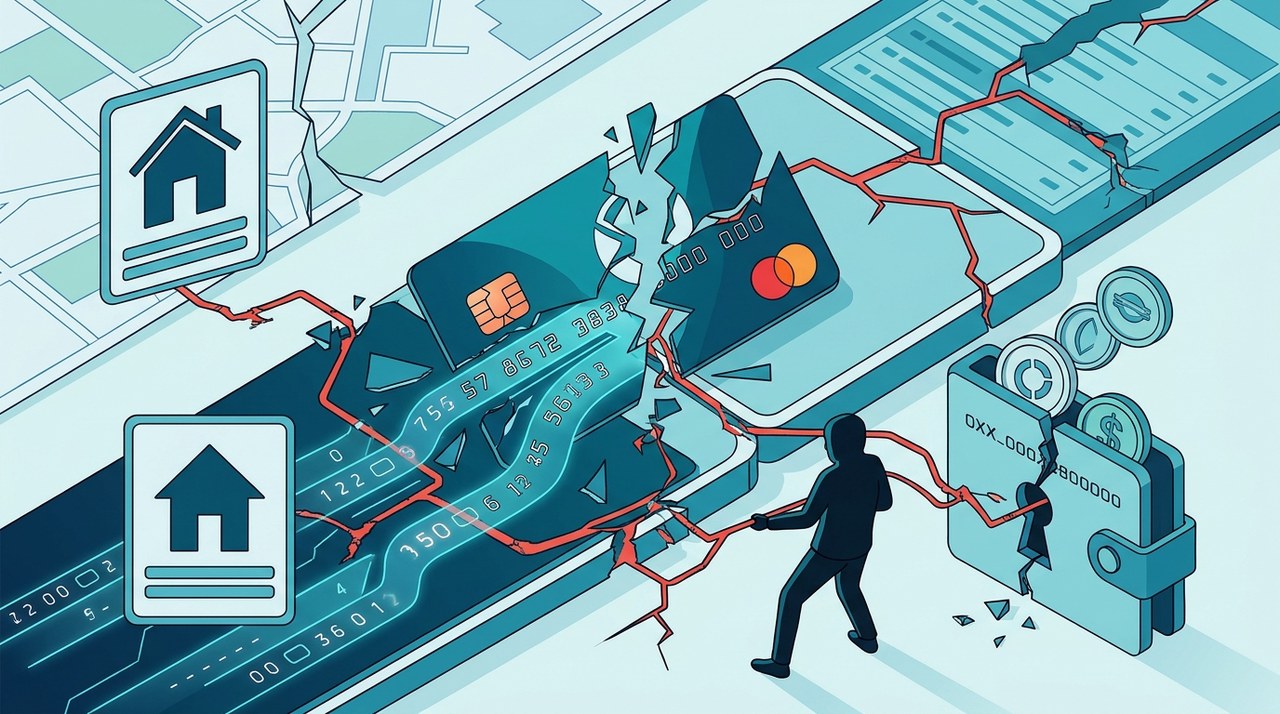


Gnosis Pay Breach Exposes Card Numbers and Wallets
A data breach at Gnosis Pay exposed user card numbers, home addresses, and linked crypto wallets, raising security concerns among crypto cardholders.
|
Spot Bitcoin ETFs Suffer $1.28B Outflows in Heavy Week
US spot Bitcoin ETFs recorded $1.28 billion in net outflows over the past week, marking their worst performance since June as BlackRock's IBIT led Friday's exits.
|

AI Chip Stocks Rebound: Is the Sector Bubble Bursting?
AI chip stocks like Nvidia rebounded after a recent global market sell-off, raising questions about valuation limits and future growth.
|