

Kalshi Eyes $65 Billion Valuation Ahead of Future IPO

Kalshi Target Valuation Jumps to $65 Billion
Prediction market platform Kalshi is in discussions to raise new private capital. According to a Bloomberg report published on November 13, 2026, new investors could value the company at $65 billion.
This potential funding round comes shortly after the company closed a major capital injection last month. People familiar with the matter revealed that this could be one of Kalshi's final private funding rounds before an eventual initial public offering (IPO).
However, Kalshi co-founder and Chief Executive Officer Tarek Mansour clarified the company's timeline. While confirming that conversations regarding a public listing are occurring, Mansour stated that an IPO will not happen in 2026.
Breaking Down Kalshi's Rapid Financial Growth
Kalshi's private valuation has experienced a substantial increase over recent months. In October 2026, the platform secured a $40 billion valuation following a $1 billion Series G funding round.
That October financing represented an 82% surge above the company's previous private valuation. The proposed $65 billion figure signals continued demand among institutional venture capital firms.
Key Investors Behind Kalshi
- Sequoia Capital: Co-led the $1 billion Series G round in October 2026.
- Wellington Management: Co-led the Series G round alongside Sequoia.
- Baillie Gifford: Participated as a major investor in the funding round.
- Morgan Stanley Investment Management: Contributed to the private capital raise.
- Coatue Management: Provided venture backing in the financing round.
- Andreessen Horowitz (a16z): Participated in supporting the growth of the platform.
Following the October funding round, CEO Tarek Mansour explained how the capital would be deployed across the organization.
Mansour noted that the funds allow the company to obtain the resources necessary to build out its product roadmap. This roadmap covers tools tailored for both retail traders and institutional market participants.
What Are Prediction Markets and Why Are They Expanding?
Prediction markets allow users to buy and sell contracts based on the outcomes of real-world events. These events range from economic data releases and elections to sporting outcomes.
Rather than operating as a traditional sportsbook, prediction platforms list contracts that adjust in price based on supply and demand. Kalshi has emerged as one of the two largest prediction platforms globally.
Platform activity has expanded significantly. In October 2026, Kalshi recorded trading volume approaching $100 billion.
Venture investors view event-based derivatives as potential alternatives to conventional gambling and financial hedging platforms. This thesis continues to attract capital despite broader macroeconomic volatility.
Market Backdrop and Macroeconomic Context
The funding discussions are taking place against a backdrop of broader financial market instability. Tech sectors experienced turbulence following the resignation of Nvidia CEO Jensen Huang amidst investigations into personal conduct and security concerns.
Digital asset markets also recorded minor pullbacks on the date of the report. On November 13, 2026, Bitcoin (BTCBTC-3.49%) traded around $68,456 (-4.15%), while EthereumETH-3.40% stood near $1,924 (-3.91%).
Past performance of digital assets or financial markets is not a guarantee of future results.
Despite fluctuations across technology and crypto markets, venture capital interest in prediction market infrastructure remains active.
The Legal Friction: State Gambling Laws vs. Federal Oversight
Kalshi's rapid growth has led to increasing regulatory friction with state authorities across the United States. The core legal dispute centers on whether event contracts should be classified as regulated financial swaps or gambling.
State regulators argue that event markets tied to sports or public events function as sports betting. Under this view, operators must obtain state-level gambling licenses.
Overview of Regulatory Challenges
- State Opposition: At least 22 US states officially contest Kalshi's position that its sports markets are financial swaps.
- Attorneys General Stance: A coalition of 38 state Attorneys General stated that prediction platforms cannot bypass state gaming laws.
- Licensing Demands: Local regulators insist that listing event contracts requires compliance with state gambling frameworks.
Federal Position: CFTC Claims Exclusive Jurisdiction
In contrast to state officials, federal regulators argue that prediction markets fall under federal financial laws. The Commodity Futures Trading Commission (CFTC) maintains exclusive authority over commodity derivatives in the United States.
CFTC Chairman Michael S. Selig has publicly defended the agency's jurisdiction over prediction market operators.
In February, Chairman Selig addressed the regulatory boundary during a public statement.
These products are commodity derivatives and squarely within the CFTC’s regulatory remit. As I’ve said before, the CFTC has the expertise and responsibility to defend its exclusive jurisdiction over commodity derivatives, and that’s exactly what we’ll do.
This ongoing legal tension between state gambling enforcement and federal derivative regulation remains a key operational factor for the platform moving forward.
Looking Ahead to Kalshi's IPO Roadmap
While public offering discussions remain active, Kalshi's leadership is taking a multi-year approach. CEO Tarek Mansour confirmed that an IPO will not occur in 2026, allowing the team to focus on technology and legal compliance.
Securing additional capital at a $65 billion valuation would provide Kalshi with substantial reserves. These resources can help the company navigate ongoing legal debates and build infrastructure for institutional participants.
Market participants will continue watching how court rulings define the boundary between state gambling laws and federal commodity derivatives oversight in the coming years.
Latest blog posts

SpaceX Cuts Grok AI Team: Where Is Its $7.6B Revenue From?
SpaceX recently laid off most of its Grok video team, yet its AI division generated $7.6 billion last quarter. Here is how compute rentals drive its earnings.


 +1
Dogecoin Cofounder Jokes He Is a Shiba Inu Amid Dip
Dogecoin cofounder Billy Markus shared a playful joke on social media as crypto markets faced pressure from macro factors.
|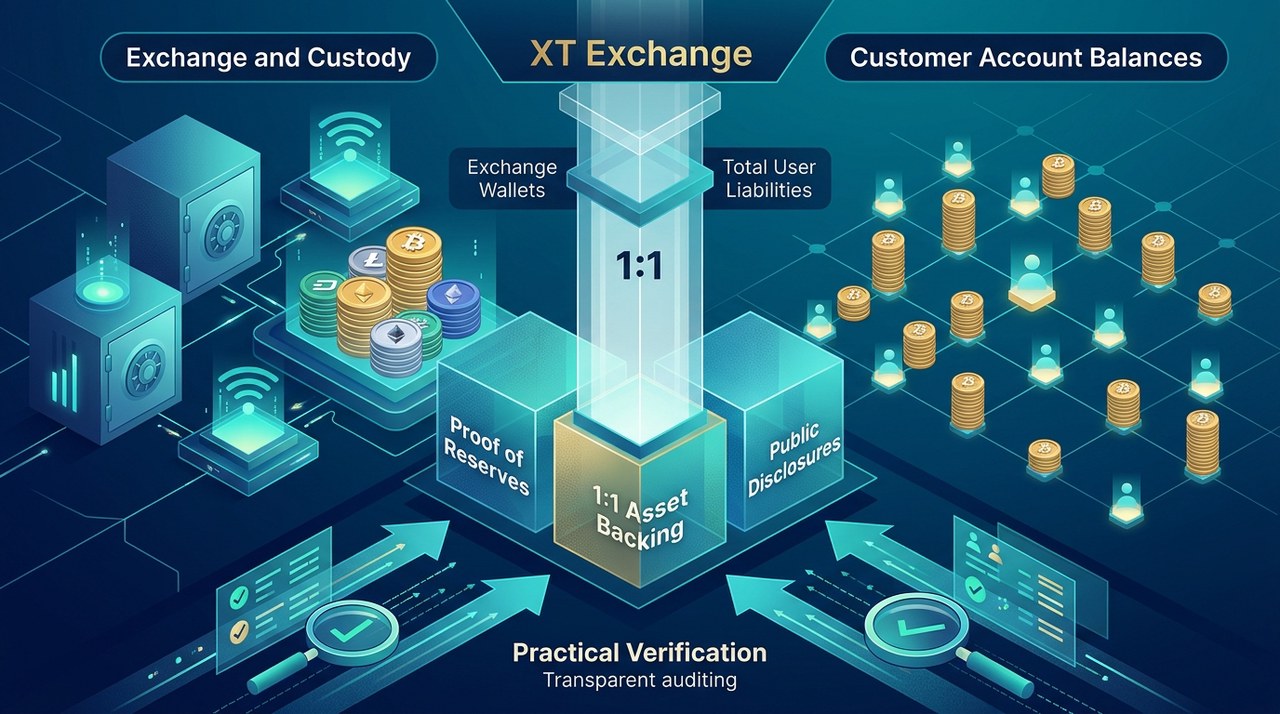
XT Exchange and the Foundations of Trust in Digital Finance
XT Exchange uses public Proof of Reserves disclosures and Merkle-tree verification to show how customer balances match stored assets.