
Justin Drake Urges 'Bunker Mode' for Ethereum Security
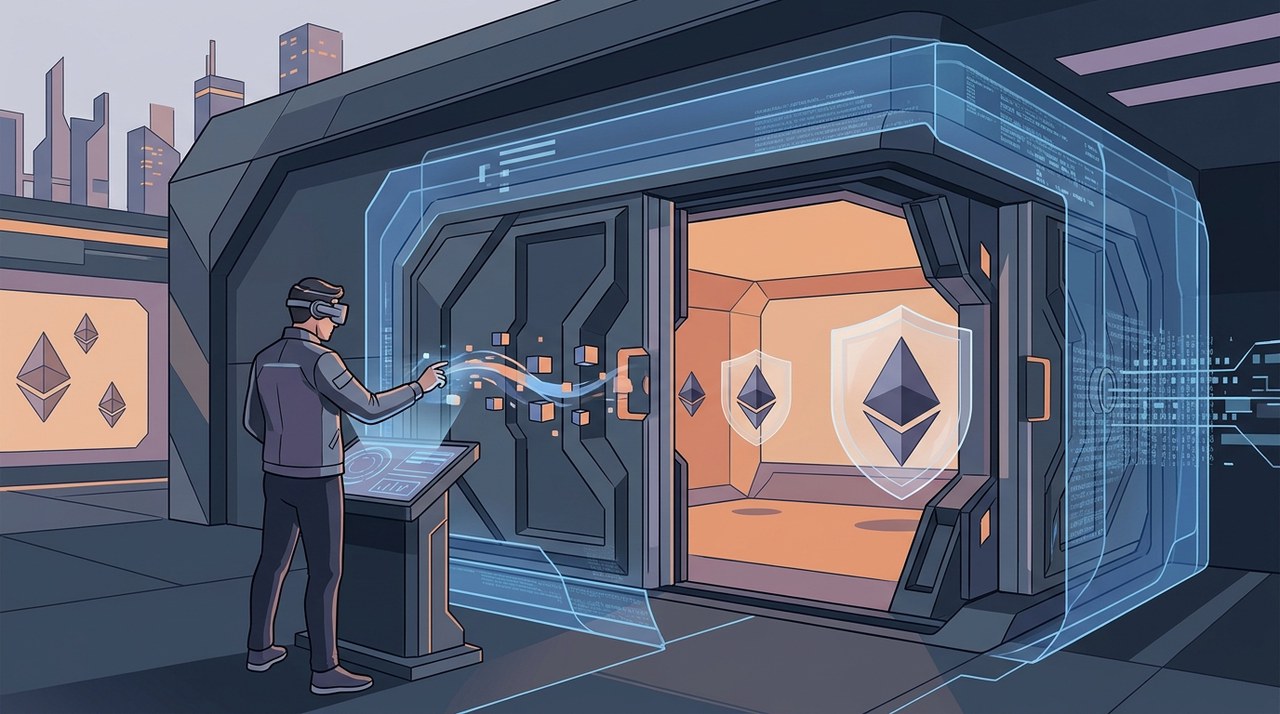
EthereumETH-1.69% Researcher Urges 'Bunker Mode' for Key Security
Imagine you own a high-tech digital safe. Every time you open it to send a package, you leave a temporary blueprint of the lock's inner mechanism visible to anyone passing by on the street. In the world of blockchain, a similar event occurs every time you make a transaction from a wallet address.
To guard against potential future vulnerabilities, Ethereum researcher Justin Drake has recommended a proactive defense strategy often described as 'bunker mode.' His core recommendation is simple: crypto users should consider moving their assets to fresh, unused addresses that keep their public keys hidden safely behind a protective cryptographic hash.
Who Is Justin Drake and What Prompted This Advice?
Justin Drake is a well-known researcher at the Ethereum Foundation. He spends his time focusing on consensus mechanisms, layer-2 scaling solutions, and long-term network safety.
Drake's suggestion for 'bunker mode' planning addresses a subtle nuance in how public-key cryptography functions. While current blockchain security remains extremely robust, exposing public keys over time could theoretically introduce risks as computing capabilities advance. By planning ahead, users can protect their long-term reserves from potential private key recovery threats.
How Blockchain Wallets Work: Keys vs. Hashes
To understand Drake's recommendation, it helps to break down how a crypto address is created and used. Most people think of a wallet as a single account number, but three distinct elements work together behind the scenes:
- Private Key: This is your secret password. It grants full control of your funds and allows you to sign outgoing transactions. You must never share it with anyone.
- Public Key: This is mathematically generated directly from your private key. The network uses it to verify that your transaction signature is legitimate.
- Wallet Address: This is a shortened, hashed version of your public key. It functions as your public account number for receiving funds.
When you simply receive funds at a fresh address, only the address (the hash) is published to the blockchain ledger. Your actual public key remains completely hidden inside your wallet software.
The Transaction Exposure: What Happens When You Send Crypto?
The moment you transfer crypto out of an address, your wallet must broadcast a mathematical signature to prove you own the matching private key.
In doing so, the transaction exposes your raw public key to the entire network. From that point onward, anyone inspecting the blockchain can see both your public address and the exact public key linked to it.
Under normal circumstances, calculating a private key from a public key is mathematically near-impossible using classical computers. However, exposing the public key removes one layer of cryptographic defense.
Why Public Key Exposure Matters: The Future Quantum Risk
Why would revealing your public key matter if traditional computers cannot break it? The core concern involves future technological developments, specifically quantum computing.
Modern blockchains rely on elliptic curve cryptography (specifically secp256k1) to link private keys to public keys. While classical supercomputers would require billions of years to derive a private key from a known public key, powerful quantum computers running Shor's algorithm could theoretically calculate it far faster.
However, if a quantum computer only knows the hash of a public key (the unspent wallet address), Shor's algorithm cannot be used. Reversing a cryptographic hash function—like Ethereum's Keccak-256—requires a different technique (Grover's algorithm), which offers much stronger mathematical resistance.
What Is 'Bunker Mode' and How Does It Work?
Justin Drake's 'bunker mode' proposal is essentially a practical security habit for digital asset storage. Here is how the concept works in practice:
- Generate a Fresh Address: Create a brand new wallet address that has never sent an outgoing transaction.
- Transfer Assets In: Deposit your long-term crypto holdings into this new address. Because you are only receiving funds, the public key is never broadcast.
- Keep the Address Cold: Avoid signing any outgoing transactions or smart contract approvals from this address until you intend to move the funds.
By keeping the public key concealed behind its hash, the address stays in a 'bunker state.' Even if future key-recovery methods or quantum capabilities emerge, funds residing in unexposed addresses remain shielded behind cryptographic hash protection.
Everyday Analogy: The Vault with a Concealed Lock
To visualize this concept, imagine two bank vaults located inside a public building:
Vault A has its lock mechanism exposed behind clear glass. While the lock is top-grade and currently unpickable, lock experts can closely study every pin and groove.
Vault B is completely enclosed in solid steel plates. No one can see where the lock mechanism is situated until the owner decides to remove the outer shield.
In this analogy, Vault A represents an address that has sent outgoing transactions (public key exposed). Vault B represents a fresh address operating in 'bunker mode' (public key hidden behind a hash).
Practical Address Management Habits for Users
While 'bunker mode' offers an extra layer of defense for long-term storage, holders must balance security with everyday convenience. Useful habits include:
- Separate Active and Reserve Wallets: Use an active wallet for everyday transfers or smart contract interactions, and maintain isolated cold wallets for long-term reserves.
- Avoid Reusing Spent Addresses: When withdrawing funds from a vault wallet, consider moving any remaining balance to a newly generated address rather than leaving it in the revealed address.
- Stay Informed on Protocol Updates: Ethereum developers are actively researching post-quantum cryptographic standards to upgrade network safety long before quantum computers pose a realistic threat.
The Future Outlook for Ethereum Cryptography
Justin Drake's recommendation highlights ongoing research into long-term network defense. Beyond individual wallet habits, Ethereum's development roadmap includes plans to integrate quantum-resistant signature schemes in future core upgrades.
Innovations such as Account Abstraction (ERC-4337) and advanced zero-knowledge primitives will eventually allow wallets to update their security models automatically without requiring manual migration steps.
Until those network-level updates are deployed, adopting simple address hygiene practices like 'bunker mode' provides a useful, user-level approach for safeguarding long-term crypto assets.
Latest blog posts


XRP Ledger Proposes Quantum-Proof Security Upgrade
The XRP Ledger Foundation has proposed a zero-cost security upgrade designed to protect user accounts from potential future quantum computing threats.
|

HIVE Reports $78.7M Loss as AI Revenue Reaches $8.8M
HIVE Digital Technologies reported a quarterly net loss of $78.7 million on revenue of $84.9 million, alongside growth in its AI unit.
|
XRP Ledger Testnet and Devnet Set for November Reset
Ripple developers scheduled a full data reset for the XRP Ledger Testnet and Devnet on November 25, 2026, to improve node history server stability.
|