

JPMorgan Stock Drops as Epstein Inquiry Resurfaces
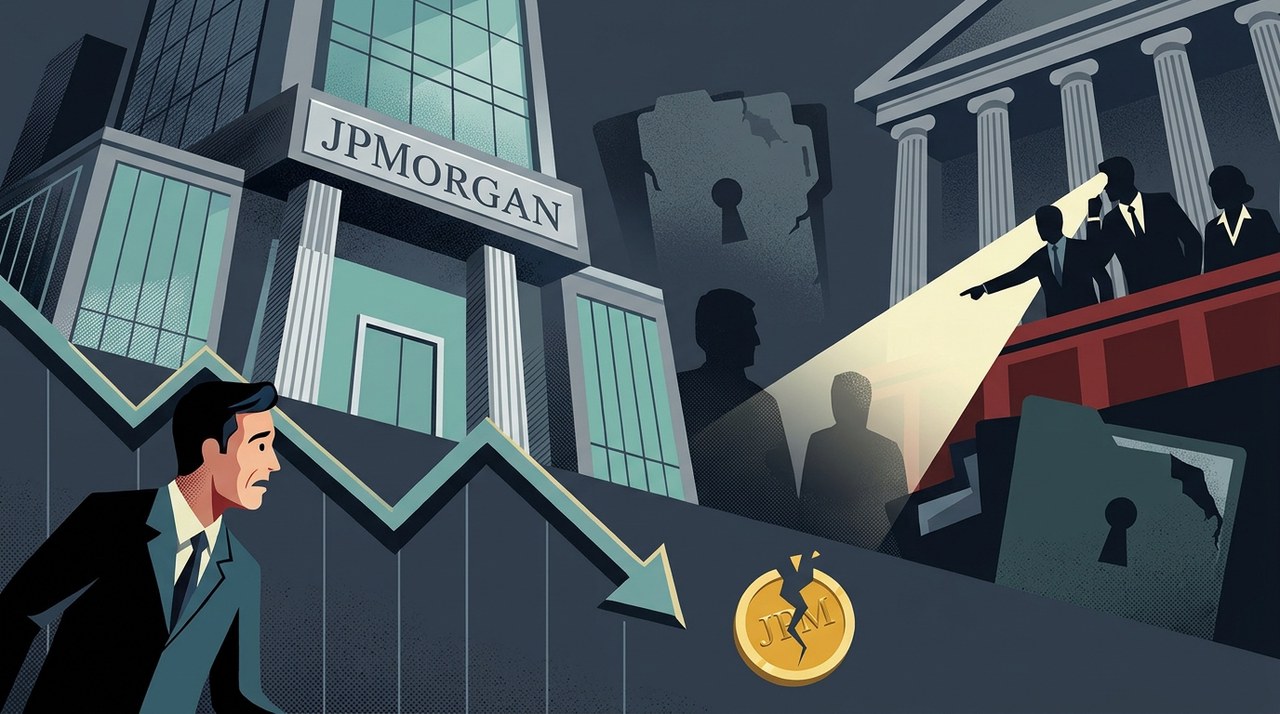
JPMorgan Chase Shares Slide Following Reports of Senate Investigation
Shares of banking giant JPMorgan Chase experienced a noticeable downturn at the end of last week, dropping by over 4% to under $340 per share on Thursday. This decline effectively wiped out the stock's gains from its post-midterm market rally.
The stock sell-off came after media reports revealed that Democratic staff on the Senate Finance Committee are preparing a new investigation into the bank's historic business relationship with convicted sex offender Jeffrey Epstein.
Details Behind the New Senate Inquiry
Following the US midterm elections, reports emerged that congressional staff plan to closely review how senior executives at JPMorgan managed Epstein's accounts before his death. The investigation is expected to kick off early next year when the committee assumes control.
Among the high-profile executives highlighted in these reports is Mary Erdoes, who serves as the Chief Executive Officer of JPMorgan's Asset and Wealth Management division.
The US government had damning information about Epstein's crimes that it failed to share with us or other banks. We regret any association we had with him, but we did not help him commit his crimes.
Although JPMorgan continues to deny any wrongdoing in the matter, the financial institution previously agreed to pay $365 million in legal settlements related to Epstein. Investors remain cautious as traditional financial institutions face public and regulatory scrutiny over executive governance.
The Irony of Wall Street Leadership and Crypto Criticism
The renewed scrutiny surrounding JPMorgan highlights an interesting contrast, particularly given the long-standing public stance of its Chief Executive Officer, Jamie Dimon. For years, Dimon has been one of the most vocal critics of BitcoinBTC+0.47% and the broader cryptocurrency space.
Over the past decade, Dimon has publicly criticized Bitcoin using strong terms, including:
- Calling Bitcoin a fraud and worthless
- Describing the cryptocurrency as a pet rock
- Labeling the asset class a decentralized Ponzi scheme
- Advising retail and institutional investors to avoid crypto assets completely
- Telling US lawmakers that if he were in charge of government, he would shut down crypto
Despite these harsh statements from top leadership, JPMorgan's operational activities have increasingly integrated with the digital asset ecosystem in recent years.
JPMorgan's Evolving Relationship with Digital Assets
While executive leadership has voiced skepticism, JPMorgan has introduced several digital asset services to meet institutional demand. The bank now allows select institutional clients to utilize Bitcoin and EthereumETH+0.27% as collateral for financial transactions.
Furthermore, JPMorgan participated directly in the infrastructure supporting BlackRock's spot Bitcoin ETF and continues to offer backend services for crypto-related corporate activities.
The bank also released long-term market research projecting that Bitcoin could potentially outperform traditional US large-cap stocks and gold over a 10 to 15-year horizon. However, such long-term projections depend heavily on sustained institutional adoption, supportive regulatory frameworks, and broader macroeconomic stability. Should regulatory pressures mount or investor demand drop, digital asset valuations could face severe downward adjustments instead.
It is also essential for investors to remember that past performance of digital assets or traditional financial institutions is not an indicator of future performance.
Decentralization vs. Corporate Governance: Why Bitcoin Has No CEO
The contrast between traditional banking and decentralized technology highlights a fundamental structural difference. Unlike Wall Street banks, the Bitcoin network functions entirely as open-source software maintained by a global node network.
Key differences in governance structure include:
- Bitcoin has no chief executive officer, board of directors, or executive leadership.
- The network does not operate a wealth management division or maintain individual client accounts.
- The core protocol cannot onboard questionable clients or engage in confidential corporate correspondence.
- No congressional committee can summon the network's protocol to testify regarding executive conduct.
While individuals or corporate entities using Bitcoin can certainly be named in criminal investigations, those governance and reputational risks remain strictly with the people or companies involved. The underlying, decentralized ledger remains neutral, operating continuously according to its original code rules regardless of external corporate events.
Understanding the Different Risk Profiles
When evaluating traditional banking institutions versus decentralized crypto assets, market participants encounter entirely different risk structures. Centralized banks carry counterparty risks, management decisions, and potential regulatory fines associated with corporate actions.
On the other hand, crypto assets present unique risk profiles, including high market volatility, protocol vulnerability risks, and shifting regulatory landscapes worldwide. Investors and observers alike must carefully evaluate both asset types with a clear understanding of these distinct risk factors.
Latest blog posts



Evernorth Data Reveals How RLUSD Drives XRP Ledger Trading
A report by Nasdaq-listed Evernorth shows that Ripple's RLUSD stablecoin isn't replacing XRP, with 92% of swaps trading against XRP.
|

 +2
Bitcoin Struggles at $76K as Altcoin Losses Mount
Bitcoin is nearing its fifth straight week in the red while major altcoins record steep double-digit drops after a chaotic market week.
|
XRP Drops to $1.18 as Global Markets Pull Crypto Down
XRP slid to an 11-week low alongside global stock market drops, as analysts highlight key support levels and macroeconomic factors to watch.
|