
How Bitcoin Works: A Guide to the Monetary Network

Understanding BitcoinBTC-0.85% Beyond the Basics
Have you ever wondered what actually makes Bitcoin work under the hood? Most people know that Bitcoin is a digital currency, but fewer understand that it is also a fully self-sustaining monetary network.
Imagine a global banking system that operates 24 hours a day, 365 days a year, without any central bank, single owner, or government in charge. That is precisely what Bitcoin accomplishes through computer code and economic incentives.
To truly appreciate this network, we need to look at how it enforces rules, manages its money supply, handles fees, keeps user transactions private, and plans to scale for future users worldwide.
Rule Enforcement and Consensus Without a Boss
In a traditional financial system, banks enforce the rules. They verify if you have enough money in your account before you make a payment, and they can reverse transactions or lock accounts if necessary.
Bitcoin takes a completely different approach. It uses a network of thousands of independent computers, known as full nodes, spread across the planet. Each node keeps an identical copy of the entire transaction history, called the blockchain.
When someone sends bitcoin, every node checks the request against the software rules. If a user tries to spend coins they do not own, or tries to spend the same coin twice, the entire network rejects the transaction automatically.
- Full Nodes: Read and verify all transactions and blocks independently.
- Consensus Rules: The strict set of software guidelines every computer agrees to follow.
- Decentralization: No central point of failure or single controller exists.
Monetary Design and Built-In Scarcity
Unlike traditional fiat currencies like the US Dollar or Thai Baht, which central banks can print in unlimited quantities, Bitcoin has a fixed monetary design programmed directly into its code.
There will only ever be 21 million bitcoins in existence. New bitcoins enter circulation through a process called block rewards, which miners receive for adding new blocks of transactions to the blockchain.
To make the supply predictable and strictly controlled, Bitcoin undergoes a programmed event called the Halving roughly every four years (or every 210,000 blocks). During a halving, the amount of new bitcoin created per block drops by exactly 50%.
By slowing the rate of new coin creation over time, Bitcoin creates a mathematical monetary policy that is completely immune to human political pressure or sudden inflation.
How Transaction Fees Work
Every block added to the Bitcoin blockchain has a limited size capacity. Because space inside each block is scarce, users must pay a small fee to miners to include their transaction.
You can think of this like a digital priority auction. When many people want to send transactions at the exact same time, space becomes competitive, and fees naturally rise as users pay more for faster processing.
During quieter periods on the network, fees settle back down to minimal levels. Transaction fees serve two main purposes: they reward miners for protecting the network and protect the blockchain from being flooded with spam transactions.
Privacy on Bitcoin: Myth vs. Reality
A common misconception is that Bitcoin is entirely anonymous. In reality, Bitcoin is pseudonymous. This means your real name is not attached to your wallet, but every transaction is publicly visible on the blockchain.
Instead of names, transactions connect cryptographic wallet addresses. If someone manages to link your identity to a specific wallet address, they can view every transaction that wallet has ever made.
Bitcoin tracks user balances through an accounting structure known as UTXOs (Unspent Transaction Outputs). Rather than storing single account balances, your wallet gathers scattered pieces of past transactions to calculate your total balance.
- Public Ledger: Anyone can inspect the entire history of transactions.
- Pseudonymity: Wallet addresses act like digital pseudonyms rather than bank accounts.
- Privacy Tools: Advanced software practices allow users to preserve their financial privacy if desired.
The Scaling Challenge and Layer-2 Solutions
Because Bitcoin prioritizes security and decentralization above all else, its base network can only process around 7 transactions per second. This is known as the Blockchain Trilemma.
If Bitcoin were to increase its block size significantly to process millions of daily transactions on the main layer, running a node would require massive, expensive computers. That would lead to centralization, leaving control in the hands of a few giant data centers.
To solve this without compromising decentralization, developers build layer-2 solutions on top of the main Bitcoin network.
The Lightning Network: Bitcoin's Fast Lane
The Lightning Network is a second layer built directly on top of Bitcoin. It allows two parties to open a payment channel and conduct hundreds or thousands of instant transactions off the main blockchain.
Think of it like opening a bar tab. Instead of paying for every single sip of your drink with a separate credit card swipe, you open a tab, enjoy your evening, and settle the final bill on the main ledger when you leave.
This design enables sub-second transaction times and tiny fraction-of-a-cent fees, making small daily purchases like buying a cup of coffee practical with Bitcoin.
Network Security and Proof of Work
How does Bitcoin keep bad actors from tampering with the transaction ledger? It uses a consensus mechanism called Proof of Work (PoW).
Miners across the world run specialized computer hardware that continuously calculates complex mathematical guesses. The first miner to find a valid solution gets to add the next block to the blockchain and earn the reward.
This process requires immense real-world energy and computer power, creating an physical anchor to the digital network. To alter an existing transaction block, an attacker would need to out-compute the combined power of the rest of the entire network, making attacks practically impossible.
Mining Economics and Energy Usage
Bitcoin mining is an extremely competitive global industry. Miners must balance hardware costs, electricity expenses, and operational efficiency to remain profitable.
The network automatically adjusts its mining difficulty every two weeks (2,016 blocks). If more miners join and total computing power rises, difficulty increases. If miners turn off machines, difficulty decreases, keeping block generation steady at around 10 minutes per block.
Regarding energy consumption, mining operations increasingly hunt for cheap, stranded, or excess energy that would otherwise go to waste—such as hydroelectric overflow during rainy seasons or excess geothermal energy.
Bitcoin Governance: How Changes Happen
Who decides when to update Bitcoin's software? Since there is no CEO or headquarters, updates happen through community consensus using Bitcoin Improvement Proposals (BIPs).
Developers propose technical updates, but they cannot force anyone to adopt them. Full node operators and miners must choose to run the updated software voluntarily.
- Soft Forks: Backward-compatible software updates that add new features without splitting the network.
- Hard Forks: Radical software changes that break backward compatibility, requiring all users to upgrade or split into separate blockchains.
- Conservative Rule: Changes to Bitcoin's core rules occur very slowly and deliberately, ensuring long-term stability.
Long-Term Adoption and What Lies Ahead
Over the past decade, Bitcoin has evolved from an obscure cryptography project into a globally recognized monetary asset. Individuals, publicly traded companies, and institutional fund managers now utilize it as a digital store of value.
As financial markets mature, institutional vehicles like spot exchange-traded funds (ETFs) have made it easier for traditional investors to gain exposure. However, like all digital assets, short-term market prices remain subject to volatility and changing economic conditions.
Understanding how Bitcoin secures its ledger, manages scarcity, and scales across layers provides a solid foundation for evaluating its role in the global financial ecosystem.
Past performance of digital assets is not a guarantee of future returns. You can view historical market data at Bitkub Market.
Latest blog posts
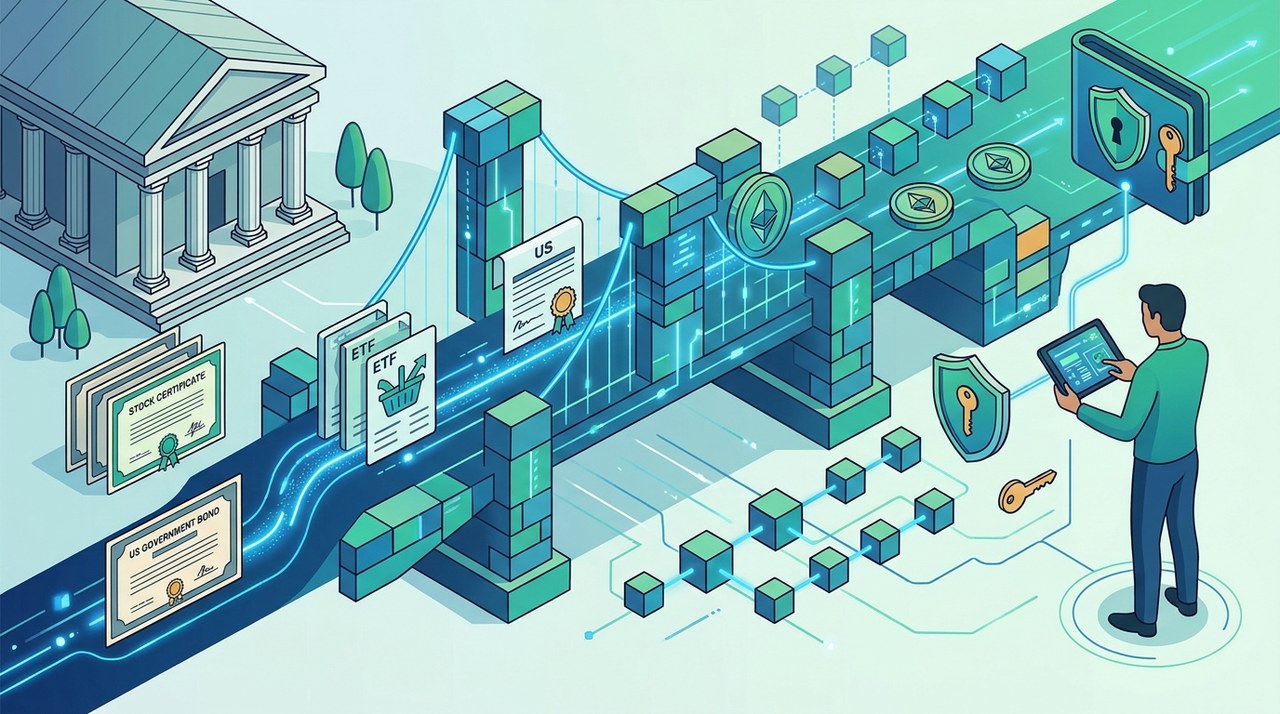

Kimber Gains Broker-Dealer Status for Tokenized Assets
Kimber Digital Securities has secured broker-dealer status to offer tokenized US stocks, ETFs, and bonds through self-custodial wallets while preserving traditional shareholder rights.
|
Former NYSE President Highlights Key to Asset Tokenization
Stacey Cunningham, former President of the NYSE and current President of Bullish, emphasizes stock issuers as vital for tokenization strategy.


Bitcoin Tests Key Support Levels After US Inflation Release
Bitcoin experienced downward pressure after US CPI data came in higher than expected, pushing prices near key support levels while stablecoin supplies contracted.
|