


How a Simple Mistake Froze $3 Million in Crypto
A Huge Misunderstanding on the Blockchain
Blockchain technology is famous for being transparent. Every transaction is recorded on a public ledger for anyone to see. However, having access to data and actually understanding it are two very different things.
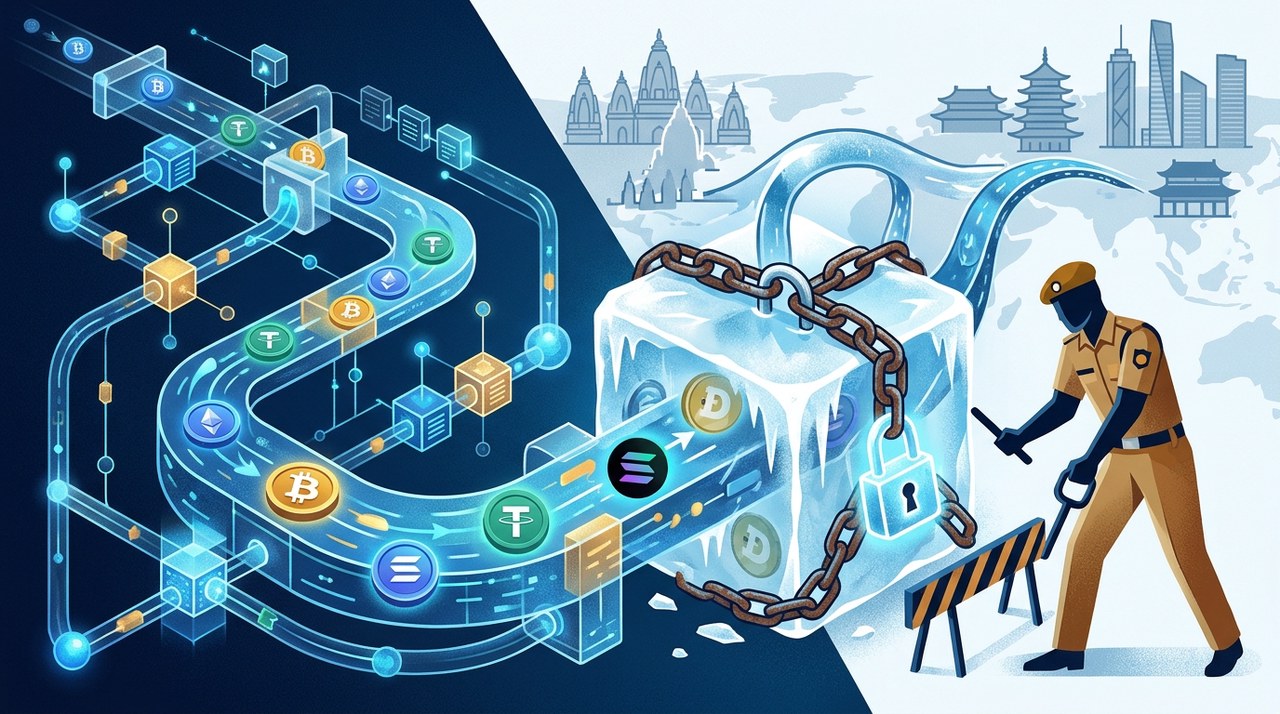
Renowned blockchain investigator ZachXBT recently uncovered a case where Indian law enforcement allegedly made a major error. According to his research, authorities froze roughly $3 million worth of cryptocurrency belonging to an innocent Chinese crypto investor. The reason? Police confused a standard crypto bridge protocol with a wallet used by scammers.
The $1.7 Million Scam Case
To understand how this mistake happened, we have to look back at the original crime. In May 2025, a victim based in Andhra Pradesh, India, fell prey to a pig butchering scam. The victim lost around $1.7 million across multiple cryptocurrencies, including Bitcoin (BTCBTC+0.20%), TetherUSDT+0.18%, Dogecoin (DOGEDOGE-0.10%), and SolanaSOL+0.83%.
The victim reported the loss to the local Criminal Investigation Department. By March of the following year, law enforcement filed an official charge sheet to track down the stolen funds and hold the culprits accountable.
What is a Pig Butchering Scam?
For context, a pig butchering scam is a type of long-term fraud where scammers build trust with victims over time, often through social media or messaging apps. Once trust is established, they convince the victim to invest in fake financial platforms before running away with the funds.
Enter the Merlin Chain Bridge
The story takes a dramatic turn involving an ordinary crypto trader known on X (formerly Twitter) as Keym. Back on March 28, 2024—more than a year before the reported theft occurred—Keym bridged 50 BTC into an ecosystem called Merlin Chain.
Between March and June 2025, Keym initiated three standard withdrawals to bridge those assets back out. The payouts came from addresses labeled under the domain alibart[.]bit.
What is a Crypto Bridge?
Think of a crypto bridge like an international currency exchange booth at an airport. You hand over your local currency, and the booth hands back foreign currency so you can use it on a different network. When you want to return, you swap back. The wallet addresses handling these automated swaps belong to the protocol, not individual scammers.
The Labeling Error That Trapped Innocent Funds
In July 2025, Keym transferred 15 BTC from wallet address 3NcBhqK to a deposit address on the Gate crypto exchange. Shortly after, Gate completely froze Keym's account.
ZachXBT revealed that Indian police had mislabeled the alibart[.]bit addresses as stolen fund repositories tied to the Andhra Pradesh scam. Because many automated compliance and analytics tools leave cross-chain bridge infrastructure unlabeled, law enforcement assumed that Keym was directly receiving illicit money from criminals.
In reality, Keym was simply withdrawing their own funds that had been deposited into the Merlin Chain bridge long before the scam ever took place.
Financial Impact and Legal Gridlock
When Gate originally froze the account in July 2025, the total assets inside were valued at approximately $3 million. However, due to broader cryptocurrency market downturns, the balance is currently worth between $1.5 million and $1.6 million.
Past performance of digital assets is not an indicator of future results. Market fluctuations can significantly alter the value of frozen assets over time.
Keym attempted to resolve the issue by submitting all requested identity and transaction documentation to Gate. Keym's legal team also asked authorities to provide explicit on-chain evidence connecting the funds to the fraud. However, law enforcement failed to provide any valid chain of transactions showing a link.
Indian LE, the prosecutor and the judge all signed off on this, Gate froze the account, and LE did a full press release about it recently, while the real victim here (the Gate user) hasn't had access to his funds for nearly 16 months.
ZachXBT Criticizes Lack of Technical Literacy
ZachXBT did not hold back in his assessment of the situation, calling the mistake an act of embarrassing incompetence. He highlighted that authorities published a public press release celebrating the freeze, seemingly unaware that they had locked up the assets of an uninvolved user.
This isn't the first major case ZachXBT has highlighted recently. Earlier this month, the investigator exposed a suspected $133 million crypto theft targeting centralized exchange accounts connected to the French banking institution Crédit Mutuel Arkéa.
Why This Matters for the Crypto Community
This ongoing dispute emphasizes how vital it is for law enforcement agencies, prosecutors, and exchange compliance teams to properly analyze on-chain data. As decentralized finance protocols and bridging technologies grow more complex, automated tracking tools can easily misidentify innocent user activity.
For everyday users, this serves as a reminder that regulatory actions and mislabeling errors can freeze funds just as easily as technical bugs, highlighting the ongoing friction between centralized compliance enforcement and decentralized blockchain tools.
Latest blog posts


Dogecoin Tests Key Support Level as DogeOS Nears Launch
Dogecoin is retesting a multi-year support zone near $0.054 as developers finalize DogeOS, a new Layer-2 utility network.
|

Anthropic Market Cap Surges Past $2 Trillion in Debut
Anthropic, the developer behind AI assistant Claude, saw its market valuation climb above $2 trillion on its first day of trading, joining an elite group of US tech leaders.
|

Ledger Investigates Tampered Crypto Wallets in Dubai
Ledger is actively investigating reports of physically modified hardware wallets in Dubai and Berlin following major crypto losses.
|