

Ledger Investigates Tampered Crypto Wallets in Dubai
What is Happening with Ledger Hardware Wallets?
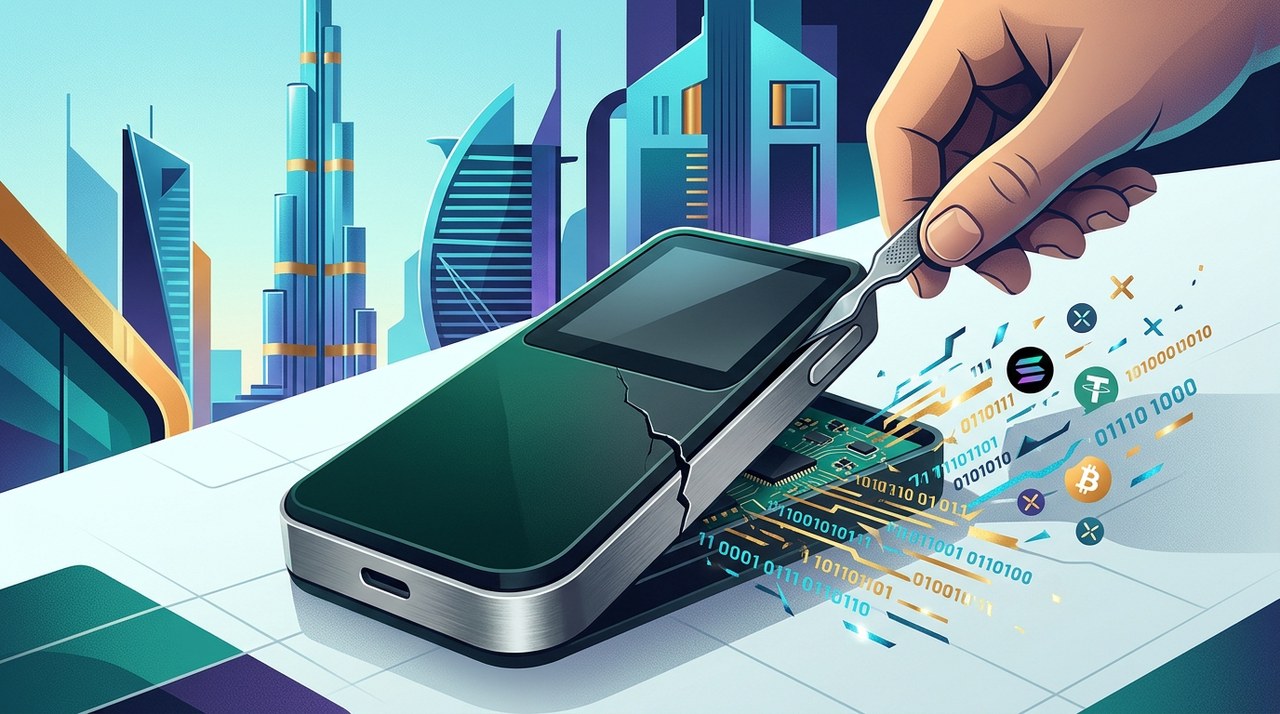
Hardware wallet maker Ledger has officially confirmed it is investigating new reports of tampered devices in Dubai and Berlin. These reports follow previous detections of physically altered hardware wallets in Southeast Asia earlier this year.
For crypto investors, hardware wallets are meant to be an extra layer of security. However, recent events reveal that modified devices can compromise secret recovery keys during initial setup.
The Dubai Reports: Significant Losses from Retail Purchases
The latest wave of reports began around mid-November. On November 15, a crypto trader going by Rewinsky shared on X that they had lost $1,300 worth of SolanaSOL+0.27% from their Ledger. After inspecting the hardware, Rewinsky shared photos showing clear signs of physical manipulation inside the casing.
Just days later, another user operating under the account New BabylonBABY+0.00% Order reported a massive loss. They claimed that 507,000 USDT was drained from a Ledger Stax unit bought at the Virgin Megastore in Dubai in early October.
The victim emphasized that they generated their wallet recovery seed directly on the device screen and never entered it on an internet-connected computer or phone. A second victim who purchased a device at the same Dubai store reported losing 122,000 USDT under identical circumstances.
Ledger's Official Findings on Physical Modifications
Ledger published an official security update stating that it is reviewing the Dubai incidents while confirming tampered devices in Berlin, Germany. Back in October, a customer who bought a unit through retailer MediaMarkt in Germany reported potential signs of hardware alteration. Ledger also confirmed finding an affected Ledger Nano Gen5 in Southeast Asia.
Every device we have confirmed shows the same kind of physical modification, built to capture the recovery phrase during setup.
This means the custom component silently records the 24-word secret seed phrase while the user sets up the hardware. The bad actors behind the attack can then use that captured recovery phrase to empty the wallet remotely.
How Criminal Gangs Conducted the Supply Chain Attack
According to Ledger, an organized criminal gang planned this attack over several months. The group purchased genuine devices, retrofitted them with custom microcomponents, and re-inserted them into the market through third-party resellers.
Resellers such as CryptoBilis in Southeast Asia and physical retail stores like MediaMarkt and Virgin Megastore unknowingly sold these modified units to regular buyers.
Security analyst Mark Karpelès pointed out that the internal implants appeared to be professionally manufactured. He suggested the attackers had set up dedicated assembly lines and user manuals before handing off the parts to intermediaries to install inside legitimate Ledger devices.
Total Losses Could Top $100 Million Across Blockchains
The scale of these altered wallets is proving to be significant. Devices distributed through CryptoBilis in Indonesia, the Philippines, and Malaysia were initial estimates for roughly $80 million in total crypto losses.
Data from blockchain intelligence firm Bitquery suggests the total figure could reach as high as $102 million affected across 335 individual wallets on 5 different blockchains.
Ledger acknowledged that more affected wallets might surface as investigations with international law enforcement and retail partners proceed.
Essential Safety Actions for Hardware Wallet Holders
If you own or plan to buy a hardware wallet, Ledger offers clear recommendations to protect your assets from supply chain attacks:
- Do not set up or restore devices bought from third-party resellers in Germany, Dubai, or Southeast Asia.
- Move existing funds immediately to a safe, freshly generated wallet if you suspect hardware tampering.
- Only generate secret recovery phrases on units purchased directly from the official Ledger website.
- Reach out to official Ledger customer support immediately if your physical device shows signs of damage or unusual behavior.
Always remember that while cold storage devices offer strong security against online attacks, ensuring your device comes from an authorized direct source remains vital for protecting your crypto.
Latest blog posts


Bitcoin Mirrors SpaceX Pattern Ahead of Anthropic IPO
Bitcoin recently dipped near $62,000, echoing chart behavior seen before the SpaceX IPO. Here is what traders are watching as Anthropic debuts.
|

Ethereum Price Analysis: Will ETH Rebound or Break Below $1.7K?
Ethereum is attempting to stabilize near $1,800 after a sharp November decline. Key support levels and on-chain metrics now point to a crucial juncture for ETH.
|
Solana Plans 2027 Upgrades to Cut Costs and Boost Speed
Solana developers revealed a long-term technical roadmap designed to increase computational capacity and lower on-chain execution costs.
|