
Europol: Quantum Tech Threatens Wallet Keys, Not Blockchains
Europol Clears Up the Quantum Threat to Crypto
Quantum computing often sounds like something out of sci-fi, but European law enforcement agencies are already preparing for its real-world impact on digital assets.
On October 7, 2026, Europol released a detailed report through its European Cybercrime Center titled Quantum Computing and Cryptocurrencies.
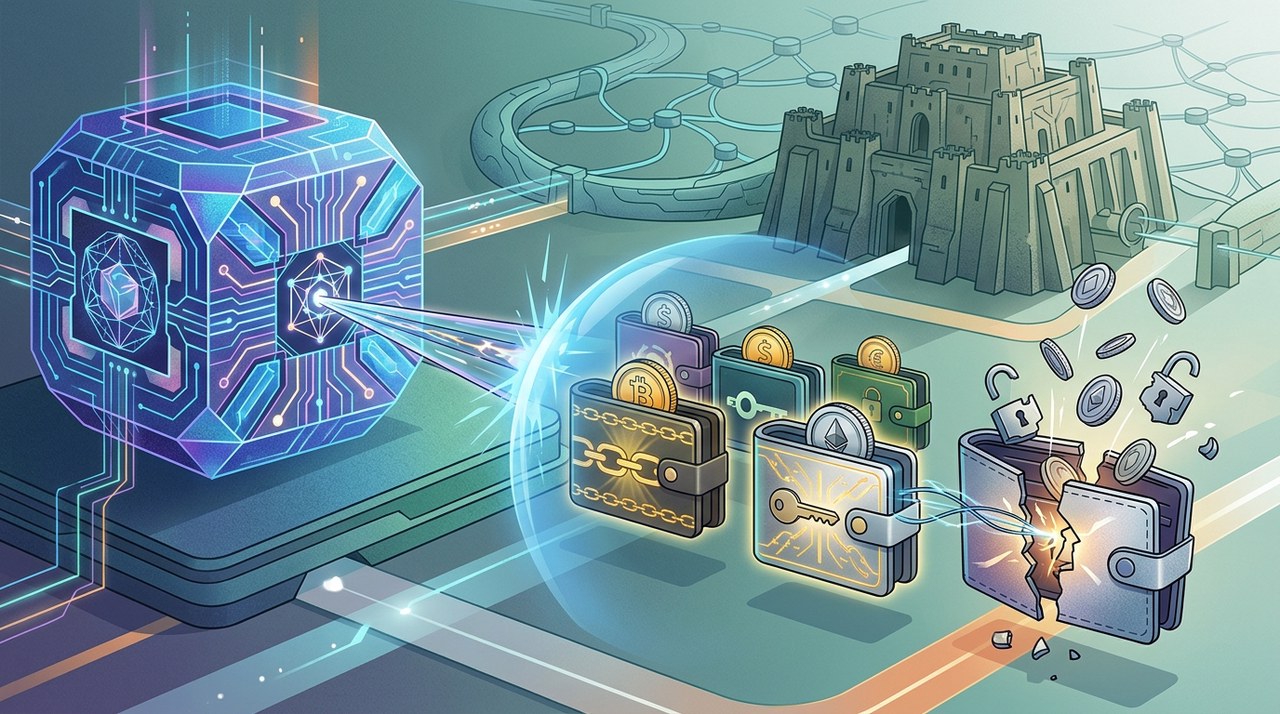
The main takeaway from the report is reassuring: quantum computers will not destroy entire blockchain networks. Instead, the real risk centers on individual cryptocurrency wallets with exposed public keys.
Wallets vs. Blockchains: What Is Actually at Risk?
To understand Europol's explanation, imagine a blockchain network as a giant digital bank vault holding millions of individual safe deposit boxes.
A quantum computer will not demolish the underlying structure of the vault. However, it could potentially pick the lock on specific boxes where key details were left in plain sight.
As Europol clearly stated: "Cryptocurrencies will not collapse due to quantum computing."
The immediate threat is about who controls the funds inside specific vulnerable wallets, rather than whether a quantum machine can alter the historic transaction record of a blockchain.
The Technical Gap: Hashes vs. Signature Schemes
Why is the underlying blockchain network so resilient? The answer lies in how modern cryptography is structured.
Blockchains rely on two distinct cryptographic tools:
- Hash functions: These mathematical algorithms secure transaction history and power bitcoinBTC-0.79% mining. They remain highly resistant to quantum computational attacks.
- Public-key cryptography: Mechanisms like the Elliptic Curve Digital Signature Algorithm (ECDSA) verify wallet ownership and authorize fund transfers. These are the components vulnerable to future quantum algorithms.
If a quantum computer becomes powerful enough, it could calculate a private key directly from a known public key. Armed with that derived private key, an attacker could move the wallet's funds without authorization.
The 6.9 Million Bitcoin Sitting in Danger Zone
Not every crypto address is equally vulnerable. The primary danger targets older addresses where the public key is already visible on the public blockchain.
During the early days of Bitcoin—often referred to as the Satoshi era—transactions frequently used Pay-to-Public-Key (P2PK) outputs. This format published raw public keys directly to the chain.
Europol estimates that approximately 6.9 million bitcoin currently reside in addresses with exposed public keys, including early mining rewards and long-dormant wallets.
The Dilemma Surrounding Legacy Wallets
One major issue highlighted in the report is that exposed public keys cannot be protected retroactively. Once a key is broadcast to the public ledger, it remains visible forever.
This reality has sparked serious debates across the Bitcoin developer community.
Some community members have discussed whether the network should freeze Satoshi-era wallets before quantum machines arrive. However, freezing addresses conflicts directly with Bitcoin's core principle of censorship resistance.
Timeline: When Might Quantum Attacks Become Feasible?
Quantum computers capable of breaking current wallet encryption do not exist today. Europol did not offer a specific prediction for when such hardware will emerge.
However, commercial quantum technology is progressing steadily.
Tech company IBM stated in July that it expects quantum computing to generate meaningful commercial revenue within two to four years.
In addition, many Bitcoin researchers and industry institutions view 2029 as a critical target year by which operational post-quantum protections must be active.
Why Upgrading Global Networks Is Complex
Replacing Bitcoin's default signature system across a global, decentralized network requires massive technical coordination.
Europol pointed out two significant logistical challenges:
1. Block Space Requirements
A 2024 study referenced in the report estimated that migrating every Unspent Transaction Output (UTXO) on Bitcoin to a quantum-resistant format would require 76 days of dedicated block space.
If the network set aside 25% of each block specifically for this transition, completing the migration would take roughly 300 days.
2. Increased Signature File Sizes
Next-generation post-quantum cryptographic schemes are much larger than current Elliptic Curve Digital Signature Algorithm (ECDSA) signatures.
These new signature schemes can be 10 to 120 times larger than today's signatures, meaning each transaction requires significantly more data on the network.
Proactive Migration Is the Way Forward
Despite the hurdles ahead, Europol expresses confidence that the cryptocurrency sector can handle this technological shift gracefully.
The agency noted that "proactive adaptation, rather than systemic collapse, is the most likely outcome."
Europol urges developers, exchanges, miners, and users to coordinate a phased upgrade process early. Recommended steps include:
- Developing and testing post-quantum signature schemes.
- Upgrading wallet software to support quantum-resistant addresses.
- Establishing clear network migration standards across global participants.
By preparing security protocols today, the global ecosystem can ensure funds remain secure long before quantum threats materialize.
Latest blog posts

BitGo Revenue Drops 51% in Q3 as Net Income Clims
BitGo recorded a 51% revenue drop in Q3 due to quiet trading and low-margin stablecoin activity, but treasury gains lifted overall net income.

BlackRock Bitcoin ETF Sees $1.66B Outflows in 7 Days
US spot Bitcoin ETFs recorded $201 million in net outflows on Monday, with BlackRock's IBIT extending its withdrawal streak to seven trading sessions totaling $1.66 billion.
|

Ethereum Security Alert: Swarm Software Compromised
Blockchain security firm SlowMist issued an urgent warning after attackers compromised Ethersphere's Swarm software through a supply chain attack.
|