

21shares Predicts New Bitcoin High by 2027 with Peak Later

What Is 21shares Predicting for Bitcoin by 2027?
Crypto investment product issuer 21shares has published its digital asset outlook for 2027. Released on November 19, 2026, the comprehensive report was written by Eliezer Ndinga, the firm's global head of research and a founding team member. The report outlines 10 major predictions based on market data collected through October 2026.
The headline forecast focuses on Bitcoin's long-term price trajectory. The firm projects that Bitcoin will set a brand-new all-time high in 2027. However, the report highlights that the ultimate top of this current market cycle will likely occur after 2027.
We expect a new bitcoin all-time high in 2027, though not this cycle’s top.
Decoding the Math: How 21shares Calculated the Targets
To understand where Bitcoin might be headed, 21shares analyzed the market drawdown between October 2025 and June 2026. During that period, Bitcoin fell from its peak of approximately $126,000 down to $59,000. Market volatility continued into late November 2026, when Bitcoin briefly dipped below $56,000 before recovering to close above $60,000. At the time of reporting, Bitcoin traded around $60,524 (+1.92%), while EthereumETH+3.01% stood at $1,704 (+2.12%).
The research team looked closely at historical patterns across three previous Bitcoin cycles. In each of those prior cycles, Bitcoin traded at least 2.2 times higher than its cycle low exactly 12 months later. Applying these historical trajectories to the June low of $59,000 generates three potential price targets by mid-2027: roughly $129,000, $133,000, and $146,000.
The report also points to the upcoming Bitcoin halving in 2028 as the primary reason why the final cycle peak is expected to arrive after 2027. Halving events historically reduce the rate of new coin creation, often extending market momentum into subsequent years.
Past performance of digital assets is not a guarantee of future performance. Investors can track live market data on platforms like Bitkub Market. These price projections depend on key assumptions, including sustained institutional buying and stable macroeconomic conditions. If global liquidity tightens or regulatory pressures intensify, market prices could experience significant downward adjustments instead.
Institutional Buyers Are Soaking Up Bitcoin Supply
A major driver behind 21shares' positive outlook is the scale of institutional accumulation. The report estimates that exchange-traded funds (ETFs), corporate treasuries, and sovereign holders have collectively absorbed 1.75 million BTCBTC+2.46% since 2024.
Even during recent bear market conditions, institutional appetite remained strong. Between the price drawdown and October 6, institutional purchases totaled 180,000 BTC. In comparison, network miners produced only 122,000 new BTC over the exact same period.
When institutional investors buy coins faster than miners can mint them, it creates a supply squeeze in the market. Think of it like a popular concert where fans buy tickets faster than the venue can print them—scarcity naturally pushes market interest higher over time.
Why Predictions Aren't Set in Stone: A Market Reality Check
While historical models provide helpful frameworks, 21shares openly acknowledges their limitations. The firm's price cycle analysis relies on only three historical precedents, making for a relatively small sample size.
Forecasting crypto cycles is an evolving science. In its mid-year review of 2026 predictions, 21shares noted that an earlier forecast predicting the breakdown of the traditional four-year cycle did not materialize. Furthermore, the market dip below $56,000 on November 21 altered the baseline low used in their chart models.
Market sentiment also plays a key role during pullbacks. During the November 20 sell-off, MicroStrategy founder Michael Saylor posted a brief four-word message encouraging long-term holders to remember why they initially bought Bitcoin, highlighting how strong conviction helps markets stabilize after sudden drops.
Global Regulations: G20 Nations Stepping Up Rules
Beyond price charts, 21shares expects significant progress on the regulatory front. The firm projects that 15 of the 21 G20 members will operate under established digital asset rulebooks by the end of 2027.
This 15-member projection represents an analytical forecast rather than fully enacted laws today. A regulatory review by the Financial Stability Board (FSB) revealed encouraging progress across major economies, though substantial gaps in practical implementation still exist.
In the United States, digital asset policy initiatives continue to move forward, but lawmakers have not yet reached full agreement on landmark bills like the CLARITY Act. Meanwhile, key administrative rule proposals from federal agencies remain pending final decision.
Stablecoins: Rising Demand for Digital Dollars
Stablecoins—cryptocurrencies tied to traditional assets like the U.S. dollar—are expanding rapidly into everyday payments and cross-border settlement.
21shares forecasts that monthly active stablecoin addresses will top 100 million by 2027. This would mark a significant increase from the 76.4 million active addresses recorded in September 2026. It is important to note that wallet addresses do not equal unique individual users, as one person or entity can manage multiple addresses.
The firm also projects that annual payment card spending using stablecoins will reach $25 billion, demonstrating how digital dollars are moving from trading platforms into real-world consumer transactions.
Tokenized Assets and Decentralized Finance (DeFi) Expansion
The report highlights major growth opportunities in tokenized real-world assets (RWAs)—such as government bonds, real estate, and private credit brought onto blockchain networks.
21shares anticipates that RWAs and fintech distribution channels will generate 15% of total decentralized finance (DeFi) gross revenue by 2027, up from approximately 8% today.
Furthermore, total tokenized asset trading volume across spot and perpetual futures markets is forecasted to reach $15 trillion, compared to $6.3 trillion in 2026. South Korea's developing legal framework for tokenized securities serves as a primary example of how national financial infrastructure is adapting to support tokenization.
Derivative markets on digital networks are also expanding. The firm expects onchain options volume to exceed $100 billion in 2027, up sharply from an estimated $30 billion in 2026.
Prediction Markets, AI, and Quantum Security
The report highlights several emerging technology trends that could reshape how users interact with blockchains over the next few years:
- Prediction Markets: Annual trading volume could cross $1 trillion (averaging around $83 billion monthly) if platforms successfully expand beyond sports betting into economics, politics, and general events.
- Privacy Assets: Total market capitalization for privacy-oriented digital assets is projected to surpass $100 billion, rising from roughly $31 billion today.
- AI Agents: Autonomous AI programs will increasingly execute trading, lending, and payment tasks onchain. The x402 protocol, for instance, has already processed over 234 million transactions, rebounding to 13 million monthly transactions after dipping below 4 million in early 2026.
- Quantum Custody Upgrades: Exchanges and asset custodians are expected to move at least 50,000 BTC to hidden public key addresses to enhance security.
Addressing security concerns, research from Glassnode revealed that 6.04 million BTC had exposed public keys in May. By October, that figure included approximately 1.79 million BTC on centralized exchanges (representing 57% of identified exchange holdings).
21shares clarified that no quantum computer currently exists that is capable of deriving private keys from public ones. Moving assets to hidden public key addresses is simply a proactive step to ensure long-term custodial security.
Final Thoughts: What Lies Ahead for the Market?
The 2027 outlook from 21shares paints a detailed picture of a maturing digital asset ecosystem. From institutional supply absorption and expanding global regulations to stablecoin adoption and quantum-resistant security, the market is gradually building deeper ties with traditional finance.
While forecasts provide valuable insight into potential growth paths, market participants should always evaluate risks carefully, keep track of changing regulations, and make informed financial choices.
Latest blog posts

 +1
Ripple CEO Sees Crypto Rally Potential After Anthropic IPO
Ripple CEO Brad Garlinghouse suggests recent crypto dips stem from investors raising cash for high-profile tech IPOs, creating room for a potential market recovery.
|
Trump Memecoin Dinner: Half of Wallets Tied to Offshore
Public Citizen found that 66 out of 130 qualifying wallets for Donald Trump's memecoin dinner received tokens from exchanges that block US users.
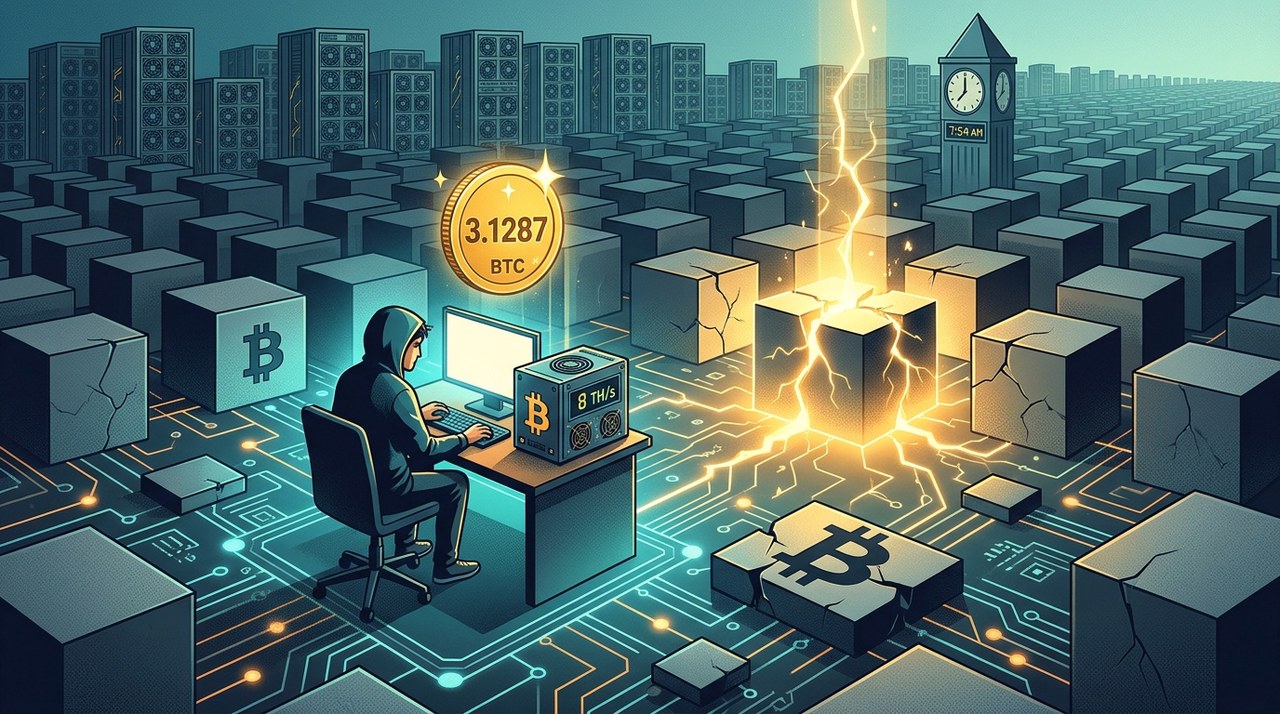
Solo Miner Wins $190K Bitcoin Jackpot Against Long Odds
A solo crypto miner using just 8 TH/s of computing power successfully found a Bitcoin block, netting nearly $190,000 despite 130 million-to-one odds.
|