

Elizabeth Warren to Lead Senate Banking: Crypto Impact
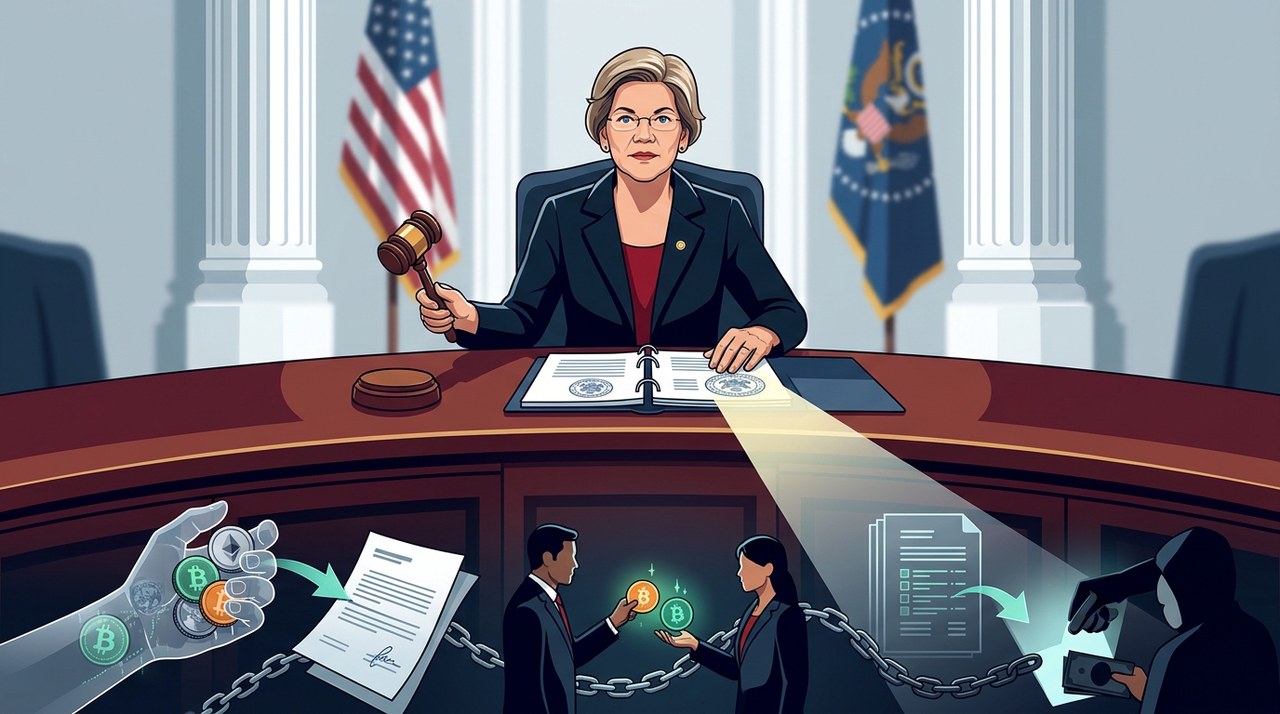
A Major Shift in Washington Crypto Oversight
Following the November 3 midterm elections, Democrats secured a majority in the U.S. Senate. In Washington, the majority party gets to choose who leads every major congressional committee.
Starting in January, Senator Elizabeth Warren is set to run the Senate Banking Committee. Warren has long been known as one of the crypto industry's most vocal critics in Congress.
Her position is not official yet, but few observers in Washington expect a challenge to her leadership. The big question for digital asset markets is whether her new role will directly move crypto prices.
For years, Warren served as the top Democrat on the panel. In that role, she could send letters asking crypto firms for information, but companies were under no legal obligation to answer.
As committee chair, her influence increases significantly. According to a report from The Wall Street Journal, Warren will gain subpoena power. This legal authority lets her require internal documents and testimony under oath.
What Are Warren's Key Targets in Crypto?
The Wall Street Journal reported that Warren's early focus as chair will cover three primary areas: insider trading on prediction markets, consumer protection at crypto firms, and alleged conflicts of interest involving Donald Trump and his family.
None of these focal points are new. Warren has pressed on all three issues throughout the past year, though previously she lacked the legal muscle to force direct responses.
1. Election Bets and Prediction Markets
On October 28, Warren joined Republican Senator John Curtis to ask prediction platforms Kalshi and Polymarket how they prevent insider trading on election bets.
Prediction markets allow users to buy and sell contracts based on real-world outcomes. As these platforms grow, lawmakers are paying closer attention to potential market manipulation.
2. Crypto Companies Operating Like Banks
Warren has also criticized the Office of the Comptroller of the Currency (OCC), a key bank regulator, for allowing nine crypto companies to operate like traditional banks.
Major exchange operator Coinbase is among the firms on that list. Warren argues that letting digital asset platforms offer banking features without standard oversight introduces risks to consumers.
3. Scrutinizing Trump Family Crypto Ventures
In May, Warren asked the Securities and Exchange Commission (SEC) to examine whether World Liberty FinancialWLFI+2.55%, a crypto business connected to the Trump family, misled potential investors.
Can Elizabeth Warren Move Crypto Prices?
Investors often wonder how political moves in Washington translate into price changes. Warren has three primary levers of power, though her impact varies by asset class.
Lever 1: Stalling Crypto Legislation
The Banking Committee chair acts as a gatekeeper for financial laws. Any new crypto bill must clear her panel first before reaching the full Senate.
This dynamic was visible on September 15, when the CLARITY Act—a bill designed to set clear regulatory boundaries for crypto—failed a key Senate procedural vote by 49-50.
Warren strongly opposed the bill, stating:
Donald Trump raked in more than $1.4 billion from cryptocurrency ventures, and this bill does nothing to prevent him from vacuuming up his next $1.4 billion in crypto profits. The underlying bill still fails to adequately protect investors, our financial system and our national security. This bill should be dead on arrival.
Crypto prices experienced broader declines following the September vote. With Warren chairing the committee, any updated legislation could face delays, extending regulatory uncertainty in the U.S.
Lever 2: Public Grillings and Subpoena Risk
Public committee hearings and subpoenas create headline risk for targeted tokens and publicly traded crypto stocks.
For example, the WLFI token trades near $0.047, close to the record low it set on November 5, according to price data from BeInCrypto. The token is down roughly 61% over the past year.
Past performance of digital assets does not guarantee future results.
While major assets react primarily to global macroeconomic trends, politically exposed tokens and individual crypto equities remain sensitive to regulatory investigations.
Lever 3: Blocking Regulatory Appointments
The Senate Banking Committee reviews nominees for major regulatory bodies, including the SEC. With a committee majority, Democrats can block or delay nominees, slowing the appointment of industry-friendly regulators.
What This Means for Regular Investors
Despite her added authority, Warren cannot single-handedly write federal laws or ban digital assets. Agencies like the SEC and CFTC continue operating under existing statutory rules.
Meanwhile, Bitcoin (BTCBTC-5.67%) trades at $75,599, down 5.95% over a 24-hour period according to BeInCrypto data. No report has directly tied Bitcoin's market drop to Warren's incoming chairmanship, as major cryptocurrencies respond more to macroeconomic factors.
Past performance of digital assets does not guarantee future results.
For everyday investors, tighter oversight presents both benefits and drawbacks:
- Potential Drawback: Stricter oversight could slow the launch of new products and delay overall regulatory clarity in the United States.
- Potential Benefit: Increased scrutiny on insider trading and misleading sales could enhance protection for retail traders.
- Market Split: Long-term holders of major cryptocurrencies will likely experience less direct impact than traders in politically tied tokens or crypto stocks.
For the past two years, Republicans set the Senate's crypto agenda. From January onward, the gatekeeper for U.S. crypto legislation will be the industry's toughest critic, making bipartisan compromise essential for future regulatory progress.
Latest blog posts

Chainalysis Reveals Password Hashes Exposed in Breach
Blockchain analytics firm Chainalysis disclosed that password hashes and live tokens were compromised during a security incident.



XRP Ledger Prepares for Major On-Chain Lending Upgrade
Validator support is growing for XLS-66, a proposal bringing native fixed-term and uncollateralized lending capabilities to the XRP Ledger.
|
Warren Eyes Senate Banking Chair: Impact on Crypto
Senator Elizabeth Warren may lead the U.S. Senate Banking Committee following the 2026 midterms, potentially bringing stricter regulatory oversight for crypto.
|