


Crypto Law Recap: CFTC Approvals, UK Rules & SEC News

Welcome to our weekly breakdown of crypto legal developments! We are highlighting the major events from the week of November 22, 2026, as regulators and lawmakers around the world make important updates to digital asset oversight.
During this period, BitcoinBTC+2.98% traded around $61,420 (up 4.05%) while EthereumETH+2.34% stood near $1,722 (up 3.46%). Please note that past performance of digital assets is not a guarantee of future results, and crypto asset prices remain subject to high market volatility.
1. CFTC Approves a Blockchain-Based Derivatives Exchange
On November 16, 2026, the U.S. Commodity Futures Trading Commission (CFTC) officially designated TLD Markets, Inc. as a contract market. This marks a notable step in bringing blockchain technology into regulated U.S. derivatives infrastructure.
Three days earlier, on November 13, its affiliate TLD Clearing, Inc. (operating as Backpack Clearing) received approval as a derivatives clearing organization. This status permits them to clear margined futures, fully collateralized futures, options on futures, and swaps.
CFTC Chairman Michael Selig emphasized that while the law does not require specific technology, blockchain platforms must meet traditional regulatory requirements.
The core principles of the Commodity Exchange Act do not mandate a particular technology, but blockchain-based firms must still satisfy the same requirements concerning anti-money laundering, segregation, customer protection, surveillance, financial resources, risk management, and system safeguards.
Regulators clarified that this approval is not a blanket exemption for decentralized derivatives protocols. Instead, it demonstrates that blockchain execution and settlement can function within existing legal structures.
Key compliance priorities for derivatives platforms:
- Legal structure: Maintaining clear legal ownership and regulatory accountability.
- Custody and segregation: Ensuring customer funds are properly separated from operational assets.
- Market surveillance: Monitoring trading activity effectively to detect potential market abuse.
- Technology resilience: Testing smart contracts and infrastructure safeguards against operational failures.
2. UK Stablecoin and Crypto Amendments Become Law
In the United Kingdom, the government formally enacted the Cryptoassets (Miscellaneous Amendments) Regulations 2026 on November 18, 2026, filed under Statutory Instrument 2026/1219.
This action officially codifies previous drafts into UK law. The regulations refine the legal boundaries for stablecoins and crypto activities across several key areas.
The law establishes exclusions for specific transfers of UK-issued qualifying stablecoins, temporary holdings during payment processing, qualifying proprietary trading, and purely technical software services.
Most provisions took effect on November 19, 2026. However, updates regarding the Regulated Activities Order and Financial Promotion Order are scheduled to take effect on October 25, 2027.
Action items for UK crypto businesses:
- Map out operational functions: Distinguish between issuance, redemption, payments, and custody services.
- Check effective timelines: Identify which rules apply immediately versus those starting in late 2027.
- Review technical integrations: Ensure decentralized interfaces and software providers fit the technical access exemptions.
3. SEC Charges Eight Entities Over Alleged Fake Trading Platforms
On November 19, 2026, the U.S. Securities and Exchange Commission (SEC) charged eight entities for allegedly stealing over $37 million through fake investment schemes.
According to the SEC complaint, perpetrators used social media advertisements to direct investors into private chat groups. Supposed advisers initially provided stock recommendations before instructing targets to send funds to fake crypto platforms.
To appear legitimate, the schemes created fraudulent SEC certificates and submitted unauthorized filings with the SEC, FINRA, and FinCEN. Between August 2024 and May 2026, the operation rotated through four distinct adviser-platform pairs.
The SEC is seeking injunctions, disgorgement of profits, interest, and civil penalties. Please note that these allegations have not yet been proven in court, and liability has not been determined.
Verification steps for investors and businesses:
- Use official government lookup tools: Verify registration status directly through official regulatory databases.
- Do not rely solely on regulatory filings: Filings alone do not constitute government endorsement or proof of legitimacy.
- Test withdrawal features: Verify that withdrawals work properly before transferring substantial amounts.
- Preserve communications: Retain chat logs, wallet addresses, and advertisement records if suspicious activity occurs.
4. Former Robinhood Engineer Pleads Guilty to Wire Fraud
In an insider trading case, former Robinhood software engineer Huaisong Xiang pleaded guilty to wire fraud on November 16, 2026.
The Department of Justice stated that Xiang misused confidential information regarding upcoming Robinhood token listings. He purchased perpetual futures contracts on the HyperliquidHYPE+3.67% platform before public listing announcements were made.
Xiang agreed to forfeit $125,523 in proceeds and is scheduled for sentencing on February 25, 2027.
This case shows that federal prosecutors can pursue insider trading using wire fraud statutes without needing to establish whether the underlying tokens qualify as securities or whether trades occurred on a traditional stock exchange.
Internal control recommendations for digital asset firms:
- Restrict sensitive data: Limit access to token listing schedules and market-sensitive updates strictly to essential personnel.
- Audit access logs: Maintain detailed records of database queries and internal document requests.
- Expand trade surveillance: Monitor employee positions across decentralized platforms and derivatives markets, rather than focusing only on spot markets.
5. Hong Kong Proposes Expanding Virtual-Asset Licensing
On November 20, 2026, the Hong Kong government published the Virtual Asset Services Legislation (Amendment) Bill 2026 in the official gazette.
The proposal aims to expand licensing requirements to four additional service categories: virtual-asset dealing, advisory, management, and custody services.
If passed into law, companies offering these services within Hong Kong will need to register with the Securities and Futures Commission (SFC) and satisfy fit-and-proper criteria. Licensed banks and payment platforms regulated by the Hong Kong Monetary Authority (HKMA) would also require SFC registration.
The bill is scheduled for its first reading in the Legislative Council on December 2, 2026. As this remains proposed legislation, the text may undergo further revisions before enactment.
Conclusion
This week's updates demonstrate that legal frameworks for cryptocurrency are expanding globally. From regulated derivatives exchanges and refined stablecoin rules to fraud enforcement and insider trading prosecutions, market participants must remain focused on compliance standards.
Disclaimer: This article provides general educational information only and does not constitute legal or financial advice. Past operational results or digital asset performance do not guarantee future outcomes.
Latest blog posts

MoldyRoost Ad Campaign Targets iPhone Crypto Wallets
Cybersecurity firm Confiant revealed that a malicious ad campaign named MoldyRoost can breach vulnerable iPhones with a single tap, putting crypto seed phrases at risk.

Bitcoin ETFs Face $1.79B Outflows in November
US spot Bitcoin ETFs recorded $1.79 billion in net weekly outflows by November 20, 2026, led by significant redemptions in BlackRock's IBIT.
|
 +2
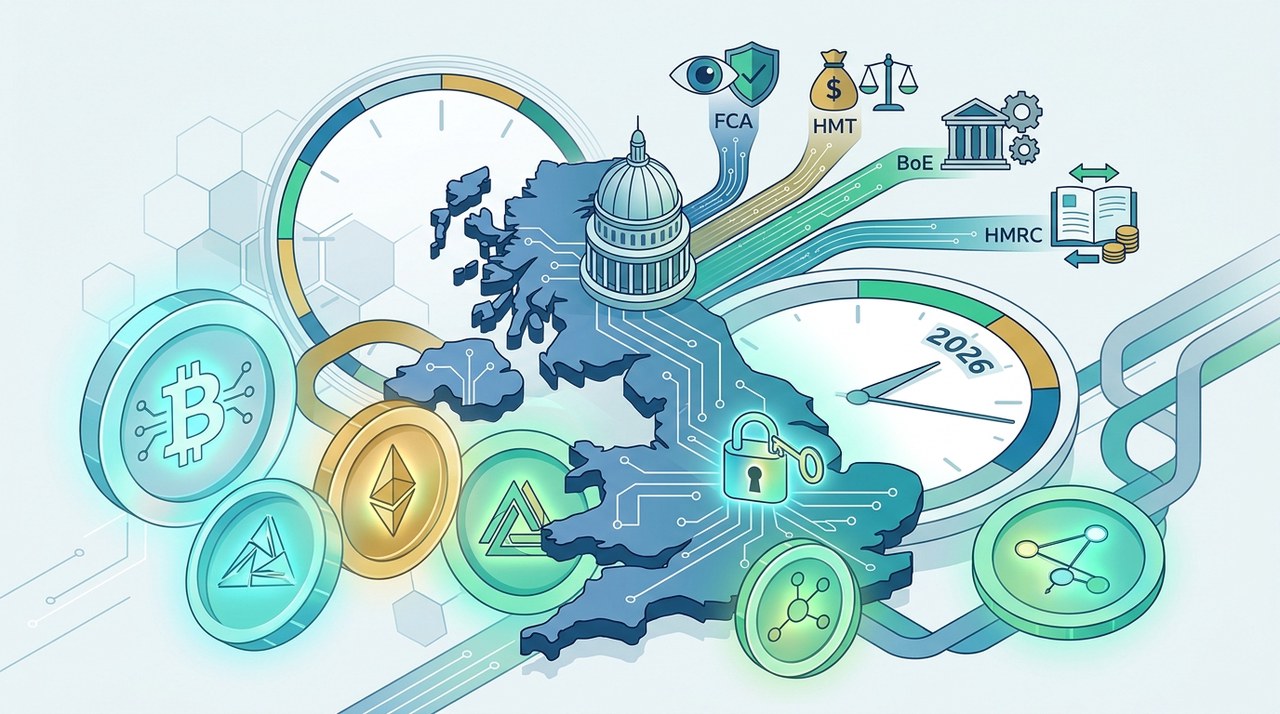
Crypto Regulations in the United Kingdom 2026
The UK has established concrete cryptocurrency regulations for 2026, covering exchange licensing, stablecoins, taxes, and market abuse controls.
|