


CoinShares Sells Treasury ETH and Cuts SOL Holdings for Buybacks
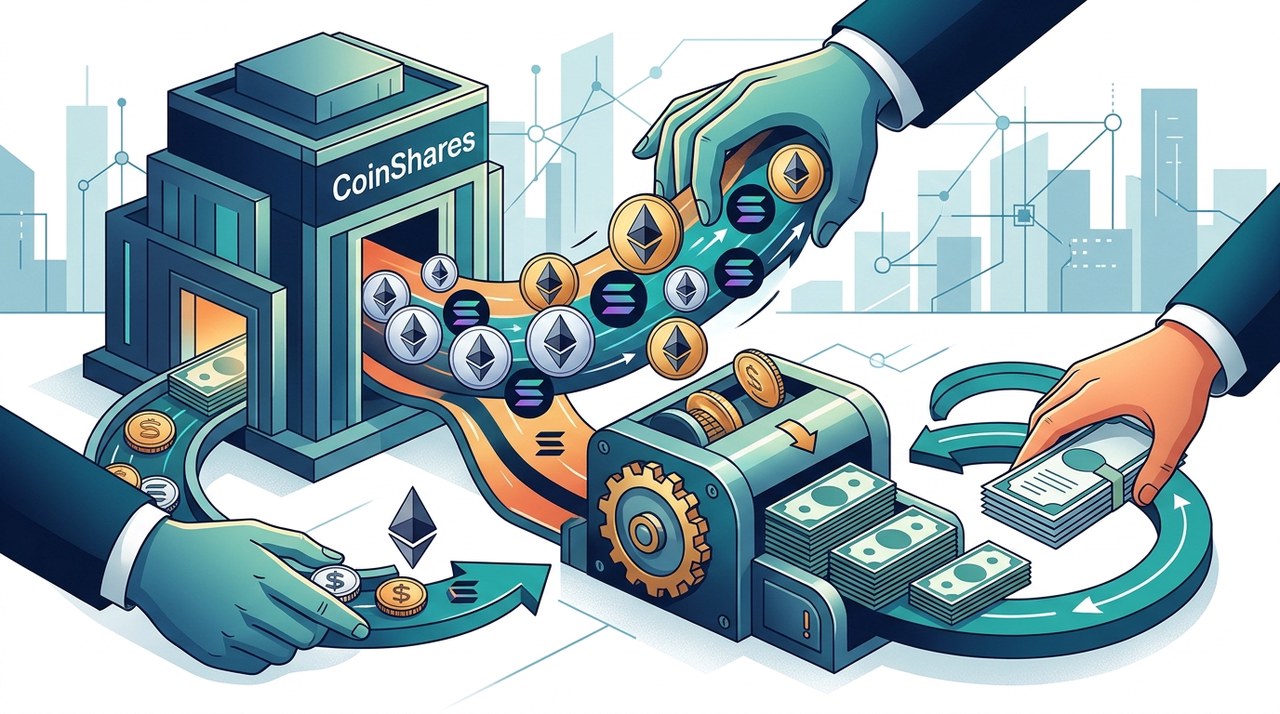
CoinShares Adjusts Treasury: Sells ETH and Halves SOL
European digital asset investment firm CoinShares made a noticeable pivot in its corporate treasury strategy during October. According to company disclosures, the asset manager liquidated all of its treasury EthereumETH-1.58% tokens and reduced its SolanaSOL+0.80% holdings by 50%.
The sales generated $19.3 million in capital. This cash injection is earmarked to support the firm's ongoing stock buyback program, which allows CoinShares to purchase its own publicly traded shares from the open market.
Breaking Down the Financial Details
Let us take a closer look at the key figures behind this asset reallocation:
- Capital Raised: The October asset sales generated $19.3 million for CoinShares.
- Buyback Cap: The company has an authorized budget of up to $40 million for stock repurchases prior to its next annual general meeting.
- Execution Rate: The $19.3 million raised represents nearly half of the maximum $40 million allocation.
Understanding Treasuries and Stock Buybacks
To better understand why a crypto asset management firm would sell its digital reserve assets, it helps to break down two core financial management concepts: corporate treasuries and share repurchases.
1. Corporate Crypto Treasuries
A corporate treasury represents the surplus cash, short-term investments, or secondary assets held on a company's balance sheet. While traditional businesses keep reserves in fiat currencies like U.S. dollars or short-dated government debt, digital asset management firms may hold major cryptocurrencies like BitcoinBTC-1.33%, Ethereum, or Solana as part of their capital reserve strategies.
2. What Are Stock Buybacks?
A stock buyback occurs when a public company repurchases its own shares directly from the open market using available cash. Think of it like a business buying back slices of its own pizza—reducing the total number of slices available in the market increases the ownership proportion represented by each remaining slice.
Companies typically choose to buy back equity when leadership assesses that their shares are undervalued relative to underlying performance, or when returning capital to existing equity holders offers a strategic advantage.
Strategic Motivations Behind the Capital Pivot
While selling crypto assets might seem surprising for an industry asset manager, corporate finance teams continuously evaluate where balance sheet capital yields the most strategic value. Factors driving such decisions include:
- Capital Allocation: Shifting non-operational crypto reserves into cash to fulfill corporate governance targets.
- Share Value Support: Acquiring company stock when executive management sees value in supporting equity price stability.
- Meeting Regulatory Deadlines: Executing authorized capital plans before the designated cutoff date at the next annual general meeting.
Market Context and Risk Factors
When institutional entities sell reserve tokens, market participants naturally monitor potential impacts on ecosystem liquidity. Ethereum (ETH) and Solana (SOL) represent two of the largest blockchain platforms by market capitalization, with substantial daily spot market trading volume.
While a $19.3 million sale is notable for an individual firm's balance sheet, it forms a small proportion of overall global trading volume for ETH and SOL. Broad macroeconomic trends, network utility, and general crypto market conditions remain the primary drivers of long-term token valuations.
Past performance of digital assets or corporate operations is not an indicator of future results. Cryptocurrency markets are subject to high price volatility.
Conclusion
CoinShares' decision to liquidate its treasury ETH and trim its SOL holdings highlights routine treasury management rather than a direct structural opinion on the underlying tokens. Investors should evaluate corporate financial actions separately from market price speculation.
Digital asset investments carry inherent price risks. Investors should conduct thorough research and review risk profiles before engaging with crypto markets. Check live asset data on Bitkub Market.
Latest blog posts
Russia Prepares Regulated Crypto Trading Amid Sanctions Risk
Moscow Exchange plans a December crypto launch, but local firms face uncertainty over international sanctions risks.


XRP Briefly Touches $1 Matching Ripple's RLUSD Stablecoin
XRP briefly reached $1 on November 18, matching Ripple USD after a 12% rebound, while institutional updates and ETF flows showed mixed signals.
|

Top Holders Move 6 Billion SHIB: What It Means for Traders
Major Shiba Inu holders transferred over 6 billion tokens to exchanges, but the broader market reaction remains muted as retail metrics stay neutral.
|