
Cleanspark Pivots to AI by Selling Bitcoin Reserves
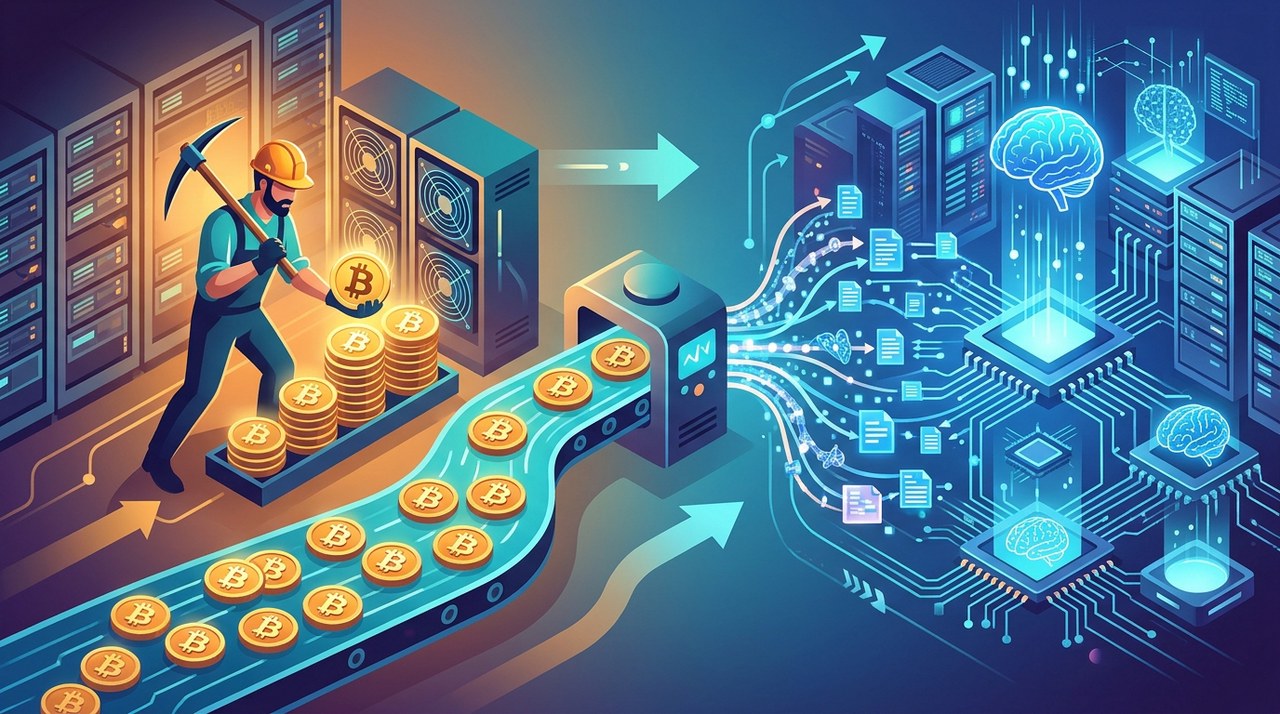
A New Direction for Bitcoin Miners
For years, the golden rule for Bitcoin mining companies was simple: mine Bitcoin and hold onto it forever. Crypto enthusiasts called this the classic buy-and-hold strategy. But times are changing fast in the mining industry.
One of the largest public Bitcoin miners, Cleanspark, is now turning that old rule on its head. Instead of hoarding every coin it mines, the company is selling its Bitcoin reserves. They are using this cash to fund a major shift into artificial intelligence (AI) data centers.
Building high-performance AI infrastructure requires billions of dollars. By selling Bitcoin, Cleanspark aims to fund its massive expansion without taking on excessive corporate debt or diluting shareholder value by issuing new shares.
Breaking Down Cleanspark's Fiscal 2026 Numbers
Cleanspark recently released its financial report for fiscal year 2026. The company reported a net loss of $987.1 million. That is a big shift from fiscal 2025, when the company posted a net profit of $364.5 million.
Why did the numbers swing so dramatically? Gary Vecchiarelli, President and Chief Financial Officer of Cleanspark, explained that about two-thirds of the loss came from non-cash accounting adjustments.
Under standard accounting rules, companies must adjust the recorded paper value of their Bitcoin when market prices change. Bitcoin closed Cleanspark's fiscal year near $83,600, down from about $114,000 a year earlier.
Past performance of digital assets or corporate financial results is not an indication of future results.
In addition to paper valuation losses, Cleanspark recorded $177.1 million in impairment expenses. Most of these costs were tied to converting its Sandersville, Georgia mining facility into an AI data center. Total annual revenue fell 25% to $576.5 million, while fourth-quarter revenue dropped 46% year-over-year to $120.9 million.
Despite the annual loss, Cleanspark managed to earn a modest profit of $9.8 million in its fourth quarter. As of September 30, the company held $1.13 billion in Bitcoin reserves alongside $204.8 million in cash and cash equivalents.
Selling More Bitcoin Than They Mine
Cleanspark's strategy of using Bitcoin as working capital is already visible in its operational figures. During the fourth quarter, the company mined 1,708 BTCBTC+2.60% but sold 2,102 BTC. That means sales exceeded quarterly production by 23%.
The trend was especially clear in September. During that month alone, Cleanspark mined 529 BTC and sold 702 BTC. By the end of September, its treasury held 13,530 BTC, including coins pledged as collateral.
- Fiscal Q4 Mined: 1,708 BTC
- Fiscal Q4 Sold: 2,102 BTC (23% more than produced)
- September Activity: 529 BTC mined vs. 702 BTC sold
- Treasury Reserves (Sept 30): 13,530 BTC (valued at ~$1.13B) plus $204.8M cash
Strategy from Company Leadership
Management made it clear that keeping a fixed minimum balance of Bitcoin is no longer their top priority. Instead, they plan to sell coins flexibly based on market conditions and capital needs.
We see the selling of a small amount of bitcoin in excess of the quarterly production to be one way of derisking. But again, we're going to be sensitive and very reactionary to markets. And we're going to use that capital to make sure that we prevent dilution or bringing on additional debt just to grow the company. — Gary Vecchiarelli, CFO
Vecchiarelli also shared that Cleanspark sold additional Bitcoin after the fiscal year ended on September 30. These sales helped build up cash reserves for future company acquisitions.
Cleanspark founder and CEO Matt Schultz summarized the company's ultimate goal during the earnings call:
Our focus is simple: convert scarce grid-connected power into long-term contracted cash flow. — Matt Schultz, CEO
The Pivot to AI: Sandersville and Texas Projects
The main focus of Cleanspark's new direction is its campus in Sandersville, Georgia. In July, the company signed a 20-year, $6.6 billion triple-net lease for the site.
To finance the development, Cleanspark raised $2.276 billion by issuing senior secured notes at a 7.875% interest rate, due in 2031. Construction is moving forward, with the first AI data hall scheduled for delivery in November 2027 and full completion expected in spring 2028.
As part of this shift, Cleanspark will start disconnecting its Bitcoin mining machines at Sandersville in late 2027. Management will then decide whether to relocate the hardware to other sites or sell it.
Meanwhile, the company is developing two sites in Texas representing up to 885 megawatts (MW) of power capacity. However, regulatory uncertainties in Texas have made lease negotiations more complicated.
Upgrading Rigs and Mining Efficiency
While expanding into AI, Cleanspark is also streamlining its existing mining fleet. During the fourth quarter, the company retired about 25,000 older mining machines. This brought its active fleet down to roughly 200,000 units.
Overall mining production fell 8% to 7,253 BTC for fiscal 2026, and average hashrate dropped 21% to 36 exahash per second (EH/s). However, removing older machines improved fleet energy efficiency to 14.8 joules per terahash (J/TH).
A Trend Across the Mining Industry
Cleanspark is not the only Bitcoin miner liquidating crypto reserves to fund new projects. Other major publicly traded miners are taking a similar approach.
According to an analysis by Glassnode published on November 18, public Bitcoin miners have sold nearly half of their total Bitcoin holdings since January 2026.
- Mara & Hut 8: Sold a combined 15,745 BTC (worth ~$1.28B) since September 30. Mara used $750M to repay Bitcoin-backed loans, while Hut 8 funded share buybacks.
- Riot Platforms: Sold 20,264 BTC through September, raising about $1.5B primarily for data center development.
Navigating Industry Risks and Next Steps
This transition creates a unique financial balancing act. Cleanspark aims to reduce its reliance on Bitcoin mining over time, yet it relies heavily on selling Bitcoin to finance its AI growth.
Until contracted revenue from AI data centers starts coming in around 2027 and 2028, Bitcoin remains a key source of operating capital. Digital asset markets remain volatile, and sudden price movements can affect funding plans. Investors should note that digital asset performance can change rapidly, and past trends do not guarantee future performance.
As demand for AI computing power explodes globally, access to grid-connected electricity has become essential. By treating Bitcoin reserves as active working capital, Cleanspark hopes to build a foundation for long-term cash flow in the evolving tech landscape.
Latest blog posts
Will the P vs NP Math Problem Break Bitcoin and Crypto?
The P vs NP problem is one of computer science's biggest mysteries. Here is what it means for Bitcoin, encryption, and crypto security.
|
Bitcoin Traders Prepare as $7 Billion in Options Expire
Around $7 billion in Bitcoin options contracts are expiring this Friday, with market data showing a shift toward defensive positioning among traders.
|


U.S. Spot XRP ETFs Buck Market Trend with $4M Daily Inflow
U.S. spot XRP ETFs registered $4.07 million in net inflows on Nov. 25, 2026, standing out as the only crypto ETF sector to gain fresh capital that day.
|