


Chainlink and UBS Target $2T Market with Onchain Products
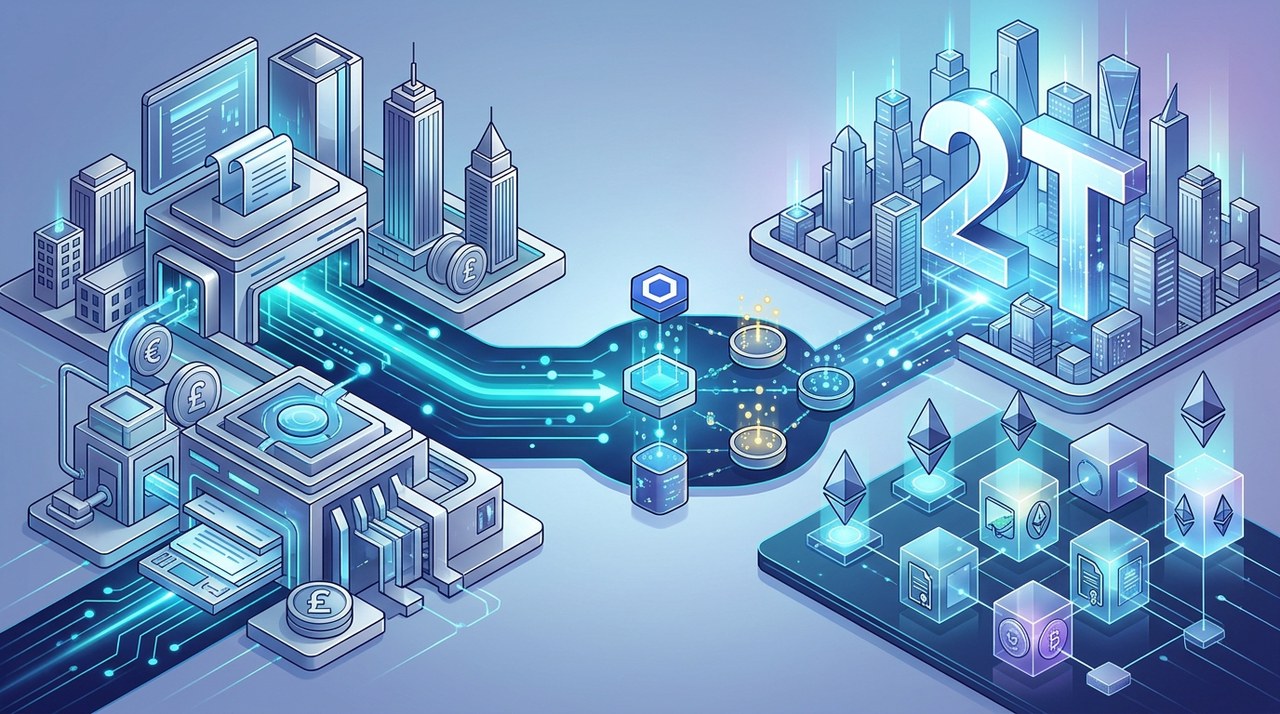
A Big Step into the $2 Trillion Financial Market
Swiss banking giant UBS has joined forces with ChainlinkLINK-0.64% to bring traditional structured investment products onto the blockchain. This new collaboration targets a global market valued at more than $2 trillion.
The two companies built a system that automates how these financial products are created and managed. By using blockchain technology, they aim to make old-fashioned banking operations faster and less reliant on manual work.
This effort marks another major step in connecting traditional Wall Street institutions with public blockchain networks like EthereumETH+0.95%.
Understanding Structured Notes and How the Pilot Works
To understand why this is important, it helps to look at what a structured note actually is. Think of a structured note as a custom investment agreement. Its payout depends on how well specific underlying assets, like stocks or market indexes, perform.
These investment products often come with complex rules. For instance, an investor might only receive interest payments if a stock reaches a specific price barrier.
Traditionally, tracking these terms requires spreadsheets, coordination across separate financial systems, and manual verification. This labor-intensive process can lead to delays and operational errors.
The new system solves this by using the Chainlink Runtime Environment (CRE). CRE bridges UBS's internal banking setup directly with the Ethereum blockchain.
During a successful production pilot, the system monitored predefined investment rules automatically. When specific market conditions were met, smart contracts triggered the required actions without requiring manual intervention.
Why Automation Matters for Traditional Banks
Chainlink estimates that the global market for structured products exceeds $2 trillion. However, much of this industry still relies on disconnected systems and manual processing.
Industry estimates show that settlement failures across financial markets can generate billions of dollars in operational costs each year. Automating lifecycle activities helps address these efficiency challenges.
The newly developed tool gives UBS clearer visibility into token holdings, coupon payment entitlements, and how close investments are to critical performance barriers.
"We’re excited to partner with UBS to bring structured note issuance and lifecycle management onchain," said Johann Eid, Chief Business Officer at Chainlink Labs.
Eid noted that the project shows how major financial institutions can adopt blockchain technology while continuing to rely on their established banking infrastructure.
Looking ahead, both companies plan to explore integrating suitable UBS digital money products. This could allow for even greater automation of payment settlements in future phases.
A Growing Partnership Between UBS and Chainlink
This announcement builds on previous work between UBS and Chainlink to bring traditional assets onto public networks.
In November 2025, UBS completed its first live end-to-end transaction for a tokenized money-market fund. The bank used Chainlink’s Digital Transfer Agent technical standard for the UBS USD Money Market Investment Fund Token (uMINT) on Ethereum, with DigiFT acting as the onchain distributor.
Before that, in September 2025, UBS Tokenize and Chainlink ran a pilot demonstrating how standard Swift financial messages could initiate blockchain transactions.
That initiative proved banks could interact with blockchain networks without having to replace their core existing systems.
Chainlink's Expanding Financial Network
Chainlink, the ecosystem behind the LINK token, has been active across the institutional sector.
In September 2026, Chainlink announced a partnership with financial technology provider Bottomline. Bottomline serves over 600 banks and processes more than $16 trillion in payments annually, aiming to connect its banking clients to blockchain settlement services.
Chainlink has also collaborated with JPMorgan’s Kinexys platform and OndoONDO-1.23% Finance to demonstrate cross-chain settlement of tokenized assets.
Separately, UBS, Goldman Sachs, and Citi are among 21 major financial institutions forming a new company to launch a U.S. dollar stablecoin planned for the first half of 2027.
What Lies Ahead for Onchain Assets?
While tokenizing fund redemptions was an early milestone, handling structured notes represents a move toward more complex financial products. Unlike basic tokens, structured notes have payment obligations that change dynamically over time.
Widespread adoption will still depend on institutional deployment timelines, regulatory clarity, and deep integration with traditional clearing infrastructure.
Nevertheless, this initiative illustrates that major financial firms are exploring blockchain technology for core operations. Past performance of digital assets or financial products is not a guarantee of future returns.
Latest blog posts


GTA 6 Launch Impacts Onchain Trading and Tokenized Equities
The release of GTA 6 shifted retail focus, driving $249.5M into tokenized Take-Two stock while security firms flagged thousands of scam tokens.
|
What is Coming for Solana in 2027? Core Upgrade Plans
Anza CEO Brennan Watt outlined Solana's 2027 technical roadmap, highlighting major upgrades across resilience, market structure, performance, and expressivity.
|

Family Office CEO: Why Skipping Bitcoin Research Is a Risk
Vogel Family Office CEO Rony Vogel highlights why ignoring Bitcoin due diligence poses risks for wealth managers and family offices.
|