
What is Coming for Solana in 2027? Core Upgrade Plans
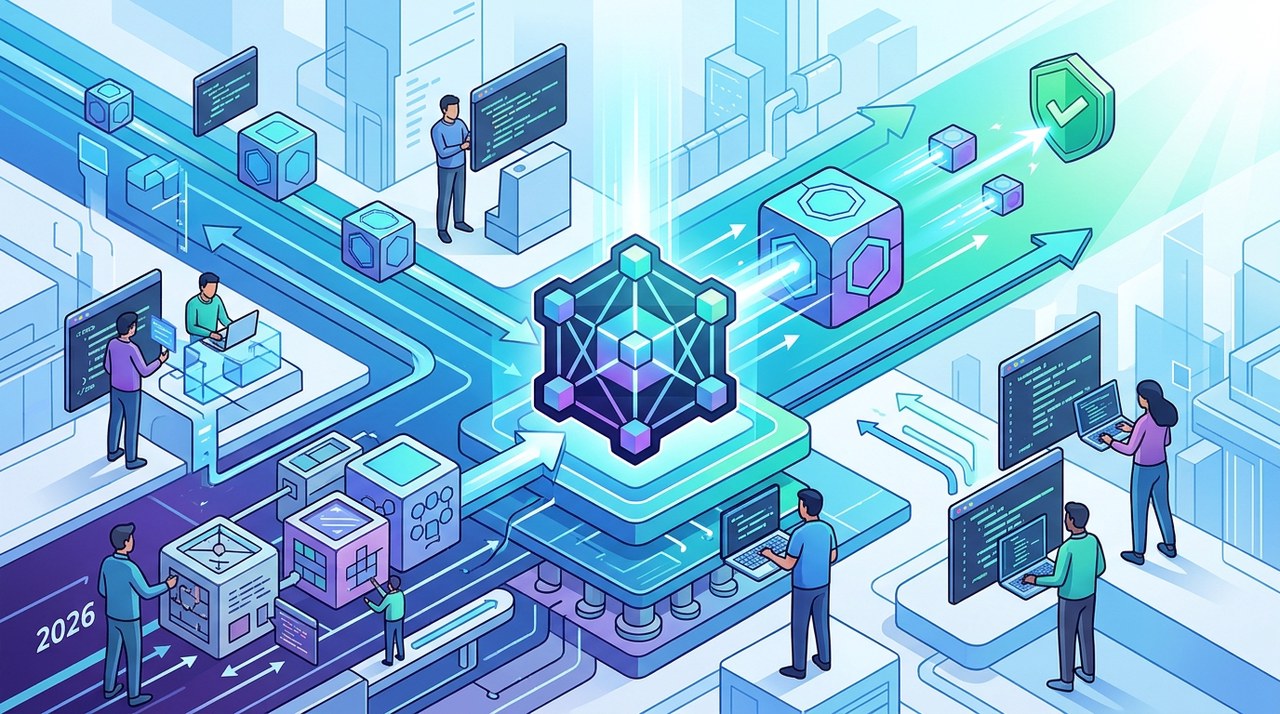
SolanaSOL+1.12% Outlines Its Technical Roadmap for 2027
At the Breakpoint 2026 conference, Brennan Watt, the CEO of core development firm Anza, revealed the primary technical goals for the Solana network heading into 2027.
The presentation detailed a comprehensive strategy designed to increase network throughput, streamline protocol rules, and expand developer capabilities. These upcoming changes build directly on major technical milestones achieved throughout 2026.
Looking Back: Key Solana Upgrades Completed in 2026
Before presenting the 2027 plans, Watt highlighted the progress made across the network over the past year. A major milestone was the launch of the Alpenglow consensus upgrade, which deployed to the mainnet on October 21, 2026.
Alpenglow replaced the legacy Tower BFT consensus algorithm with Votor, a faster voting protocol designed to reach agreement more quickly.
- Block times were reduced by 50%, moving from 400 milliseconds down to 200 milliseconds.
- Overall network compute capacity doubled during the same period.
- Transaction finality times dropped from roughly 12.8 seconds to approximately 150 milliseconds.
Alongside these speed enhancements, Solana officially transitioned to Solana 1.0, removing the mainnet beta tag it had carried since its initial launch. This change acknowledged the network's ongoing improvements in uptime, developer tools, and structural stability.
Data storage costs also saw significant cuts. Onchain storage fees decreased by 27% during 2026, with an additional sevenfold (7x) reduction scheduled for implementation shortly after the event.
Area 1: Improving Network Resilience
The first major focus area for 2027 is boosting network resilience. Anza plans to simplify core protocol architecture by removing outdated abstractions and consolidating legacy code.
By updating wire formats and pushing more execution elements directly onchain, developers aim to make future network upgrades safer and faster to roll out.
So, we're going to go ahead and simplify the protocol, replacing legacy abstractions and interfaces, pushing more of the execution on chain, and modernizing some of the wire formats. And all of this, you know, enhances resiliency, but it also allows us to move quicker and be more agile and deploy things and evolve the protocol more quickly.
Area 2: Refining Market Structure and Consensus
The second focus area centers on market structure and block distribution. This effort includes continuing the Alpenglow rollout and introducing a framework called Constellation.
While the Votor consensus voting layer is already active, the next step involves deploying Rotor. Rotor will serve as a single relay layer that replaces Turbine, the network's existing protocol for spreading block data among nodes.
In tandem with Rotor, the Constellation initiative will establish clearer rules for transaction ordering. This system is intended to foster greater competition among validators while streamlining how blocks move across the network.
Area 3: Expanding Network Performance
The third pillar of the 2027 roadmap focuses on scaling core compute efficiency.
Anza aims to double the total compute capacity of the network once again. Additionally, the update will cut the compute units (CU) required for standard token account operations by 80%.
Lowering compute requirements per account allows transactions to execute more efficiently, freeing up resource space within individual blocks.
Area 4: Enhancing Onchain Expressivity
The fourth pillar focuses on expressivity, expanding the types of applications and data models developers can build natively on Solana.
The roadmap introduces vector processing, enabling advanced computational models—such as machine learning applications—to run fully onchain.
- Maximum accounts per transaction will increase from 64 to 96.
- Programs will be able to read account data directly rather than making memory copies, reducing data transfer overhead per transaction.
Summary of Ecosystem Impacts
The updates planned for 2027 aim to refine Solana's base layer by targeting protocol complexity, transaction efficiency, and application flexibility.
Disclaimer: Past performance of digital assets or underlying blockchain operations does not guarantee future results. Users and developers should track technical releases through official channels.
Latest blog posts


Family Office CEO: Why Skipping Bitcoin Research Is a Risk
Vogel Family Office CEO Rony Vogel highlights why ignoring Bitcoin due diligence poses risks for wealth managers and family offices.
|

Did Anthropic's $81B IPO Temporarily Drain Crypto Markets?
Ripple CEO Brad Garlinghouse suggested Anthropic's massive stock debut pulled capital from crypto, but market data shows a more complex story.
|

 +1
Hashi Launches Mainnet to Bring Bitcoin DeFi to Sui
Hashi mainnet is officially live on Sui alongside over 20 institutional and DeFi partners, enabling 1:1 Bitcoin-backed assets for decentralized finance.
|