
Cardano Treasury Rejects $5M Bid for Warehouse Copper
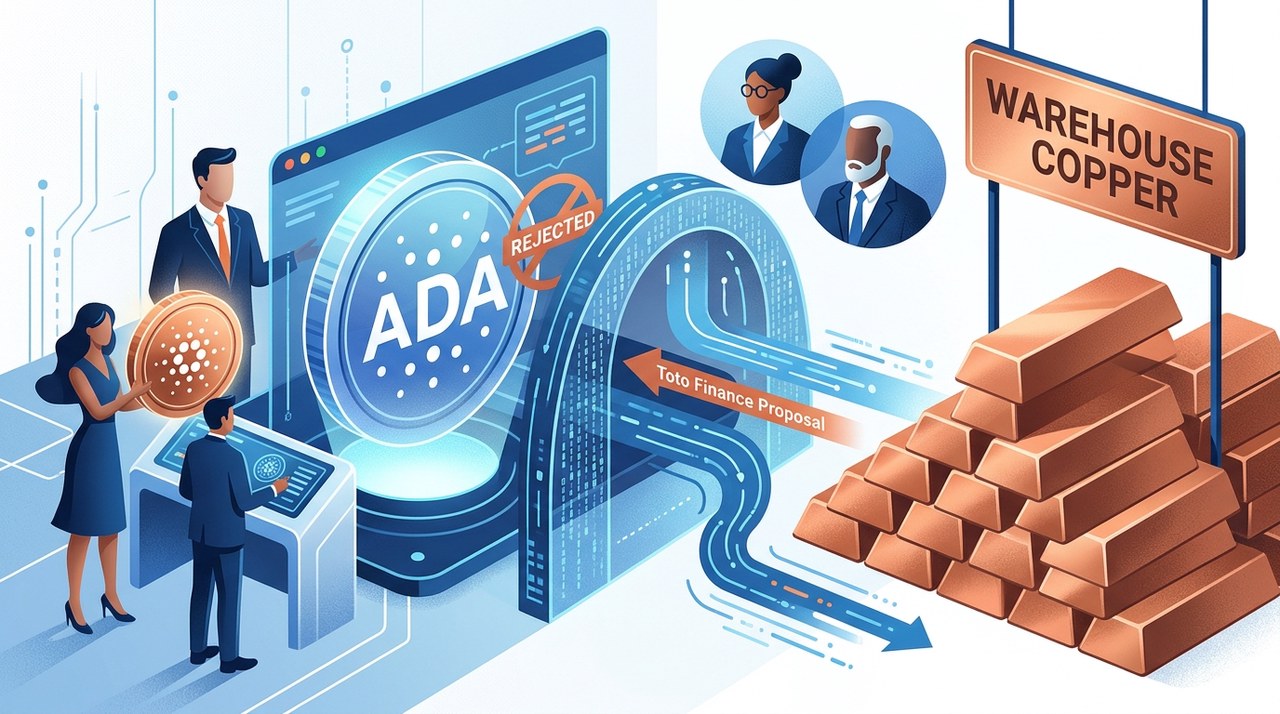
CardanoADA+1.31% Treasury Votes Down $5M Copper Proposal
Imagine asking a community treasury for $5 million to buy tons of physical copper, only for the vault keepers to turn down the idea. That is exactly what just happened on the Cardano blockchain.
Toto Finance recently submitted a governance proposal requesting 22 million ADA from the Cardano treasury. Their goal was to use these funds to purchase warehouse copper as part of a real-world asset initiative.
However, the proposal officially expired on Sunday without passing. While about 20 million ADA voted in favor, none of Cardano's seven Constitutional Committee members approved the request.
Understanding Toto Finance's 22 Million ADA Proposal
To understand why this vote matters, it helps to look at what Toto Finance was trying to achieve.
Real-World Asset (RWA) tokenization is a growing trend in crypto. It involves bringing physical items like real estate, gold, or industrial metals onto the blockchain.
Toto Finance asked for 22 million ADA, which was valued at around $5 million USD. The plan was to back digital assets with physical copper stored in commercial warehouses, attempting to diversify the ecosystem treasury.
Breaking Down the Governance Vote Numbers
Cardano's voting results showed a clear split between token holder sentiment and committee approval:
- Requested Amount: 22 million ADA (approx. $5 million USD)
- Community Support: Roughly 20 million ADA voted in favor
- Constitutional Committee Vote: 0 out of 7 members voted yes
- Status: Expired on Sunday without passing
Even though thousands of community votes rallied behind the proposal, Cardano's governance rules require checks from specific leadership bodies before treasury funds can be disbursed.
How Cardano's Constitutional Committee Works
Cardano uses a decentralized governance model established in its Voltaire roadmap. Under this framework, decisions involve three main groups: Delegated Representatives (DReps), Stake Pool Operators (SPOs), and the Constitutional Committee.
The Constitutional Committee consists of seven elected members. Their main job is to act like a judicial branch for the network.
Even if a proposal gets support from token holders, the Constitutional Committee must ensure the request follows Cardano's governing principles, protects community resources, and avoids unnecessary operational risks.
Why Was the Commodity Proposal Rejected?
Purchasing physical commodities like warehouse copper introduces unique real-world risks. Unlike pure software protocols, physical metals require secure storage facilities, insurance, legal ownership structures, and regular auditing.
When project proposals lack sufficient legal frameworks or risk mitigation details, governance committees often exercise caution. Releasing 22 million ADA without absolute clarity on legal custody poses significant risks to the treasury.
What This Means for Real-World Assets on Cardano
For many ADA community members, this rejection shows that governance guardrails are working as intended. It demonstrates that the network will not approve multi-million-dollar treasury requests without strict constitutional compliance.
At the same time, it sets a standard for future teams building RWA solutions. Future builders now know they must present ironclad legal structures alongside their technical proposals.
Past Performance Disclaimer: Past performance of digital assets or crypto ecosystem decisions does not guarantee future results. Market conditions can fluctuate quickly. You can track official market updates for ADA at Bitkub ADA Market.
Latest blog posts


Brazil Official Links Stablecoins to Money Laundering
A Brazilian central bank official sparked intense debate after suggesting that legally earned funds could be treated as dirtied money when converted into stablecoins.
|

Aster Token Drops 32% as CEO Suspects Foul Play
Aster's native token fell 32% in minutes following high-leverage liquidations. The CEO suspects foul play, though the exchange remained operational.
|
Crypto Account Frozen? Here Are Your Legal Options
If a crypto exchange locks your account or stops withdrawals, don't panic. Learn how to identify the freeze, gather evidence, and protect your legal rights.