

Brazil Official Links Stablecoins to Money Laundering
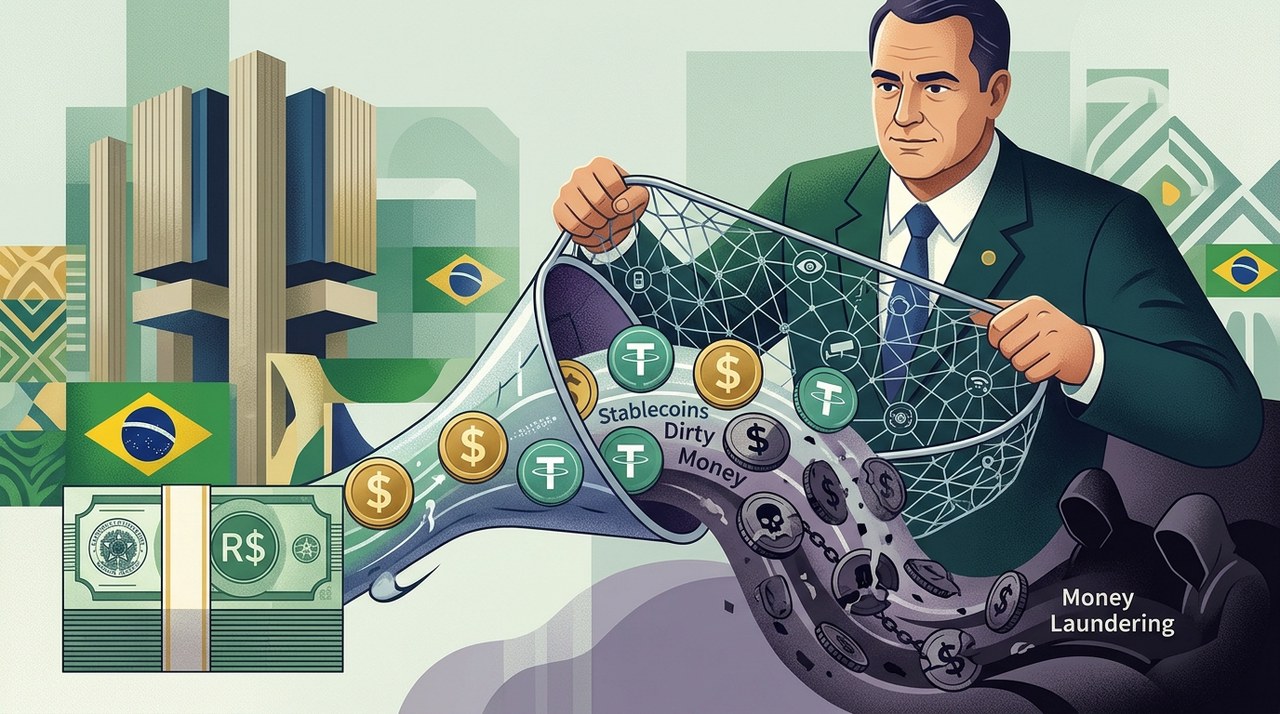
Central Bank Official Sparks Debate Over Stablecoins
A senior official from Brazil's central bank recently raised eyebrows across the financial world. He suggested that even legally earned money could be flagged for money laundering if it gets converted into stablecoins.
Gerson Romantini, the director of the foreign exchange department at the Central Bank of Brazil, reportedly made these controversial comments during a private event. The meeting was attended by representatives from traditional and digital financial companies.
According to local reports, Romantini argued that funds acquired legitimately might change their legal nature once they enter the stablecoin ecosystem. In his view, using clean money in specific stablecoin setups could effectively dirtied the funds, making them part of a potential money laundering operation.
It is important to note that Romantini's remarks do not represent an official declaration that every stablecoin transaction is illegal. However, they clearly show how closely regulators are watching digital asset transfers.
Brazil Tightens Rules on Crypto Remittances
These controversial statements come at a time when Brazil is already moving fast to restrict how cryptocurrencies are used for international transfers.
On April 30, the Central Bank of Brazil published Resolution No. 561, which officially went into effect on October 1. This resolution places strict limits on using virtual assets to settle international payment and transfer services, commonly known as e-FX.
In plain terms, payments between an e-FX provider and its overseas partner must now follow traditional banking paths. They must be settled through standard foreign exchange transactions or through a Brazilian real account opened by non-residents. Settling these specific transactions using crypto is now explicitly off-limits.
What Is the Stablecoin Sandwich?
A major focus of the Brazilian regulator's concern centers around a popular practice known as the stablecoin sandwich. This technique has been widely used by financial technology firms to make cross-border payments faster and cheaper.
Here is how a stablecoin sandwich typically works:
- A Brazilian fintech firm accepts local fiat currency (reais) from a client.
- The firm converts those reais into dollar-pegged stablecoins like USDT or USDCUSDC-0.38%.
- The stablecoins are sent over the blockchain to an offshore partner company.
- The offshore entity converts the stablecoins back into local fiat currency to pay vendors or send family remittances.
This method lets users bypass standard banking rails and avoid high international transfer fees. However, financial regulators worry it reduces transparency over cross-border capital flows.
Brazil's Crypto Industry Responds
The Brazilian digital asset community did not stay quiet after the central bank official's remarks came to light.
On November 14, the Brazilian Association of Tokenization and Digital Assets (ABToken) issued a formal response. The industry group strongly questioned the idea that stablecoin transactions should automatically be viewed as money laundering.
ABToken pointed out several important concerns regarding overly strict regulatory interpretations:
- Using stablecoins for payments is not inherently illegal.
- Sweeping bans or broad labels could create legal uncertainty for compliant businesses.
- Overly restrictive policies might hurt legitimate companies relying on digital assets for international payments.
Navigating the Changing Landscape
Brazil remains one of the most dynamic crypto markets in Latin America, but tension between fintech innovation and central bank policy is growing. As regulators refine their rules, businesses and users will need to adapt to stricter compliance requirements for cross-border transactions.
Latest blog posts


Aster Token Drops 32% as CEO Suspects Foul Play
Aster's native token fell 32% in minutes following high-leverage liquidations. The CEO suspects foul play, though the exchange remained operational.
|
Crypto Account Frozen? Here Are Your Legal Options
If a crypto exchange locks your account or stops withdrawals, don't panic. Learn how to identify the freeze, gather evidence, and protect your legal rights.



Asian Chip Stocks Slide Ahead of Nvidia Q3 Earnings
Asian semiconductor stocks dropped alongside regional markets, with the Nikkei 225 falling 2% and the Kospi down 2.6% before Nvidia's Q3 report.
|