


Cardano Hits Epoch 666 as Network Advances Technical Roadmap

CardanoADA-0.65% Reaches Epoch 666: A Symbolic Milestone
On November 5, 2026, the Cardano blockchain officially entered its 666th epoch. This milestone quickly caught the attention of community members due to the famous numerical association.
As reported by crypto journalist Tomiwabold Olajide, the milestone became an intriguing talking point across social channels. However, the event is purely symbolic and carries no special technical changes by itself.
While the number 666 generated lighthearted discussions online, the network continues to run its regular operations. Behind the scenes, several key development updates are currently moving forward across the ecosystem.
How Cardano Tracks Time: Understanding Epochs
To understand why Epoch 666 is significant, it helps to look at how Cardano keeps time. Unlike traditional financial systems that operate on calendar months or standard business days, Cardano organizes its operational schedule into distinct cycles called epochs.
Think of an epoch like a recurring five-day work shift or a scheduled chapter in a book. Each epoch on the Cardano network lasts exactly five days.
Inside every five-day epoch, time is further divided into smaller units called slots. One slot equals exactly one second. This means every single epoch contains precisely 432,000 slots.
During these slots, block producers are selected to validate transactions and add new blocks to the ledger. This steady rhythm has been running continuously since Cardano launched back in September 2017.
Epoch 666 Details and Mainnet Transaction Growth
Data from blockchain explorer Cexplorer reveals that Epoch 666 officially began on November 5, 2026. The five-day cycle is scheduled to end on November 10, 2026.
At the time of reporting on November 9, 2026, Epoch 666 had approximately 1 day and 10 hours remaining before transitioning into Epoch 667.
Alongside the epoch milestone, Cardano reached another major activity milestone. Mainnet data from Cexplorer records that the network has now processed a total of 127,203,164 transactions.
Crossing 127 million transactions highlights the cumulative activity on the mainnet over time. It demonstrates how steady user interactions and smart contract executions have accumulated since the platform went live.
Technical Progress: Dijkstra Net Hits Protocol Version 12
Beyond symbolic milestones, Cardano developers have made notable technical updates across test environments. A primary focal point is the Dijkstra Net testnet.
Dijkstra Net acts as the testing ground for the upcoming Dijkstra hard fork. It gives developers a safe space to test new features and code upgrades before releasing them to the main network.
Dijkstra Net has officially hard-forked to protocol version 12. This upgrade enables testing and integration against the complete Dijkstra feature set, with the exception of Linear Leios, which is being refined separately.
This transition was made possible by Node 11.2, which was pre-released on October 28, 2026. Developers used Node 11.2 to guide Dijkstra Net into the Dijkstra era.
Additionally, DB Sync version 13.8.0.0 was released for all networks. DB Sync is an essential component that stores blockchain data in relational databases, allowing developers to query transaction history efficiently.
Midnight Sidechain Upgrades to Ledger 9
The broader Cardano ecosystem also saw progress on Midnight, a data-protection sidechain. Midnight recently completed an upgrade from Ledger 8 to Ledger 9.
The shift to Ledger 9 brings new developer tools alongside system-wide improvements in security, compatibility, and performance.
One key feature introduced in Ledger 9 is direct smart contract interaction. Contracts can now execute calls directly with one another, enabling developers to build more complex decentralized applications.
Ledger 9 also broadens compatibility for wallets and institutional custody platforms, simplifying integration for service providers.
Explaining Keccak-256 and ECDSA Cryptographic Standards
A key component of the Ledger 9 release is native support for two widely recognized cryptographic standards: Keccak-256 and ECDSA.
While these names sound complex, they serve as foundational building blocks for security across the blockchain ecosystem.
Keccak-256 is a cryptographic hashing algorithm. You can think of it like a digital blender. It takes data of any size and blends it into a unique, fixed-length cryptographic fingerprint. Keccak-256 is the standard hashing algorithm used by EthereumETH-5.63%.
ECDSA stands for Elliptic Curve Digital Signature Algorithm. Think of ECDSA as a digital ID signature. Networks like BitcoinBTC-2.11% and Ethereum use ECDSA so users can verify ownership of a wallet address without exposing private keys.
By incorporating native support for Keccak-256 and ECDSA, Midnight makes it easier for Ethereum and Bitcoin developers to build compatible solutions and cross-chain tools.
Evaluating Network Activity and Market Risks
Continuous development and transaction growth show ongoing activity on the Cardano network. However, network upgrades and numerical milestones do not guarantee market returns.
Digital asset markets experience frequent price fluctuations driven by global market conditions and liquidity shifts. Investors should always conduct thorough research and evaluate potential risks carefully.
Past performance of digital assets is not a guarantee of future returns. To review real-time market data and pricing, visit the Bitkub Market page.
Summary of Key Cardano Updates
- Cardano entered Epoch 666 on November 5, 2026, running through November 10, 2026.
- Total mainnet transactions surpassed 127 million, reaching 127,203,164.
- Dijkstra Net upgraded to protocol version 12 using Node 11.2, pre-released on October 28, 2026.
- DB Sync 13.8.0.0 was officially released across all Cardano networks.
- Midnight upgraded to Ledger 9, introducing direct contract interactions and native support for Keccak-256 and ECDSA.
Epoch 666 offers an entertaining milestone for the community, but the core focus remains on engineering progress, cross-chain support, and network development.
Latest blog posts
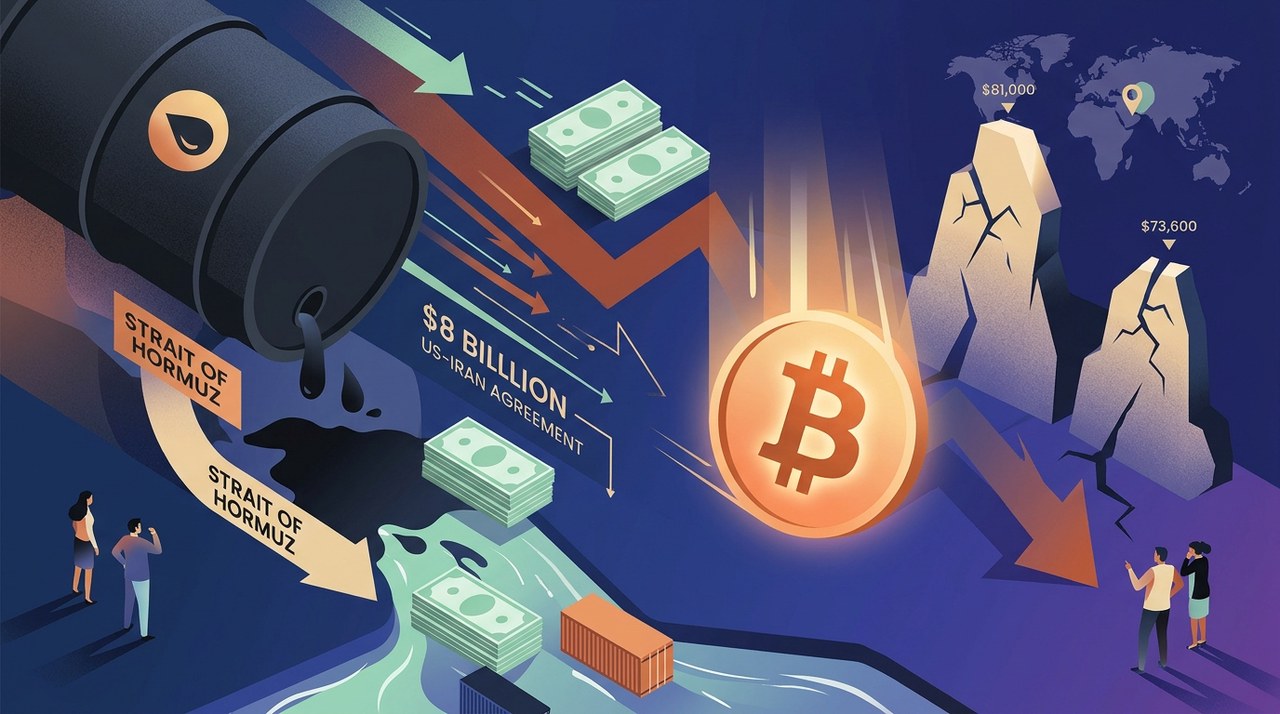
Oil Drops on U.S.-Iran Deal Report: Impact on Bitcoin
Brent crude fell 4.6% following reports of an $8 billion U.S.-Iran deal. Here is how falling oil prices and Fed interest rates impact Bitcoin.
|
NYSE Chooses Avalanche to Settle Tokenized Stocks
The New York Stock Exchange selected Avalanche as the main settlement ledger for its planned tokenized stock trading platform.

Strive Buys $2.2M in Bitcoin as Buying Slows Down
Strive added 29 Bitcoin to its treasury for $2.2 million, bringing total holdings to 43,153 BTC as corporate accumulation continues.
|