

Can AI Send Bitcoin to Zero? Chamath Palihapitiya Thinks So
From $1 Million Bull to AI Skeptic
Chamath Palihapitiya was once one of Bitcoin's most vocal cheerleaders. The Canadian venture capitalist and former Facebook executive bought into Bitcoin early at around $100 per coin. Back in 2017, he famously advised investors to put 1% of their net worth into Bitcoin, predicting the digital asset would eventually reach $1 million per coin. As recently as August 2024, he maintained a bullish stance with a price target of $500,000.
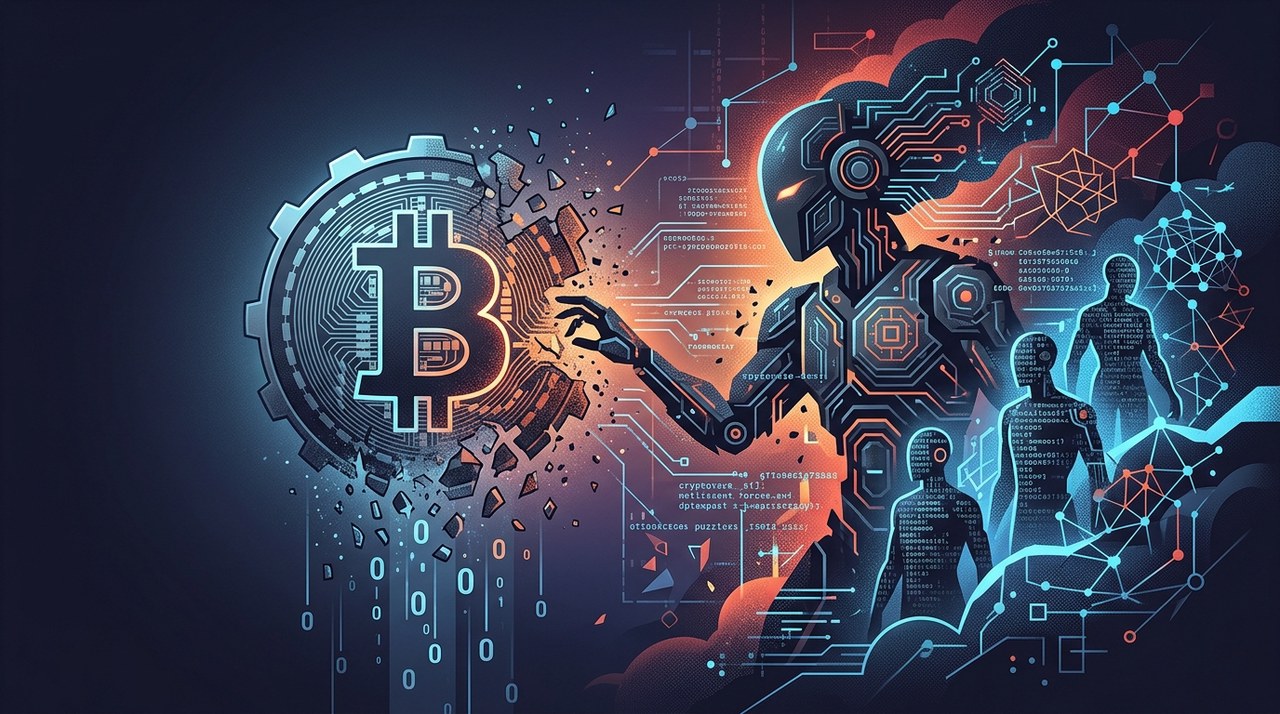
However, Palihapitiya has dramatically shifted his perspective. Speaking on the Moonshots podcast in October, he claimed that Bitcoin is capped and could eventually be hacked down to zero. To clarify his stance, his venture firm, Social Capital, released a detailed essay outlining how advancements in artificial intelligence might compromise the foundation of cryptocurrency security.
How AI Could Challenge Bitcoin's Encryption
At its core, Bitcoin relies on complex mathematical puzzles to protect user funds. These cryptographic algorithms make it virtually impossible for traditional computers to forge signatures or steal funds. Palihapitiya's argument centers on the idea that artificial intelligence could discover mathematical shortcuts, solving problems that currently take computers millions of years to crack.
The Social Capital essay highlights recent breakthroughs where AI models assisted in addressing long-standing mathematical challenges, such as the Riemann hypothesis and the exponential time hypothesis. While experts are still reviewing these mathematical proofs, the essay points to rapid developments in AI capabilities as a potential threat to traditional cryptography.
The essay also referenced AI research firm Anthropic, whose Claude model identified an accelerated attack against a simplified, weakened cipher in July. Anthropic noted that this test involved a reduced mathematical cipher and does not impact real-world cryptographic systems currently in use.
If Palihapitiya's prediction were to come true, the impact would extend far beyond individual retail holders. Major institutional investors would face massive losses, including MicroStrategy, the Nasdaq-listed firm holding over 850,000 Bitcoin acquired for more than $63 billion.
Industry Leaders Push Back Against the Bearish Case
Prominent figures in the cryptocurrency space quickly disputed Palihapitiya's theoretical scenario. Michael Saylor, founder and executive chairman of MicroStrategy, called the essay's core thesis a logical fallacy.
This thesis rests on a logical fallacy. Bitcoin isn't software... If AI breaks encryption, all digital commerce is at risk. The solution is an upgrade to next generation encryption.
Mike Belshe, Chief Executive Officer of crypto custody provider BitGo, also pushed back against the claim on social media. He pointed out that if AI were capable of breaking fundamental cryptography, the entire global financial infrastructure would collapse alongside Bitcoin.
Taken seriously, you'd be saying that banks, TLS, SSH, Signal, code signing, and nation state secrets all 'go to zero' too. Yes, we have work to do in the presence of AI, but the idea that 'new math could appear' is a basis for things 'going to zero' is silly.
The Challenge of Upgrading Decentralized Networks
The threat of advancing computing power is not entirely ignored by blockchain developers. The EthereumETH-3.87% Foundation currently ranks artificial intelligence threats higher than potential risks posed by quantum computing. However, implementing upgrades across decentralized networks presents unique governance hurdles.
Unlike traditional software companies or centralized banking institutions, Bitcoin has no central authority or CEO to mandate system-wide patches. Any changes to the underlying protocol require widespread consensus among miners, developers, node operators, and users worldwide.
Palihapitiya argues that achieving this level of global consensus for a major cryptographic overhaul is nearly impossible. Counter-arguments suggest that faced with a genuine security challenge, the global Bitcoin community would naturally align to protect the network's collective value.
Balancing Technological Risk and Market Realities
Cybersecurity is an ongoing evolution across all digital platforms, from online banking to government databases. While artificial intelligence introduces new tools for security analysis, cybersecurity defensive measures also continuously adapt to maintain system integrity.
Investors evaluating digital asset security should consider both theoretical technical risks and the history of network protocol updates. Past performance of digital assets is not an indication of future results. You can monitor current market metrics and price data on the Bitkub BTCBTC-3.26% Market.
Latest blog posts


Shibarium Gaming Upgrade: Shiba Eternity Cards Go Live
Over 440,000 Shiba Eternity cards have officially migrated to Shibarium, introducing on-chain trading, NFT rentals, and upcoming privacy features.
|
Vitalik Buterin Defends EIP-8037 Amid Contract Breakage Fears
Ethereum co-founder Vitalik Buterin has defended the proposed EIP-8037 upgrade, addressing developer concerns regarding potential smart contract disruptions.
|

 +2
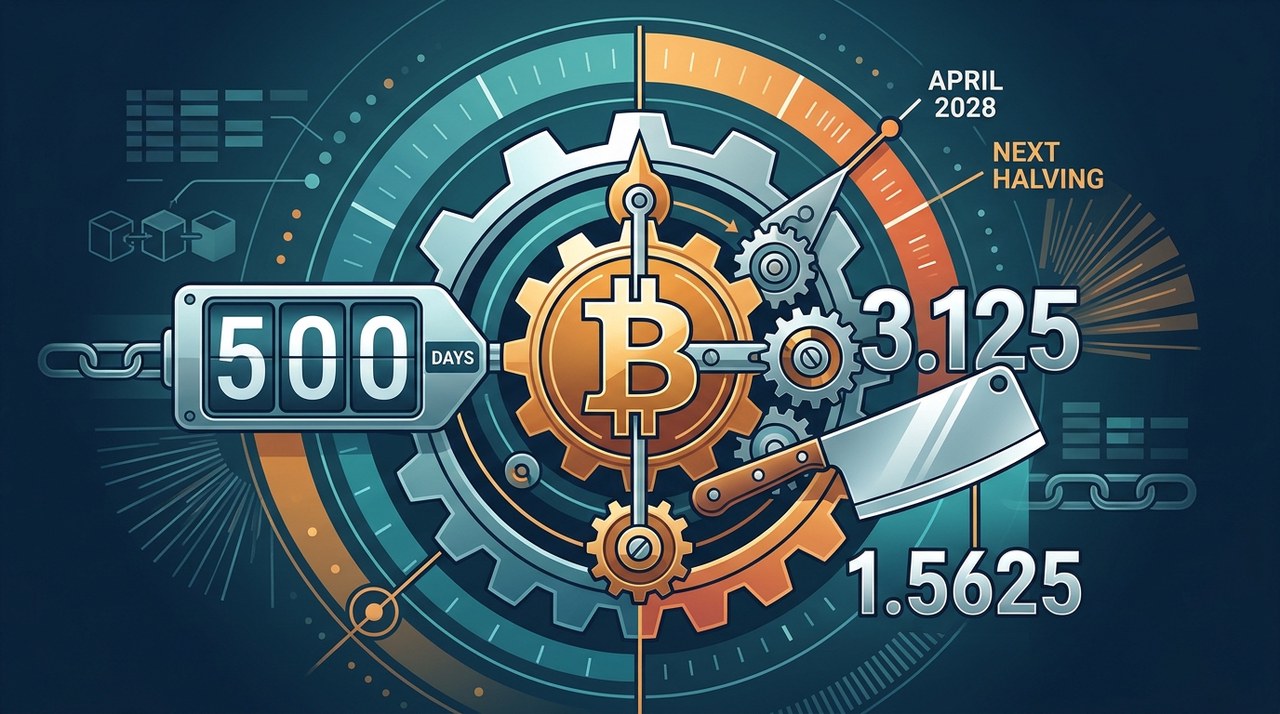
Bitcoin Halving Countdown Hits 500 Days: Key Insights
With 500 days remaining until Bitcoin's next supply cut in April 2028, here is a breakdown of mining mechanics, historical cycles, and key price levels.
|