
Braiins Warns of Massive Bitcoin Hashrate Hijacking Attacks
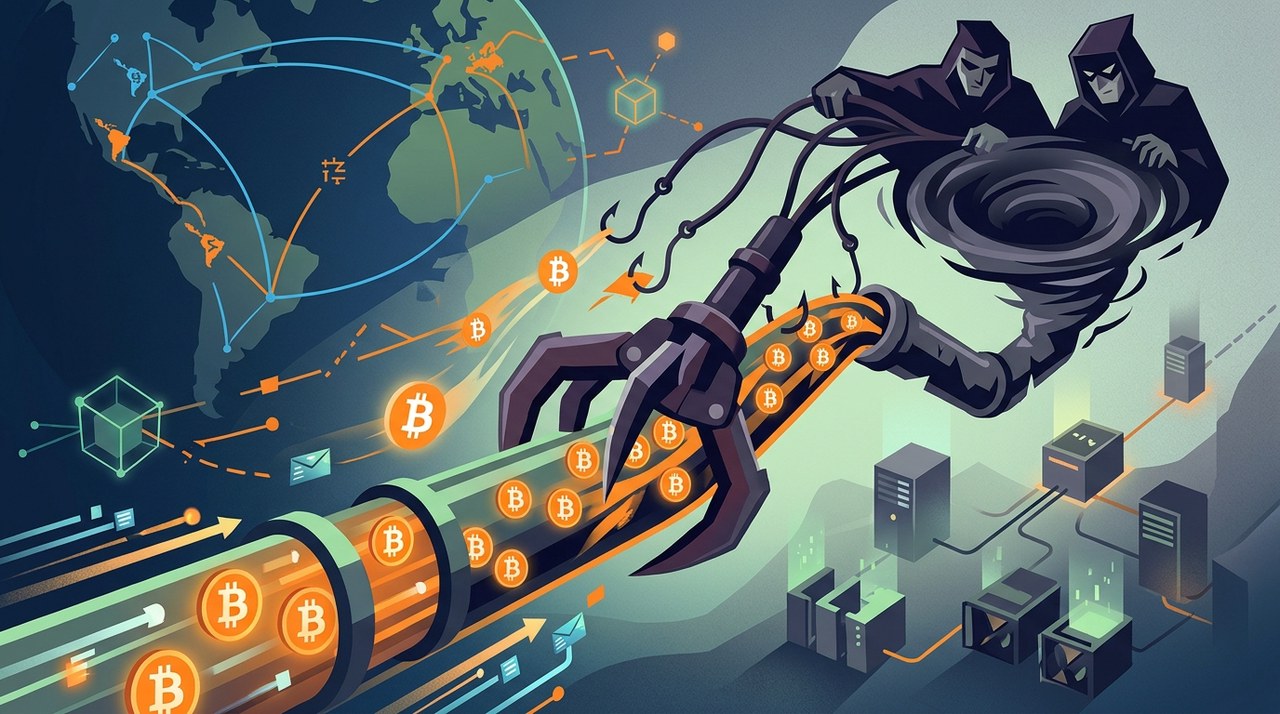
Braiins Issues Security Alert Over BitcoinBTC+2.92% Hashrate Hijacks
On Wednesday, Nov. 25, 2026, leading Bitcoin mining pool operator Braiins released a crucial security advisory. The warning alerted the crypto community to a series of sophisticated network hijacking attacks active throughout the month.
These attacks successfully redirected up to 1.9 exahashes per second (EH/s) of Bitcoin computing power away from legitimate pools. The culprits accomplished this by exploiting long-standing security weaknesses in the outdated Stratum V1 mining protocol.
What Is Hashrate Hijacking?
Imagine sending physical cash through regular mail inside a plain, unsealed envelope. Anyone along the delivery route could open the envelope, change the destination address on the outside, and keep the money for themselves.
That is essentially how this attack works. The hackers did not break into physical mining machines, nor did they breach pool server security. Instead, they intercepted data packets while they were traveling across the internet.
The Timeline: From Latin America to Europe
The security incidents began early in November and gradually escalated across multiple continents. Braiins documented the expansion step by step:
- Nov. 7 to Nov. 12 (Latin America): Investigators identified 19 separate attack episodes targeting operations primarily in Brazil and Argentina. Each incident impacted between 120 and 400 mining sites, redirecting 36 to 174 petahashes per second (PH/s).
- Nov. 20 (Europe): The attacks grew significantly larger and shifted toward European internet infrastructure. Braiins recorded four massive episodes lasting between 6 and 49 minutes each.
- Peak Impact: During the Nov. 20 attacks, between 1,050 and 1,600 mining sites were affected per episode. The total diverted computing power reached between 0.6 and 1.9 EH/s.
How Attackers Manipulated Internet Traffic
The underlying technical flaw used in these attacks is far from new. Stratum V1 was introduced back in 2012 to help mining rigs communicate with pool servers.
However, unencrypted Stratum V1 connections lack a mechanism for mining hardware to authenticate the server assigning their work. This leaves mining revenue vulnerable to network interference.
Attackers combined this protocol flaw with Border Gateway Protocol (BGP) routing manipulation. BGP acts like the GPS system of the internet, directing data traffic between independent global networks.
By broadcasting fraudulent BGP routing announcements, attackers rerouted legitimate mining traffic toward impersonated pool infrastructure. Mining machines kept running at 100% capacity and burning expensive electricity, but their work was credited to the attacker's fake pool.
Comparing Braiins Incident to the Recent Luxor Hack
This warning comes shortly after a separate hashrate hijacking incident involving Luxor Technology earlier in November.
On Nov. 15, Luxor confirmed that unauthorized account modifications via its Luxor Commander platform affected just over a dozen customer accounts. Estimates suggested around 13 EH/s was temporarily redirected to the Ocean mining pool. Luxor CEO Nick Hansen described that incident as a sophisticated AI-enabled vector.
Braiins highlighted key differences between the two security events:
- Luxor Incident: Involved unauthorized configuration changes inside account management software.
- Braiins Disclosed Incident: Intercepted network communications in transit. No configuration settings were changed, and pool account balances or payout rules remained completely intact.
A Decade-Old Flaw Returns
BGP routing attacks against cryptocurrency miners have occurred before. In 2014, security firm Dell Secureworks documented a similar internet routing attack that stole roughly $83,000 in mining payouts.
Braiins previously addressed this threat vector in 2020 while advocating for industry adoption of Stratum V2. Security analysts suspect November's escalating events might represent preliminary testing by attackers before attempting larger operations.
Urgent Recommendations for Mining Operators
To guard against active network threats, Braiins strongly urges mining operators to update their security setups immediately:
- Adopt Stratum V2: Stratum V2 encrypts data communications and authenticates the true identity of the mining pool.
- Use Stratum V1 with TLS: For operations unable to switch to Stratum V2 right away, wrapping Stratum V1 in Transport Layer Security (TLS) offers encrypted protection—provided firmware validates certificates properly.
- Upgrade Firmware: Braiins released Braiins OS 26.11 on Wednesday, introducing strict TLS certificate verification and protections against silent fallbacks to unencrypted connections.
- Deploy Stratum V2 Proxy: Braiins introduced a free Stratum V2 proxy tool for legacy mining equipment lacking compatible firmware.
Firmware Testing Reveals Unexpected Flaws
Testing conducted across seven firmware implementations on Nov. 20 and Nov. 23 revealed additional security deficiencies across the industry.
Two widely used firmware builds accepted fake or invalid TLS certificates without alerting the user. This means operators using those firmwares remained exposed to pool impersonation even when connections appeared encrypted.
Braiins called on mining pools, firmware developers, and internet service providers to fortify network infrastructure. Operators should regularly check for discrepancies between physical machine hash output and computational power credited on pool dashboards.
Securing Bitcoin's Infrastructure Backbone
Authenticated encryption cannot stop bad actors from disrupting basic internet connectivity, but it prevents mining hardware from doing free work for imposter pools.
November's events showcase an uncomfortable reality for industrial mining operations. While hardware computational efficiency has advanced by leaps and bounds, securing the network connections that generate mining revenue remains vital work for the entire ecosystem.
Latest blog posts

Will the P vs NP Math Problem Break Bitcoin and Crypto?
The P vs NP problem is one of computer science's biggest mysteries. Here is what it means for Bitcoin, encryption, and crypto security.
|
Bitcoin Traders Prepare as $7 Billion in Options Expire
Around $7 billion in Bitcoin options contracts are expiring this Friday, with market data showing a shift toward defensive positioning among traders.
|


U.S. Spot XRP ETFs Buck Market Trend with $4M Daily Inflow
U.S. spot XRP ETFs registered $4.07 million in net inflows on Nov. 25, 2026, standing out as the only crypto ETF sector to gain fresh capital that day.
|