

Bitcoin Holds $75K as Asian Stocks Dip on AI Fears
What Happened to Global Markets?
Imagine waking up to find stock market trading paused in an entire country because prices fell so fast. That is exactly what happened in South Korea recently.
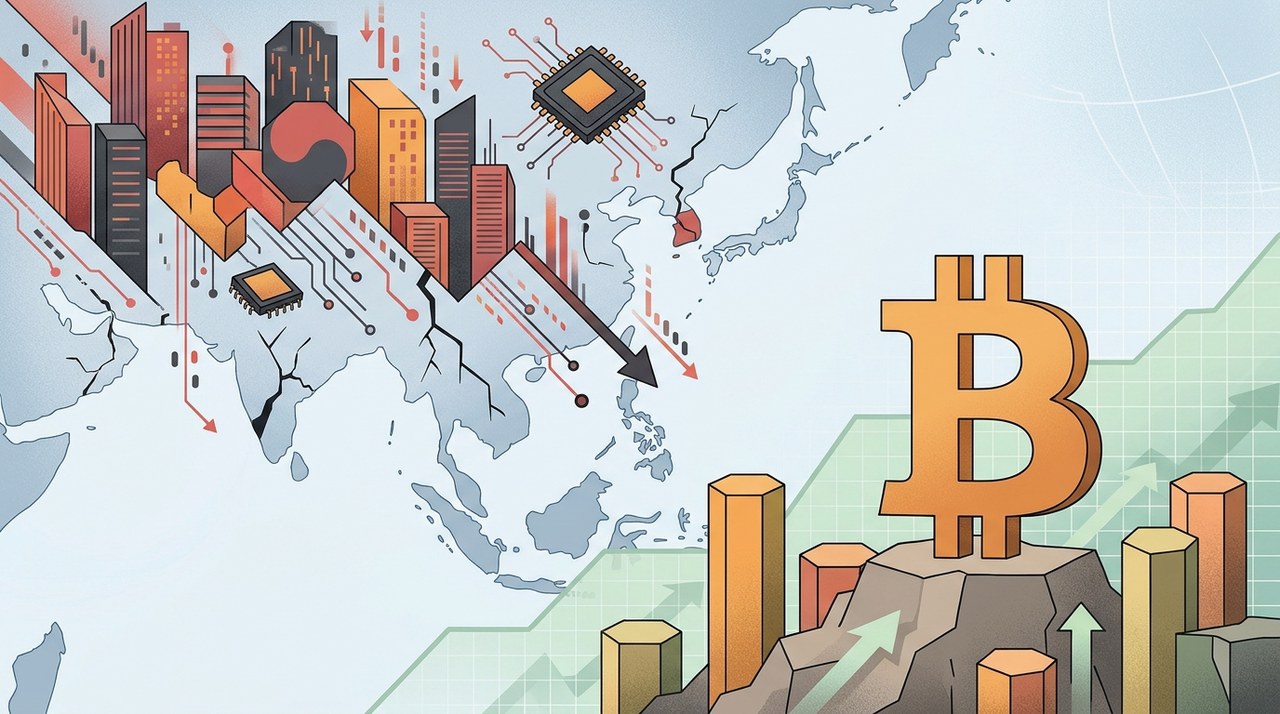
News about potential new artificial intelligence regulations in the United States triggered widespread nervousness across global financial markets. Asian markets took the brunt of the initial reaction, causing South Korea's flagship stock index, the KOSPI, to tumble by 8%.
The decline was fast enough that automatic market filters kicked in to temporarily pause trading. Meanwhile, amid all this chaos in traditional finance, BitcoinBTC+0.35% did something noteworthy. It mostly stood its ground and consolidated right around the $75,000 mark.
Breaking Down the South Korean Stock Crash
To understand why this matters, it helps to look at South Korea's financial ecosystem. The country's stock market is heavily weighted toward technology corporations, especially semiconductor producers like Samsung Electronics and SK Hynix.
These tech giants supply essential hardware used to build and operate AI models worldwide. Because of this deep connection, policy shifts or regulatory debates originating in Washington can quickly rippleXRP-0.38% across the Pacific and influence Korean stock valuations.
What Triggered the Market Halt?
When stock prices drop too rapidly, stock exchanges employ automated mechanisms known as circuit breakers or sidecars. You can think of a market circuit breaker like a safety fuse in your home electrical panel.
If electrical current surges too fast, the fuse trips to stop damage. In financial markets, if an index drops by a specific percentage within a short window, trading is temporarily suspended.
This pause gives investors time to assess incoming news and helps prevent automated selling programs from driving prices further down into a panic loop.
When the KOSPI dropped 8%, South Korean financial authorities stepped in promptly. Officials announced targeted stabilization measures to calm market volatility, restore liquidity, and reassure investors.
Why AI Regulation in the US Worried Investors
Why would proposed regulatory discussions in Washington cause such a fast reaction in Asian markets? The answer comes down to high growth expectations surrounding artificial intelligence.
Global equity markets have experienced a major rally over the past two years, largely driven by enthusiasm for AI. Technology firms have invested heavily in microchips, data centers, and advanced software models.
When government authorities begin discussing stricter regulatory oversight, trade limits, or safety mandates, market participants start recalculating future profit margins. Here are three main concerns that impacted investor confidence:
- Increased Operating Costs: Stricter rules mean technology firms must spend more money on compliance, legal teams, and safety audits.
- Slower Product Releases: Government approvals and oversight can delay the launch of new software products and microchips.
- Supply Chain Friction: Potential export restrictions can limit hardware manufacturers in Asia from selling chips freely to global buyers.
When investors worry that growth rates might slow down, many sell stock positions to protect their capital, leading to temporary price drops across affected sectors.
How Bitcoin Held Near $75,000
While traditional equity markets experienced notable selling pressure, the cryptocurrency market presented a calmer picture. Bitcoin remained steady near the $75,000 price point during the market turbulence.
In financial trading, this behavior is referred to as consolidation. Consolidation occurs when an asset trades within a relatively stable range after a previous upward or downward price trend.
Instead of dropping alongside Asian tech equities, buying interest near key price levels helped absorb selling pressure, keeping Bitcoin relatively stable around $75,000.
While Bitcoin displayed resilience during this specific event, digital assets remain subject to high market volatility. Prices can fluctuate rapidly depending on broader global liquidity, economic conditions, and shifting market sentiment.
Crypto vs. Tech Equities: Examining Market Correlations
Market analysts frequently study how closely Bitcoin moves alongside traditional stock indices. During times of broader economic shift, crypto assets can trade similarly to growth tech stocks.
When interest rates change or market liquidity shifts, tech stocks and cryptocurrencies often move in the same direction. However, during news events specific to corporate AI regulation, crypto can act differently.
There are several key structural reasons why Bitcoin does not always move in tandem with tech stocks:
- Decentralized Structure: Bitcoin operates on a decentralized blockchain network that is independent of corporate quarterly earnings reports or corporate board decisions.
- Different Demand Drivers: While semiconductor makers rely on corporate capital expenditure, Bitcoin demand is tied to global liquidity, network usage, and store-of-value considerations.
- Continuous Trading: Crypto markets operate 24/7 globally, allowing continuous price adjustment without opening gaps or trading halts.
Looking Ahead: Potential Scenarios for Markets
Moving forward, market participants will monitor both government policy updates and macroeconomic signals. Here is a look at potential developments under different conditions:
Scenario 1: Regulatory Clarity Restores Market Calm
If policymakers provide clear guidelines that support technology development while addressing safety, market uncertainty could decrease. In that environment, traditional stock indices like the KOSPI could stabilize, providing a steady backdrop for risk assets generally.
Scenario 2: Macro Factors and Bitcoin Price Paths
For Bitcoin, future price paths depend heavily on global monetary policy and fund flows. If global central banks ease interest rates and institutional inflows into exchange-traded funds remain strong, Bitcoin could maintain momentum toward higher price levels.
Conversely, if global economic conditions tighten or if regulatory uncertainty spreads into wider financial markets, overall risk appetite could contract. Under those circumstances, Bitcoin could experience a downward price pull below current support levels.
Key Takeaways
The 8% drop in South Korea's KOSPI index highlights the interconnected nature of global finance, where policy debates in one country can quickly impact stock values in another.
At the same time, Bitcoin holding near $75,000 illustrates how cryptocurrency markets continue to develop their own distinct trading dynamics alongside traditional stock exchanges.
Past performance of digital assets or financial markets is not a guarantee of future performance. Always evaluate risks carefully before making investment choices.
You can follow live cryptocurrency prices and market metrics at Bitkub Market.
Latest blog posts

 +2
Blue Wave, Red Week: Global Markets and Crypto Dynamics
A friendly breakdown of how U.S. midterm elections, stock market swings, and crypto security updates shaped the week.
|
Bitcoin Developer Proposes Strategy to Neutralize Quantum Threat
A new proposal by Bitcoin developers uses game theory and cryptographic updates to make quantum computing attacks economically unviable for hackers.
|


Keplr Wallet Hack Impacts Google and Apple Login Users
A security vulnerability in Web3Auth infrastructure affected Keplr users who created wallets via social logins, prompting a rescue operation to secure funds.
|