

Bitcoin Hits Record 411-Day Bear Market as Holders Realize Losses

Bitcoin Market Overview: Grayscale vs. Onchain Data
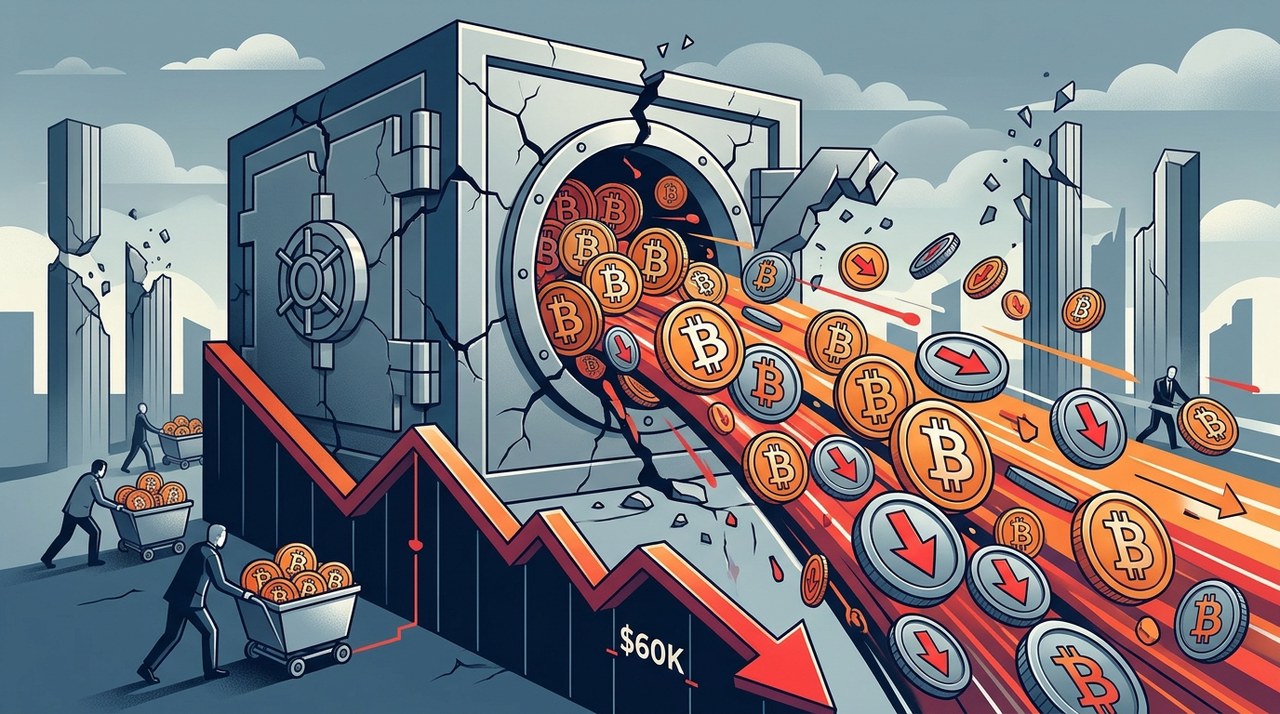
Bitcoin traded near $59,765 on November 24, 2026, marking a 5.61% daily decline. Meanwhile, EtherETH-5.70% fell 6.28% to around $1,675. These moves follow a prolonged downturn that has analysts comparing short-term pressure against long-term metrics.
Digital asset manager Grayscale suggests that Bitcoin has entered oversold territory after its longest bear market on record. However, onchain data from research firm CryptoQuant reveals that long-term investors are currently selling coins at an average loss of 33%.
Inside the Record 411-Day Bear Market
Bitcoin's downturn has reached 411 days, making it the longest bear market in its historical comparisons. On November 21, 2026, Bitcoin touched a new cycle low of $55,000, dropping below its previous June bottom of $58,000.
From its October 2025 high, Bitcoin has experienced a 56% peak-to-trough decline. Interestingly, while this is the longest bear market to date, it is also technically the shallowest peak-to-trough drop compared to past cycles.
Investors should note that past performance of digital assets is not an indication of future results. Market conditions can shift rapidly based on macroeconomic conditions.
Grayscale Sees Potential Opportunity Amid Fund Outflows
Zach Pandl, Head of Research at Grayscale, noted that current asset valuations might offer entry points for long-term investors. However, he emphasized that market participants must navigate potential near-term price volatility, as downside risks remain.
Several data points reflect current pressure across the broader market:
- Global crypto exchange-traded products (ETPs) recorded over $2 billion in net outflows last week.
- Redemptions for major stablecoins accelerated as capital moved to the sidelines.
- Futures open interest for both Bitcoin and Ether dropped to summer lows.
Grayscale maintains that underlying blockchain fundamentals remain intact. Nevertheless, tech sector shifts—such as Nvidia leadership updates involving Jensen Huang and Anthropic's IPO—continue to influence broader market sentiment.
Onchain Signals: Long-Term Holders Realize 33% Losses
Despite Grayscale's focus on long-term value, onchain activity shows persistent selling pressure. CryptoQuant analyst Woominkyu reported that Bitcoin's Long-Term Holder Spent Output Profit Ratio (SOPR) dropped to 0.67 on November 23, 2026.
The SOPR metric tracks whether moved coins were transferred at a profit or loss. A reading below 1 indicates net loss-making activity. A reading of 0.67 means coins held for longer than 155 days were moved at an estimated average loss of 33%.
This metric fell even as Bitcoin briefly rallied toward $64,600 during intra-day trading. SOPR readings this low have occurred only seven times this year, including four instances during the June market low.
Capitulation Metrics and What Comes Next
The seven-day moving average for SOPR currently stands at 0.76, near its yearly low of 0.73 set in June. Long-term holders have now recorded nine consecutive days of loss-making transactions.
On November 23 alone, the network saw $1 billion in net realized losses and 2,033 BTCBTC-5.05% in net exchange inflows. In historical market cycles, periods of heavy realized losses among patient investors have sometimes coincided with capitulation phases.
Capitulation can extend over several weeks before market momentum resets. Analysts suggest that monitoring SOPR for a sustained move back above 1 will be key to confirming whether selling pressure is subsiding.
Institutional Spot ETF Holdings Reach Record Highs
While short-term sentiment remains cautious, institutional accumulation continued through the third quarter. According to data cited from Galaxy, U.S. institutional investors added a net 49,229 Bitcoin via spot ETFs in Q3.
This was the largest quarterly addition by institutions since Q2, bringing total U.S. institutional spot ETF holdings to a record 356,000 Bitcoin, with firms like Wells Fargo among the key participants.
While institutional participation points to ongoing structural interest, crypto assets remain high-risk investments subject to significant market swings.
Latest blog posts

Anchorage Digital Launches 61st Parallel Asset Management
Crypto custody firm Anchorage Digital is expanding its institutional reach by launching a standalone subsidiary called 61st Parallel Asset Management.

South Korea Proposes Reversing 2017 Ban on Crypto ICOs
South Korea proposes lifting its 2017 ban on Initial Coin Offerings to foster job growth and encourage domestic crypto investment.
Bitcoin ETFs See $570M Outflow as BTC Drops Below $60K
U.S. spot Bitcoin ETFs saw $570 million in net outflows on Monday, with BlackRock leading the exits as total November withdrawals near $5 billion.
|