


Anthropic IPO, Saylor Strategy, and Quantum Bitcoin Security
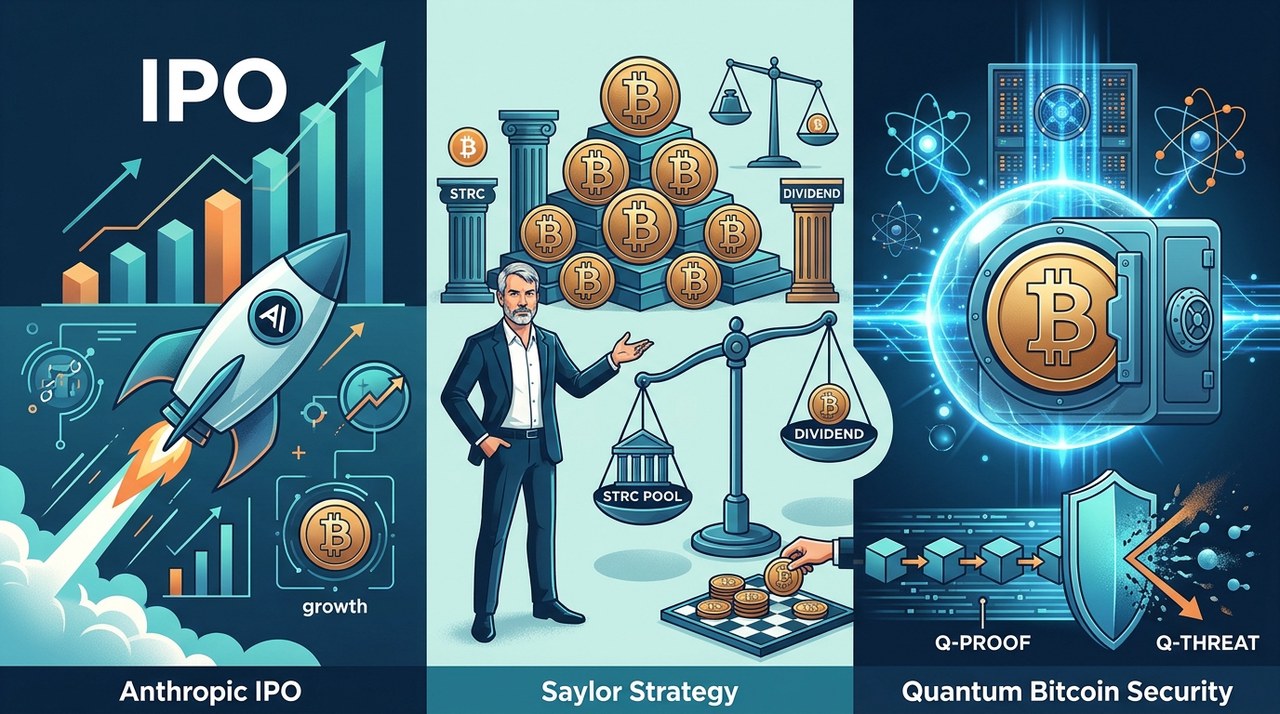
What Happened in Crypto This Week?
Welcome to your weekly crypto recap! It has been another busy week across the digital asset landscape. From corporate treasury updates to high-profile tech IPOs, regulatory moves, and post-quantum security research, there is plenty to catch up on.
Recently, BitcoinBTC+1.48% traded near $59,059 (up 1.99%), while EthereumETH+1.43% hovered around $1,660 (up 1.47%). As always, keeping up with macroeconomic events and regulatory changes helps explain these broader market movements.
Note: Past performance of digital assets is not an indication of future results. Crypto assets are volatile and subject to market risks.
Michael Saylor Shares Strategy on STRC Preferred Shares
MicroStrategy executive chairman Michael Saylor addressed investors regarding the company's flagship STRC preferred shares. Saylor noted that the firm would prefer to shrink the STRC preferred share pool toward $5 billion rather than increase its 12% dividend.
Saylor acknowledged that the company could potentially sell some Bitcoin if necessary to defend the preferred shares near par value. While specific portfolio swaps might not appear profitable in a single week, he emphasized that these actions are structured to protect the company's overall credit standing.
High dividend rates often attract significant interest, but corporate capital allocations involve ongoing risk management. Investors continue to monitor how public firms manage balance sheets alongside digital asset holdings.
Anthropic IPO Sparks $306 Million Exit from Bitcoin ETFs
Wall Street saw massive focus shift toward artificial intelligence firm Anthropic as it prepared for its public market debut. This major stock market event coincided with temporary capital outflows from crypto products.
On Wednesday alone, spot Bitcoin ETFs registered $306.42 million in net outflows, extending a quieter November for institutional crypto demand. Market analysts observed that blockbuster tech IPOs often draw liquidity away from alternative risk assets.
If tech stock excitement cools following the initial launch, capital might potentially rotate back toward Bitcoin and other digital assets. However, market shifts depend heavily on broader economic conditions and investor sentiment.
Hong Kong SFC Adds HyperliquidHYPE+1.94% to Alert List
On the regulatory front, Hong Kong's Securities and Futures Commission (SFC) added decentralized derivatives platform Hyperliquid to its list of suspicious virtual asset trading platforms on November 18. The regulator flagged the DEX for operating without a license in the jurisdiction.
Decentralized platforms operating globally frequently encounter local regulatory challenges. Despite these regulatory alerts, Hyperliquid has recorded significant trading growth:
- Open interest on Hyperliquid reached $16.8 billion last quarter.
- Trading activity grew nearly 80% from the end of June.
- These metrics pushed Hyperliquid ahead of several major centralized exchanges, including Bybit, Kraken, and OKX.
While decentralized platforms offer distinct technical setups, users should stay mindful of local regulatory frameworks and compliance requirements.
Moonpay Applies for U.S. National Bank Charter
Crypto infrastructure firm Moonpay has formally applied for a U.S. national trust bank charter. This initiative reflects a broader trend of crypto firms seeking federal oversight to integrate more deeply with traditional finance.
Moonpay follows other prominent digital asset companies—such as Circle, RippleXRP+1.79%, and Coinbase—that have previously pursued federal charter licenses.
Having already secured New York's BitLicense, Moonpay's bank charter application marks another step toward bridging traditional banking infrastructure with digital asset payments.
Quantum Security Progress: The SHRINCS Proposal for Bitcoin
Long-term security remains a key focus for blockchain developers. Researchers working on SHRINCS recently published a detailed security analysis of a proposed post-quantum signature scheme designed to protect Bitcoin against future quantum computing risks.
While quantum threats remain theoretical in the short term, preparing cryptographic defenses requires substantial long-term coordination. Moving from proposal to implementation involves several key steps:
- Rigorous peer-reviewed security testing and cryptographic audits.
- Protocol design adjustments tailored for efficiency.
- Broad consensus among open-source developers and network node operators.
Continued research into post-quantum signatures highlights the developer community's proactive approach to safeguarding decentralized networks against future technological changes.
Central Banks Discuss Gold and Bitcoin Infrastructure
Industry reports indicate that behind closed doors, central bank officials continue to evaluate asset reserve strategies. While central banks express preference for physical gold over tokenized gold products, discussions around Bitcoin's role as a non-sovereign digital store of value remain active.
Understanding how traditional reserve managers view both physical assets and digital networks provides helpful context as institutional crypto adoption develops.
Wrapping Up
This week highlighted the intersection of mainstream stock markets, corporate treasury management, and ongoing technological security for digital assets. Check back next week for more clear, balanced updates on the crypto market!
Latest blog posts

Bitcoin Volume Surges to Highest Level Since February
Bitcoin daily trading volume hit multi-month highs following a drop to $55,100, triggering $562 million in liquidations as prices bounced back.
|
Fed Rate Hikes Could Extend Beyond December as Inflation Stays High
Federal Reserve Governor Lisa Cook signals that interest rates might stay higher for longer, impacting both traditional stocks and cryptocurrency markets.
|
Bitcoin Reclaims $60K Following Michael Saylor Post
Bitcoin recovered above $60,000 on Nov 21 after dropping near $55,000, following a brief social media message from Strategy's Michael Saylor.
|