
Fed Rate Hikes Could Extend Beyond December as Inflation Stays High
What Happened to the Markets This Week?
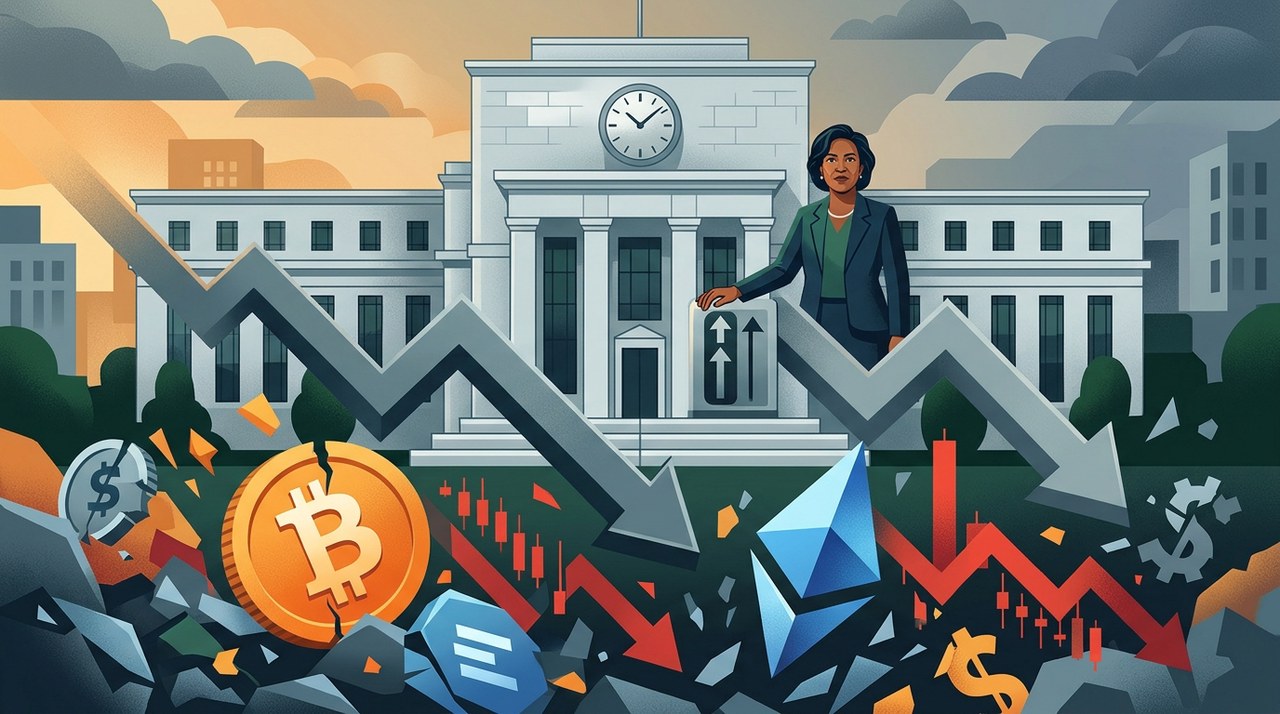
Federal Reserve Governor Lisa Cook recently delivered a clear message to the financial world. She warned that inflation in the United States has been running high for too long, and a single interest rate hike may not be enough to fix the problem.
Her comments sparked immediate reactions across financial markets on Friday, causing declines in both stock indexes and cryptocurrency prices. Whenever central bank officials discuss raising interest rates, investors pay close attention.
Why Fed Leaders Are Pushing for More Rate Hikes
Lisa Cook shared her perspective at the Central Bank of Chile's annual conference in Santiago. During her address, she explained why monetary policy might need to stay tight for an extended period.
She dissented during the Federal Reserve's October meeting. While the majority voted to hold rates steady, Cook favored a quarter-point rate increase instead.
I am skeptical that September’s single 1/4 point rate increase will be enough to change the path of inflation.
Cook argued that overall financial conditions remain too loose to bring elevated inflation back down to the target level. She highlighted two key factors supporting her view:
- The rapid expansion and heavy investment in artificial intelligence show no signs of slowing down despite higher borrowing costs.
- Strong stock market performance has continued to boost consumer wealth, encouraging ongoing consumer spending.
She also warned that waiting too long carries serious risks. If the central bank falls behind the curve, it might be forced to implement even larger interest rate hikes later on.
How Interest Rates Work: A Simple Analogy
To understand why interest rates matter so much, imagine an economy as a car traveling down a highway. Inflation is like the car picking up too much speed.
When the Federal Reserve increases interest rates, it is gently tapping on the brakes. Borrowing money becomes more expensive for businesses and everyday consumers.
As borrowing costs rise, individuals and companies tend to spend less. This cooling effect helps bring down price increases across goods and services over time.
Wall Street and the Shift in Rate Expectations
Traders have been actively adjusting their expectations for future rate moves. Minutes from the Fed's October meeting revealed that several officials shared Cook's concern about persistent inflation.
Data from the CME FedWatch tool previously indicated roughly even odds of a second rate hike happening by January. However, Friday's market turbulence shifted market sentiment.
The probability of the Fed taking a pause at the December meeting jumped from zero to about 11% in a single day. CME FedWatch target rate probabilities showed the odds of a rate hold at 11.4%, while the probability of a rate hike stood at 88.6%.
This movement occurred alongside a selloff in technology stocks, which led some investors to move capital into safer government bonds. Weak manufacturing data released during the week added to general market caution.
Cook's economic argument links these developments together. If rising share prices encourage spending, falling stock prices tighten financial conditions and help slow economic activity.
How Does This Affect BitcoinBTC+2.75% and Crypto Markets?
Cryptocurrencies like Bitcoin tend to be sensitive to macroeconomic interest rate changes. When interest rates rise or stay high, investors often re-evaluate riskier assets.
Higher interest rates mean risk-free options like US Treasury bonds offer higher yields. Consequently, capital can flow away from higher-volatility assets like digital currencies.
Recently, Bitcoin dropped below the $60,000 threshold, trading near two-year lows during market pullbacks — though prices remain subject to ongoing market volatility.
Past performance of digital assets is not an indication of future results. Investors can monitor historical market trends at bitkub.com/th/market/BTC.
The Next Key Catalyst: PCE Inflation Data
Market participants are looking ahead to upcoming economic reports for clearer signals on future policy. The next crucial dataset arrives on November 25.
That date brings the release of October Personal Consumption Expenditures (PCE) inflation data, which serves as the Federal Reserve's preferred measure for price stability.
Lisa Cook cited an estimate of 3.8% for October PCE inflation. How the actual report turns out will play a key role in shaping the Fed's next move:
- If PCE inflation comes in higher than expected, it could reinforce the case for further rate increases in upcoming meetings.
- If PCE inflation shows signs of cooling, market participants expecting a rate pause will gain support heading into the Fed's meeting on December 8 and 9.
What to Keep in Mind Going Forward
Navigating markets during periods of shifting monetary policy requires paying attention to key economic data rather than short-term price fluctuations.
Federal Reserve rate decisions impact interest costs, stock valuations, and crypto liquidity across global markets. Staying informed on upcoming reports like the PCE index provides essential context for where financial conditions are headed.
Latest blog posts


Bitcoin Reclaims $60K Following Michael Saylor Post
Bitcoin recovered above $60,000 on Nov 21 after dropping near $55,000, following a brief social media message from Strategy's Michael Saylor.
|
 +2
Chainflip Faces Second Security Exploit Draining Vaults
Decentralized protocol Chainflip suffered a second security breach in ten weeks, losing Bitcoin, Ethereum, and stablecoins while offering a 10% bounty for returned funds.
|
Robert Kiyosaki Urges Crypto Buyers to Wait Out the Crash
Author Robert Kiyosaki advises crypto investors to wait for a market bottom before buying Bitcoin, citing limited supply and rising debt.
|